


Why Are Investors Increasingly Interested in Nickel for 2025?
There’s been a noticeable shift in how investors approach metal markets, and nickel is now receiving more attention than ever before. For UK investors exploring exposure to the energy transition, nickel’s importance has moved beyond industrial use. It has become a strategic resource, one that sits at the crossroads of electric vehicle (EV) batteries, renewable energy infrastructure, and critical green technologies.
Nickel demand is no longer just a story of stainless steel. In 2025, it’s a narrative of electrification, energy density, and strategic supply chains. For those looking to invest with foresight and purpose, platforms like 5starsstocks.com offer an evidence-led guide to the top nickel stocks on the market today.
From detailed company data to refined valuation methodologies, their nickel coverage is grounded in transparency and tailored for modern retail investors.
How Is Nickel Used in the Energy and Industrial Sectors?
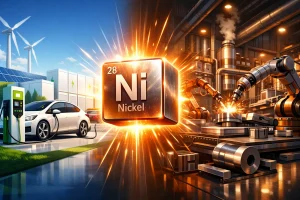
Nickel serves a dual role. On the one hand, it underpins traditional industries like stainless steel production, which still accounts for around 65% to 70% of primary nickel demand. On the other hand, it is central to the production of nickel-rich cathodes in electric vehicle batteries, where it enhances energy density and extends vehicle range.
The result is a dual-market demand profile: while battery adoption introduces volatility, stainless steel ensures a stable base. It’s this duality that helps nickel avoid the boom-and-bust traps seen in other niche battery metals.
Even as LFP (lithium iron phosphate) batteries gain market share in cost-sensitive EVs, particularly in China, premium and long-range vehicles in the West continue to prefer NMC (nickel manganese cobalt) chemistries.
The International Energy Agency (IEA) projects that nickel demand from the battery sector will continue growing in 2025, supported by infrastructure investment and OEM (original equipment manufacturer) offtake agreements. Simply put, nickel’s importance is no longer industrial—it’s strategic.
What Makes 5starsstocks.com a Valuable Resource for Nickel Investors?
Unlike broad financial news sites, 5starsstocks.com offers tailored research for sector-focused investors. Their nickel coverage is structured for clarity, depth, and actionability.
The platform integrates:
- Independent data sources such as the USGS, INSG, and IEA
- Company filings and technical reports like NI 43‑101, JORC, and 20-F
- In-house models and live watchlists for ongoing performance tracking
The goal is to bridge the gap between retail accessibility and institutional research depth. For those new to commodity investing, or those building a focused portfolio, 5starsstocks.com offers a clear pathway to quality nickel exposure.
What Are the Key Drivers Behind Nickel Supply and Pricing in 2025?
Understanding supply is essential to evaluating nickel investments. As of 2023 and into 2025, Indonesia has become the dominant force in global nickel supply. Its low-cost production of nickel pig iron (NPI) and expanding high-pressure acid leach (HPAL) projects have increased total market output but complicated class‑1 availability.
Not all nickel is created equal. The market now operates on a two-tier structure:
| Feature | Class‑1 Nickel (Battery-grade) | Class‑2 Nickel (NPI, Ferronickel) |
| Primary Use | EV batteries, specialty alloys | Stainless steel |
| Form | Sulfate, briquettes, cathode | NPI, matte, ferronickel |
| Main Producers | Canada, Australia, Japan | Indonesia, China |
| ESG Profile | Strong traceability, lower CO₂ (sulfide) | High CO₂, challenging residue management |
| Conversion to Battery Grade | Refining to sulfate | NPI to matte to sulfate (complex and costly) |
| Pricing Reference | LME + sulfate premia | FeNi/NPI index and long-term contracts |
What this means for investors is that class‑1 nickel can command a pricing premium, particularly when supply is tight and traceability is required. ESG regulations, supply chain transparency, and conversion capacity will all affect realised prices, not just the spot market.
How Can Investors Evaluate Nickel Stocks with Confidence?

To evaluate nickel stocks effectively, 5starsstocks.com recommends a clear five-factor framework. This method is applicable to both large producers and early-stage developers.
- Cost Position
Companies in the lowest quartile of the global cost curve are best positioned to survive price downturns. Look at C1 cash costs and AISC (All-In Sustaining Cost) for a more accurate operational picture. - Balance Sheet Strength
A company’s net debt-to-EBITDA ratio should be under 1.5x. For developers, a minimum cash runway of 12–18 months is ideal to avoid forced capital raises. - Jurisdiction and Permitting
Investors should favour companies operating in stable jurisdictions with clear environmental permitting and community engagement. - ESG and Product Quality
Firms with class‑1 production or conversion optionality are likely to benefit from pricing premiums. ESG credentials can enhance valuation and funding access. - Valuation Metrics
Use blended valuation models like EV/EBITDA, free cash flow yield, and P/NAV. Anchor projections to mid-cycle pricing, not speculative peaks.
Which Are the Six Best Nickel Stocks to Buy in 2025?
5starsstocks.com has shortlisted six standout stocks based on cost position, strategic partnerships, product type, jurisdiction, and valuation. Here’s a snapshot of the selection:
| Company | Market Focus | Investment Case | Key Consideration |
| Vale S.A. (NYSE: VALE) | Class‑1, diversified major | Emphasis on Canadian output, OEM supply deals, strong cash flow | Broader results driven by iron ore |
| BHP Group (NYSE: BHP) | Nickel West, integrated supply chain | Battery-grade output, Tesla partnerships, disciplined capex | Operational and cost risks at Nickel West |
| Glencore (LON: GLEN) | Mining + marketing | Volatility buffer from trading operations, attractive free cash flow profile | Regulatory risks and broader commodity exposure |
| Sumitomo Metal Mining (TSE: 5713) | Upstream + battery materials | Exposure to cathode markets, HPAL experience, Japanese OEM connections | FX risk, capex discipline required |
| Nickel Mines Ltd. (ASX: NIC) | Indonesian NPI assets | Strong margins, strategic partnerships, rapid development | Exposure to class‑2 pricing and Indonesian policy shifts |
| Canada Nickel Co. (TSXV: CNC) | Pre-production developer | Carbon capture integration, large-scale class‑1 potential | Funding and permitting still required |
These stocks are designed to form a balanced basket, combining stability from majors and high-growth potential from pure plays.
What Is the Best Strategy for Building a Nickel Portfolio in 2025?
The optimal portfolio structure depends on the investor’s risk tolerance, but 5starsstocks.com recommends a tiered allocation strategy:
- 60–80% in diversified majors such as BHP, Glencore, and Vale for steady cash flow and dividends
- 20–40% in selective growth plays like Canada Nickel and Nickel Mines for exposure to project-specific upside
Investors should split entries across multiple points, using catalysts such as quarterly earnings, permitting decisions, or offtake agreements. Instead of trying to time the market, strategic staging offers more control.
Use valuation guardrails like P/NAV ≤ 0.7x for developers and EV/EBITDA ≤ 6x for producers. Reassess portfolio performance quarterly and monitor company-specific and macroeconomic catalysts.
How Can Investors Manage Risk in the Volatile Nickel Market?

Nickel prices are cyclical and can be affected by policy shifts, demand cycles, and commodity market shocks. A structured risk approach is essential.
- Prioritise low-leverage balance sheets and operational flexibility
- Diversify exposure across jurisdictions and product types
- Use limit orders to manage liquidity in OTC or pre-market trades
- Track macro indicators such as:
- LME warehouse stocks
- INSG global supply-demand balances
- Sulfate premia and China’s NPI output
- Indonesian export and processing policy updates
Investors are advised to size positions based on conviction and protect against drawdowns by using predefined loss thresholds and thesis checkpoints instead of mechanical stop-losses.
What Practical Steps Can Investors Take to Act on These Insights?
To turn research into action, investors should:
- Shortlist 3–6 stocks aligned with their risk appetite and portfolio structure
- Create a one-page memo per company highlighting the top three drivers, risks, and upcoming milestones
- Set staged entry points based on upcoming catalysts
- Define allocation weights across majors and developers
- Review positions quarterly and adjust based on updated technical, ESG, and macro factors
This approach enables resilient investing through the entire nickel cycle, from price slumps to surges driven by EV adoption and geopolitical shifts.
Frequently Asked Questions About Nickel and 5starsstocks.com
Why does LFP adoption not eliminate nickel demand in EVs?
Although LFP batteries are popular in low-cost segments, NMC chemistries remain dominant in Western markets and high-performance vehicles. Nickel’s role in premium battery types sustains long-term demand.
Are diversified miners or pure-play nickel stocks better?
Both have merits. Diversified majors provide stability and liquidity, while pure plays offer torque to specific catalysts like project funding, commissioning, and offtakes.
How should nickel price and FX risk be modelled?
Use mid-cycle nickel prices and stress-test ±20%. For FX, apply ±10–15% sensitivity on AUD, CAD, and JPY, depending on where the company operates.
What red flags should investors avoid in nickel developers?
Short cash runways, overoptimistic ramp-up schedules, ESG blind spots, and lack of credible partners are major warning signs.
How does 5starsstocks.com support investors?
The platform provides company-level data, sector analysis, valuation tools, and real-time monitoring tailored for retail and institutional investors alike.
What indicators matter most when tracking the nickel market?
Watch LME stock levels, INSG balances, China NPI output, and policy changes in Indonesia,each can significantly affect pricing and supply chains.
Is a staged entry strategy more effective than lump-sum investing?
Yes. Staging entries around key catalysts such as earnings, permits, and commissioning events reduces risk and allows for better price control.