
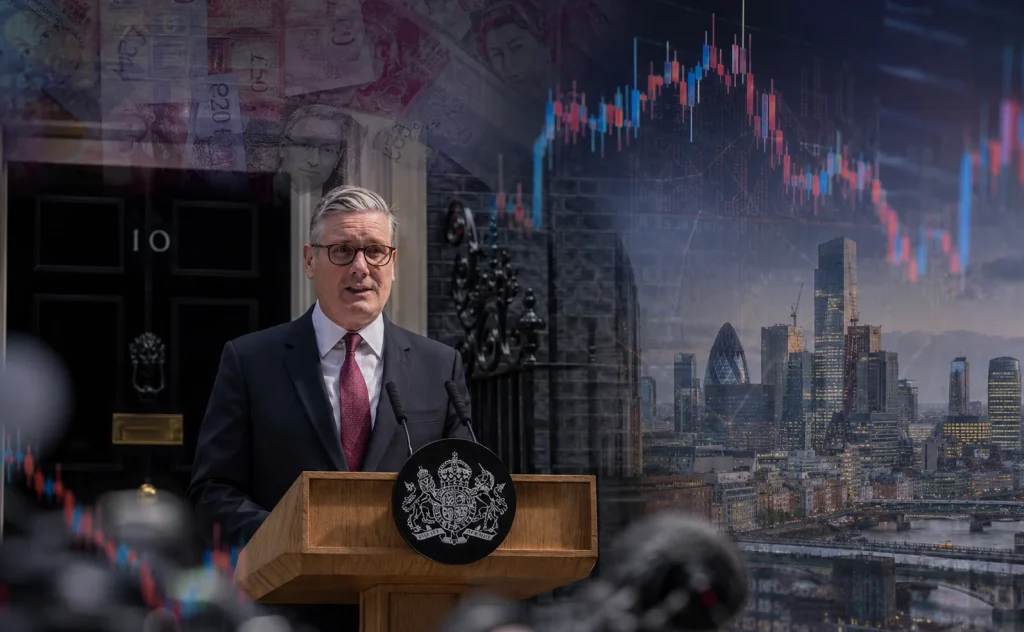
The immediate Keir Starmer resignation pound impact has been relatively limited, with financial markets largely pricing in his departure before the official announcement.
While sterling weakened slightly against the US dollar and euro, it avoided the sharp volatility that often accompanies major political upheaval. However, the real test for GBP may come during the leadership transition and the policy decisions of the next government.
Key Takeaways:
- The pound initially fell but remained broadly stable around $1.32.
- UK gilt yields stayed elevated near 4.85%, reflecting fiscal concerns.
- Investors are closely monitoring the leadership race and future Chancellor.
- Fiscal policy decisions could have a greater impact on GBP than the resignation itself.
- UK startups, exporters and importers may face currency-related opportunities and risks in the coming months.
What Is the Immediate Keir Starmer Resignation Pound Impact in 2026?
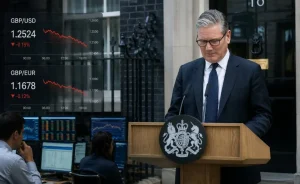
Prime Minister Keir Starmer’s resignation announcement on 22 June 2026 created headlines across global financial markets. However, unlike previous political shocks in the UK, sterling did not experience a dramatic sell-off.
According to market data, the pound traded around $1.322 against the US dollar and approximately €1.15–€1.16 against the euro following the announcement. Investors had already anticipated the possibility of Starmer stepping down after months of political pressure and speculation.
As a result, the market reaction was measured rather than emotional. The pound remained under slight pressure, but traders focused more on future policy implications than on the resignation itself.
“So far, markets have mostly shrugged off the news,” said Ruth Gregory, Deputy Chief UK Economist at Capital Economics.
This reaction highlights a key reality: political events matter most when they create uncertainty about future economic policies.
Why Did Sterling Hold Lower but Avoid a Major Crash?
Despite Keir Starmer’s resignation creating political uncertainty, financial markets remained relatively calm. Investors appeared reassured by the prospect of an orderly leadership transition, helping the pound avoid a sharp decline.
Market Expectations Were Already Priced In
Financial markets operate on expectations. For several months, concerns surrounding Starmer’s leadership had already influenced investor sentiment.
Sterling had reportedly lost around 3% of its value since February 2026 as political uncertainty increased. By the time the resignation was officially announced, much of the expected risk had already been incorporated into asset prices.
GBP Reaction Against the Dollar and Euro
The pound’s performance remained relatively stable because investors were reassured by signs of an orderly leadership transition.
Current market movements included:
- GBP/USD trading near $1.32
- GBP/EUR remaining around €1.15–€1.16
- Limited intraday volatility
- Stable investor demand for UK assets
This suggests that markets are currently adopting a wait-and-see approach rather than reacting aggressively. The focus has shifted from the resignation itself to who will replace Starmer and what policies they may introduce.
How Are UK Gilts and Borrowing Costs Influencing the Pound?
While headlines focused on sterling, many analysts argued that the gilt market deserves closer attention. UK government bonds, known as gilts, directly influence borrowing costs and investor confidence.
Britain’s 10-year gilt yield remained around 4.85% after the resignation announcement, indicating that investors still have concerns about long-term fiscal stability.
Market Snapshot:
| Indicator | After Resignation |
| GBP/USD | $1.322 |
| GBP/EUR | €1.15–€1.16 |
| 10-Year Gilt Yield | 4.85% |
| FTSE 100 | Stable |
| FTSE 250 | Flat |
Higher gilt yields can signal that investors require greater compensation for lending money to the UK government. If future fiscal policies increase borrowing significantly, yields could rise further and place additional pressure on sterling.
Consequently, many market participants are monitoring bond markets more closely than currency markets at present.
Could Andy Burnham’s Leadership Bid Change the GBP Outlook?
Andy Burnham has emerged as the leading candidate to succeed Starmer, making his economic approach a critical factor for future sterling performance.
Investors are particularly interested in whether Burnham would maintain existing fiscal rules or pursue higher public spending. Markets generally favour predictable economic policies, especially during leadership transitions.
Several analysts believe Burnham’s recent efforts to reassure investors have helped limit downside risks for both gilts and the pound. However, uncertainty remains until his policy platform becomes clearer.
“The market will be watching for any potential changes in policy under the new leader,” said Lee Hardman, Senior Currency Analyst at MUFG.
The coming weeks could therefore prove more important for GBP than the resignation announcement itself.
What Role Will Fiscal Policy Play in Sterling Stability?
Fiscal policy will play a crucial role in determining the future direction of sterling. While political leadership changes often attract headlines, investors are equally focused on how the government plans to manage public finances, borrowing, and economic growth.
Strong fiscal discipline can help support market confidence, whereas concerns about rising debt or spending commitments may place pressure on the pound.
Why Investors Are Watching the Next Chancellor
For currency markets, the next Chancellor may ultimately matter as much as the next Prime Minister. Investors want reassurance that public finances will remain under control. Any indication of significantly higher borrowing or spending could trigger concerns about government debt sustainability.
Fiscal Rules, Spending Plans and Market Confidence
Several issues are likely to influence sterling over the second half of 2026:
- Government borrowing levels
- Defence spending commitments
- Infrastructure investment plans
- Welfare spending reforms
- Growth-focused economic policies
“The medium-term reaction is that the market is going to get nervous at some point about fiscal policy,” noted Kit Juckes, Chief FX Strategist at Société Générale.
Ultimately, fiscal credibility remains one of the strongest drivers of investor confidence and currency stability.
How Are the FTSE 100, FTSE 250 and UK Stocks Reacting?
Despite the political uncertainty surrounding the Prime Minister’s resignation, UK equity markets have remained relatively resilient, suggesting that investors are currently focused more on economic fundamentals and corporate performance than short-term political developments.
Performance of Major UK Stock Indices:
| Market Index / Sector | Market Reaction |
| FTSE 100 | Gained approximately 0.5% |
| FTSE 250 | Recovered early losses and traded broadly flat |
| Banking Stocks | Posted notable gains |
| Overall Investor Sentiment | Remained broadly positive |
Market analysts have also highlighted easing geopolitical tensions and improving inflation expectations as supportive factors for UK equities.
What Does Keir Starmer’s Resignation Mean for Mortgages, Savings and Household Bills?
For most households, the immediate impact is likely to be minimal. Mortgage rates are primarily influenced by Bank of England policy, inflation expectations and gilt yields rather than political headlines alone. However, prolonged uncertainty could affect borrowing costs if gilt yields rise significantly.
Potential Consumer Impacts:
| Area | Potential Effect |
| Mortgages | Limited short-term impact |
| Savings Rates | Dependent on interest rate outlook |
| Energy Bills | More influenced by global energy markets |
| Consumer Confidence | Could weaken if uncertainty grows |
| Import Costs | Higher if sterling weakens further |
Consumers should focus on broader economic developments rather than reacting solely to political events. The direction of inflation and interest rates will likely remain the biggest financial factors for households. As things stand, there is no evidence of immediate disruption to personal finances.
How Could the Pound’s Reaction Affect UK Startups and Small Businesses?
For UK startups, sterling movements can have real operational consequences. Many technology startups pay for software subscriptions, cloud services and digital advertising in US dollars.
A weaker pound increases those costs, potentially reducing profit margins. At the same time, businesses selling products or services internationally may benefit from a more competitive exchange rate.
Key startup considerations include:
- Increased costs for imported software and technology services
- Potentially stronger export competitiveness
- Higher uncertainty for fundraising and investment activity
- Possible changes to future government business support programmes
Business groups including the CBI have already called for policy continuity to maintain investor confidence and encourage economic growth. For startups planning expansion in 2026, monitoring GBP movements and government policy announcements will be essential.
Will Sterling Remain Stable or Face More Pressure in the Coming Months?
The future of GBP depends less on Keir Starmer’s departure and more on what happens next. Current evidence suggests financial markets remain relatively calm because the resignation was anticipated.
However, investors will closely watch leadership developments, fiscal policy proposals and economic growth data over the summer.
Sterling Outlook Scenarios:
| Scenario | Potential GBP Impact |
| Stable leadership transition | Positive to neutral |
| Fiscal discipline maintained | Supportive for GBP |
| Higher government spending | Negative for GBP |
| Stronger UK growth outlook | Positive for GBP |
| Political uncertainty increases | Negative for GBP |
If the next government delivers a credible economic strategy, the pound may remain stable. However, political uncertainty or fiscal concerns could put pressure on sterling. The new Prime Minister’s policies will likely shape the pound’s direction.
Conclusion
The pound weakened slightly after the announcement, but most of the move had already been priced in by markets before the resignation became official.
What level was GBP/USD trading around after the resignation news?
Sterling traded at approximately $1.322 against the US dollar following the announcement.
Why are gilt yields important for the pound?
Gilt yields reflect investor confidence in UK public finances. Rising yields can indicate concerns about borrowing and fiscal policy, which may affect sterling.
Could a new prime minister strengthen the pound?
Yes. If the new leadership provides policy certainty, supports economic growth and maintains fiscal discipline, investor confidence could improve and support GBP.
What could weaken sterling further in 2026?
Potential risks include higher government borrowing, weaker economic growth, elevated inflation and prolonged political uncertainty.
Are UK financial markets more focused on gilts than the pound?
Currently, many analysts believe gilt markets are providing a clearer indication of investor sentiment than short-term currency movements.
Should UK businesses worry about exchange rate volatility?
Businesses with international suppliers, overseas customers or foreign currency expenses should monitor GBP movements carefully as exchange rates can affect costs and profitability.

Startup mentor & Blogger | Sharing leadership tips for UK business owners