
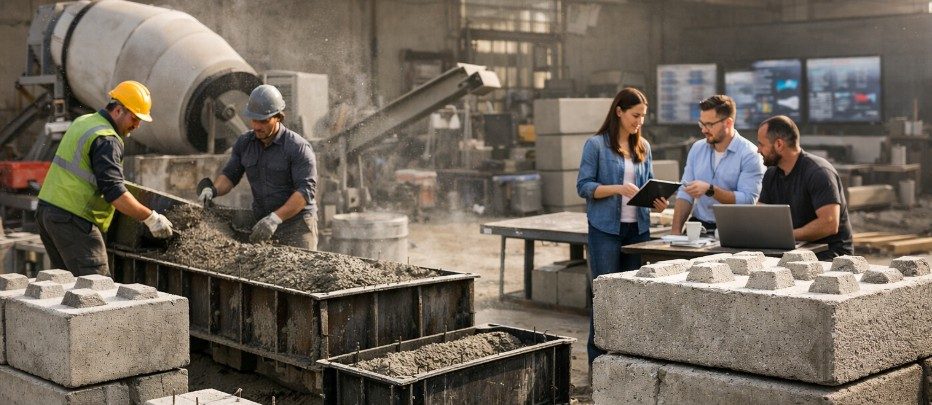

Sustainable business practices are reshaping how startups handle construction waste, with practical approaches that turn leftover materials into valuable new products. Focused models now enable founders to generate revenue and contribute to environmental efficiency using recovered waste.
Amid rising disposal costs and regulatory requirements, a new generation of startups is rethinking the value of construction waste. Betonblock.com demonstrates how waste streams like surplus concrete can become key operational assets instead of expenses.
By using steel moulds to produce concrete blocks, barriers, retaining walls, and tetrapods, businesses can manage residual concrete in an environmentally friendly and efficient way.
The resulting products may be sold to generate additional income, addressing both sustainability expectations and the demand for lower-impact building materials. Treating construction waste as a business opportunity is increasingly a pathway to growth and resilience.
Identifying the Most Valuable Waste Streams on-site

Startups eager to harness construction waste must first recognise which materials hold value for their model. On many sites, leftover concrete from over-ordering, washout materials during daily cleanup, and returned batches from deliveries are promising.
These byproducts can make up a meaningful portion of a project’s waste and, with careful planning, can be collected without disrupting main operations.
However, startups must account for practical challenges such as variable material quality, the risk of contamination, and the timing of waste collection relative to production schedules. Understanding these realities is crucial to aligning operational goals with feasibility.
Not all waste streams offer equal potential for value creation. For instance, materials mixed with debris or site chemicals often require costly sorting or cannot be reused. The most attractive waste streams are those that can be isolated quickly and incorporated into repeatable product processes.
Startups need effective assessment methods to determine material consistency and suitability before investing further in their chosen approach.
This reduces the chances of unexpected costs and supports ongoing sustainability efforts without undermining efficiency. Reusing uncontaminated residual concrete supports both waste minimisation and the generation of usable construction products with consistent quality.
Scalable Business Models for Leftover Construction Materials
Several business models leverage leftover concrete for repeatable, revenue-generating products. Small-batch manufacturing is one option, targeting items such as blocks, road barriers, landscaping edging, and retaining wall components.
Building a service-led approach, you might offer on-site recovery and conversion, integrating production with local projects and partnering directly with contractors or ready-mix suppliers.
Each model offers a route to market but relies on a lean operating style that minimises waste and prioritises resource effectiveness. Employing steel moulds for these products allows for more efficient transformations of waste concrete, supporting sustainability goals and economic efficiency.
The revenue logic for such startups depends on turning low- or no-cost residuals into viable goods with clear quality benchmarks. Margins can improve when products meet established procurement specifications, allowing for repeat orders and more consistent cash flow.
Scalability is strongest where demand for sustainable construction solutions overlaps with the logistical ease of supply. Adopting a customer-centric viewpoint can improve the odds of sustained growth, as procurement increasingly favours waste reduction and environmental impact alongside cost savings and reliability.
The sale of concrete blocks, barriers, and similar products produced from residual concrete presents a practical route to monetising waste sustainably.
Ensuring Quality and Safety With Robust Processes
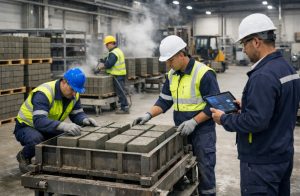
For dependable product output, standardised processes and equipment selection are critical from day one. Dedicated curing, moulding, and quality-check routines help maintain reliability and predictability as operations expand.
Using betonblock forms, which are steel moulds designed for manufacturing concrete blocks and related products, enables greater repeatability across batches, reduces material waste, and can quicken production cycles.
Startups should also factor in sufficient storage and transport capabilities to prevent spoilage or delays in delivery, which can affect reputation and profit margins.
Safety and environmental management must be embedded in every stage of the production process to meet evolving compliance and client expectations. Planning for proper site handling, protective equipment, and clear workflow documentation reduces operational risk.
Regular monitoring, along with a culture of proactive maintenance, helps ensure batches remain consistent and meet procurement performance requirements. These steps can protect a startup against early setbacks and support a narrative of reliable, sustainable growth for both customers and investors.