


Starting a company isn’t something that happens overnight. It often begins as a whisper, an idea that lingers quietly in the background. For Andrei Savine, CapabiliSense didn’t emerge from a lightbulb moment, a pitch competition, or a push to join the startup scene. It came from decades of witnessing the same painful, frustrating patterns repeat themselves across companies, teams, and industries.
After 30 years in tech—working across IT operations, cloud transformation, and enterprise consulting for names like AWS, Airbus, AstraZeneca, and European agencies, one reality became clear: transformation efforts consistently struggled or failed, not because of bad technology, but because of people. Misalignment. Mistrust. Unclear expectations. These human challenges repeatedly derailed even the best ideas.
That’s the problem CapabiliSense is built to solve.
What Persistent Problems Have I Seen Across 30 Years in Tech?
Over the years, Andrei’s career path has taken him from basic IT support to leading digital, data, and cloud transformations across Europe. He’s worked inside startups and tech giants, contributed to public sector programmes, and delivered enterprise strategies at a global scale.
Despite this variety, the challenges often looked remarkably similar.
Teams frequently struggled to understand how they fit into a broader strategic vision. Leaders had ambitious ideas but couldn’t get teams to align behind them. Communication would break down. Risk and compliance would surface late and halt progress. Transformation programmes, regardless of budget or expertise, would falter.
The issue wasn’t always a lack of tools. In fact, some organisations had invested millions in technology. The real problem was that people lacked clarity and connection to the change. They didn’t understand their role, didn’t feel involved, and often, didn’t trust the process.
Andrei recalls countless moments where he’d step in not just as a technologist or strategist, but as a translator, turning complex roadmaps into personal meaning for individuals and teams. That act of translation became exhausting. And eventually, it raised a deeper question: why isn’t there a better way to make sense of this complexity?
Why Do Transformation Programmes Keep Failing?

There’s a consistent statistic that appears across whitepapers, research reports, and boardroom discussions: up to 95% of transformation efforts fail to deliver on their promises. Whether it’s digital, cloud, AI, or organisational change, the numbers remain sobering.
What’s often blamed? Budgets. Technology. Market conditions.
But Andrei’s experience suggests otherwise.
Transformations collapse because people are confused, cautious, or disengaged. Teams struggle to see how a new system will help them, or worse, fear that it might replace them. Leaders push change top-down without listening to the ground-level insights. And when that happens, you don’t just lose momentum, you lose trust.
Perhaps most frustratingly, these breakdowns are predictable. The signs are always there: misalignment between leadership, missing compliance input, late-stage resistance, or simply unclear goals. But without a shared view of capabilities, who can do what, where, and how effectively, there’s no early warning system. There’s no dashboard to make sense of the human dynamics.
That’s the gap CapabiliSense intends to fill.
What Sparked the Idea for Capabilisense?
Unlike many startup origin stories, CapabiliSense didn’t come from a single moment of inspiration. There wasn’t one specific meeting, presentation, or failure that prompted it. Instead, the idea was shaped over time, in quiet moments of observation.
In one transformation programme after another, Andrei saw the same script playing out: discovery workshops, capability assessments, strategic planning, and then the hard part, translating it all into meaningful action that teams could relate to.
After years of repeating this process manually, the question started to grow louder: why isn’t there a platform that can do this?
That question sat in the back of Andrei’s mind for years. While working on AWS frameworks and building cloud adoption assessments used by thousands, he saw what structured thinking could achieve. But he also saw its limits. Frameworks helped people think, but they didn’t help them feel connected. A PDF could outline a roadmap, but it couldn’t respond to real-time challenges.
And so, the idea slowly turned into a mission: to build a platform that could adapt like a team member, not just instruct like a document.
What Lessons From AWS Shaped the Vision for Capabilisense?
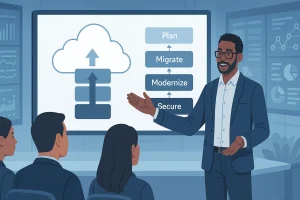
During his time at Amazon Web Services, Andrei worked on some of the most widely adopted cloud transformation tools in the world. He helped develop readiness frameworks and maturity assessments that guided hundreds of businesses and thousands of AWS consultants.
These tools were highly effective, but they were also static.
One of the biggest lessons from that period was that every transformation is unique. No two organisations are the same. Even with identical frameworks, outcomes varied widely. Success depended on culture, communication strategy, and a shared understanding of capabilities.
CapabiliSense takes those AWS learnings and builds on them. Instead of a static framework, it’s a living, responsive system. One that helps organisations sense their capabilities, understand what’s working, what’s missing, and what’s possible.
Why Does the Name “Capabilisense” Matter?
The name wasn’t chosen to sound trendy or technical. It reflects the core idea behind the platform: the ability to sense capabilities within an organisation.
CapabiliSense isn’t about skills matrices or employee directories. It’s about building a deep, dynamic understanding of the human infrastructure inside a business. It’s about seeing the interdependencies, the gaps, the hidden leaders, and the unspoken tensions.
At its heart, CapabiliSense functions like an organisational GPS. It doesn’t just tell you where you are, but also where you could go, and how to get there without losing alignment, trust, or sanity.
How is Capabilisense Different From Existing Tools?
Many organisations already use tools for project tracking, resource management, or HR planning. But those tools typically focus on tasks or people, not capabilities. CapabiliSense is designed to map the space between the org chart and the strategy.
It answers questions like:
- Do we have the right capabilities to deliver this roadmap?
- Where are the hidden misalignments?
- Who is likely to resist this change, and why?
- How do our capabilities evolve over time?
Let’s compare:
| Capability | CapabiliSense | Traditional Frameworks | General SaaS Tools |
| Real-time sensing | Yes | No | Limited |
| Human-centric insights | Core focus | Not supported | Optional add-ons |
| Built for transformations | Yes | Partially | Not focused |
| Dynamic alignment tools | Yes | No | Rare |
| AI-assisted adaptability | Core feature | None | Rare |
Who is CapabiliSense built for?

The platform is designed for organisations navigating change, but also for the individuals trying to lead that change. It’s for transformation managers, team leads, enterprise architects, and even risk officers who need better visibility into how their people are positioned to succeed.
Beyond that, CapabiliSense is built for:
- Supporters and former colleagues who’ve worked with Andrei and want to follow the journey
- Investors, both financial and intellectual, who see the value in fixing transformation at its root
- Experienced founders and thought leaders who can offer guidance or challenge assumptions
It’s not just a platform; it’s a conversation with everyone who cares about doing transformation better.
What’s Next for Capabilisense?
CapabiliSense is currently in its private beta phase, working with select UK organisations to test, refine, and validate its approach.
The roadmap ahead includes:
- Developing AI-driven capability mapping engines
- Enhancing integration with strategic planning tools
- Publishing case studies and real-world insights
- Expanding access to broader industries beyond tech and consulting
But beyond the product development, Andrei is also committed to building transparency into the journey. This blog will continue to share not just platform updates, but reflections on startup life, honest insights into failure, and discussions around the role of AI in reshaping transformation work.
Why Share This Blog?
Because stories matter. Andrei believes that building a company should be an open process, especially when the goal is to help others work more openly and effectively.
This blog is a place to:
- Share what’s working and what’s not
- Explore the human side of enterprise tech
- Offer value to those on similar paths
- Invite feedback, discussion, and improvement
For those wondering what CapabiliSense really is, this is the answer: it’s a platform born from lived experience, designed to help people and organisations do better together.
Frequently Asked Questions
What is CapabiliSense designed to solve?
CapabiliSense helps organisations gain visibility into their internal capabilities, supporting better alignment, decision-making, and successful transformation delivery.
How does it differ from traditional transformation tools?
Most frameworks are static and theoretical. CapabiliSense is dynamic, AI-powered, and built around real-time human insights and organisational sensing.
Why focus on “capability” rather than “skills” or “resources”?
Capabilities represent the combination of skills, structure, and readiness to act. They’re more holistic and more useful in aligning strategy to execution.
Who can benefit from CapabiliSense?
Organisations of all sizes going through change, especially those managing complexity across people, tech, and strategy.
Is CapabiliSense already in use?
Yes, it’s currently in private beta with UK-based organisations across sectors.
How do I stay informed or get involved?
Follow updates on ukstartupblog.co.uk or join the early access list to trial CapabiliSense when it becomes publicly available.
Will CapabiliSense integrate with existing systems?
Yes, the roadmap includes integrations with project management, HRIS, and strategic planning platforms.