
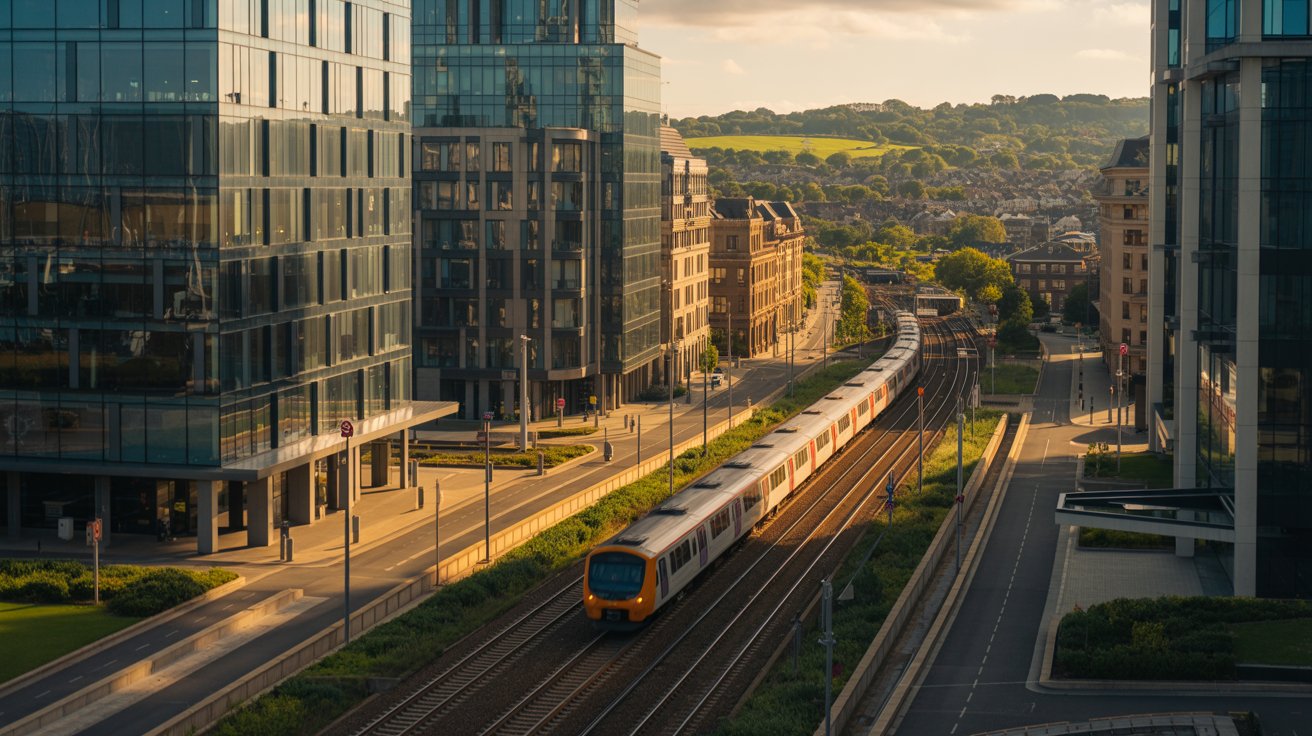

What’s driving Preston’s remarkable rise in the UK’s business landscape? Once seen as a traditional Lancashire market town, Preston is now emerging as one of the most dynamic and fast-growing business hubs in the country. With strategic investments, strong local policy frameworks, and a diverse economic base, Preston is steadily transforming into a northern powerhouse, quietly but confidently.
Let’s explore the many layers that make Preston’s growth story one worth watching.
Why Is Preston’s Location Considered So Strategic?
Preston’s location at the heart of the North West is one of its strongest natural advantages. The city offers seamless access to major transportation networks including the M6 motorway, the West Coast Main Line, and nearby ports such as Liverpool and Heysham. Being equidistant from Manchester, Liverpool, and Lancaster allows Preston-based businesses to serve a wide regional market without the high operational costs of bigger cities.
The nearby Manchester and Liverpool airports also provide essential links for international trade and travel. This strategic positioning makes Preston an ideal base for logistics, distribution, advanced manufacturing, and professional services.
How Have Infrastructure Investments Helped Preston’s Growth?
Major infrastructure projects in and around Preston have played a critical role in its economic transformation. These developments not only support transport and housing but also unlock opportunities for commercial and industrial growth.
Key Projects Shaping Preston’s Infrastructure
Preston Western Distributor Road (PWDR) has significantly improved access from the M55 to western parts of the city, encouraging commercial developments and reducing congestion. Similarly, the City Deal Programme, worth over £430 million, has provided extensive funding for housing, road upgrades, and employment zones, making Preston one of the best-connected urban centres in Lancashire.
Another important development is the Preston Railway Station upgrade, which has improved commuter flows and made daily travel to cities like Manchester and London more efficient.
Infrastructure Investments Driving Growth
| Project | Budget | Year Completed | Impact |
| Preston Western Distributor Road | £200 million | 2023 | Reduced journey times, opened new commercial zones |
| Central Lancashire City Deal | £430 million | Ongoing | Enabled housing, roads, and business park expansion |
| Preston Railway Station Modernisation | £10 million | 2024 | Improved connectivity and passenger experience |
What Role Does UCLan Play in Supporting Business?
The University of Central Lancashire (UCLan) is central to Preston’s business ecosystem. With over 38,000 students and an extensive network of business partnerships, UCLan supports entrepreneurship, research-led development, and workforce training.
Its £200 million campus investment has created state-of-the-art facilities like the Engineering Innovation Centre, which collaborates directly with SMEs and large manufacturers. These partnerships help companies innovate while giving students industry exposure.
UCLan’s Contribution to the Business Landscape
UCLan not only produces skilled graduates who support Preston’s key industries, but it also offers incubation spaces, startup support through its SME Centre, and access to research for local businesses. This synergy between academia and enterprise enhances Preston’s competitiveness and ability to attract investment.
How Do Local Policies Encourage Inclusive Growth?
One of Preston’s unique strengths is its approach to local wealth generation. Through what’s known as the Preston Model, the city has become a national example of community wealth building. This policy encourages local institutions, such as hospitals, schools, and councils—to spend more of their procurement budgets with local suppliers.
This has led to a stronger base of small and medium-sized businesses, improved local employment, and a more sustainable economy. Unlike cities reliant on a few large employers, Preston has used this model to create a networked, resilient business ecosystem.
The local government also actively supports business development through:
- Simplified planning processes for commercial developments
- Enterprise zones with tax benefits and faster approvals
- Targeted grant funding for innovation and clean growth
This combination of inclusive economic policy and practical support makes Preston a model for future-facing, people-powered economic regeneration.
Which Sectors Are Fueling Preston’s Business Boom?
Preston benefits from a well-diversified economy. No single sector dominates, and this balance has been key to its resilience and steady growth.
Advanced manufacturing leads the way, particularly in aerospace and automotive supply chains. Its proximity to BAE Systems and other Tier 1 manufacturers supports a large ecosystem of engineering firms.
The digital and creative industries are also gaining ground, with new startups, agencies, and freelancers establishing themselves in co-working hubs throughout the city. Health innovation, supported by partnerships with NHS trusts and UCLan, adds another layer of growth, especially in medical tech and life sciences.
Fastest-Growing Sectors in Preston
| Sector | Activity Description | Local Strengths |
| Advanced Manufacturing | Aerospace, defence, automotive engineering | BAE Systems, UCLan partnerships, engineering parks |
| Digital & Creative | Software, content creation, marketing | Coworking spaces, startup grants, tech incubators |
| Health & Life Sciences | Medical devices, healthcare innovation | NHS collaborations, research centres |
| Professional Services | Legal, finance, consulting | Growth in SME services, affordable office space |
This diversity ensures that economic shocks in one sector don’t derail the broader business ecosystem.
What’s Happening in Preston’s Property and Commercial Space Markets?
The demand for both residential and commercial property in Preston is growing alongside business activity. Developers are responding with new mixed-use spaces, office blocks, logistics hubs, and high-quality housing developments.
The Animate Preston project, for example, is bringing new leisure and business space to the city centre, while industrial zones like Red Scar and Riversway are expanding rapidly.
Housing developments under the Preston Housing Zone initiative are providing modern living options for the city’s growing workforce. This balance of employment and residential development is key to sustaining momentum.
Why Are Businesses Choosing Preston Over Manchester or Liverpool?
Compared to Manchester and Liverpool, Preston offers many of the same advantages, transport links, talent, and infrastructure, but at a significantly lower cost. Office space is cheaper, there’s less congestion, and the city maintains a strong quality of life, making it especially attractive to small businesses and scaling startups.
In addition, there is less competition for council funding and support, meaning that new and growing companies in Preston can more easily access resources, advice, and space.
Those who follow the local business scene can find regular updates, funding opportunities, and investment news on the Preston Blog, which covers the city’s economic transformation in detail.
How Is the Entrepreneurial Scene Evolving?
Preston’s business culture has become increasingly collaborative and innovation-driven. The growth of co-working spaces like Society1 and Fringe reflects the changing face of business in the city. These venues host frequent networking events, pitch nights, and knowledge-sharing workshops that bring local professionals together.
Emerging Entrepreneurial Infrastructure
Preston also hosts high-profile events like the Lancashire Business Expo, which connects entrepreneurs with investors, clients, and service providers. UCLan’s entrepreneurship programmes also add to the momentum, making the city fertile ground for startups and innovation-led SMEs.
This evolving business culture ensures that Preston doesn’t just attract businesses, it helps them thrive and stay.
What Does the Future Look Like for Preston’s Business Ecosystem?

The future for Preston’s business environment looks strong. Several long-term developments are on the horizon, including the Preston Station Quarter Regeneration, further investments in smart infrastructure, and the integration of green technology into business parks and transport systems.
The city’s strategy is focused not just on attracting business but on building sustainable and equitable growth. With a stable foundation in place, Preston is positioned to become a national leader in mid-sized urban regeneration and business innovation.
Conclusion
Preston’s emergence as one of the UK’s fastest-growing business hubs isn’t accidental. It’s the result of thoughtful investment, forward-looking policy, strong academic support, and a deep commitment to local economic resilience. With its strategic location, thriving sectors, and evolving entrepreneurial spirit, Preston is becoming a magnet for ambitious businesses across the UK.
If you’re an investor, entrepreneur, or just someone seeking opportunity outside the London bubble, Preston may well be the most underrated city in the UK to watch, and to join.