

Establishing a startup to become a reputable brand like Apple Pay isn’t easy. It obviously takes a lot of investment channelled towards acquiring the initial customers and marketing the company to break even.
But do you think building a great product is the only uphill task?
The real test comes when you’re trying to get customers to give you access to their wallets and actually pay for the product. So, you can spend thousands or millions of pounds on attractive marketing campaigns and pleasant user interfaces, but if the checkout process is broken, people will simply walk away.
This article discusses Apple Pay’s frictionless checkout and how startups can learn a thing or two.
How Apple Pay Teaches Startups to Reduce Checkout Friction?
What’s Apple Pay and Why Is It Popular?
Apple Pay is a digital wallet method developed by Apple to allow users to make payments within iOS-supported apps and across the web using their Apple devices.
It’s quite popular because of how it reduces effort, and is even one of the most popular payment methods in entertainment and gaming. For instance, casino Apple Pay payment methods are consistently sought-after.
Instead of tedious, multi-step processes associated with traditional payment methods, Apple Pay will let you complete a transaction in a matter of seconds. It has grown to the level of dominating the mobile payment sector because it operates on the basis of solving a frustration that almost everyone recognizes.
Why is Biometric Authentication Becoming the Standard for Fast Payments?
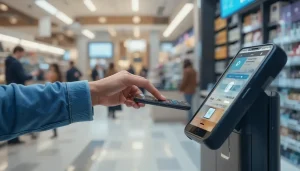
When was the last time you used a password when making a payment?
Passwords are a broken concept for mobile commerce. They’re hard to remember constantly and annoying to reset, which usually makes people tired and likely to abandon the experience before they can complete a purchase.
Biometric authentication, which is used by Apple Pay, fixes the problem, elegantly if you ask. You literally only need to ID your Face or scan your fingerprint to confirm that you’re indeed the one making a purchase, and you’re done.
That payment process keeps things in motion without forcing users to pause and think. So, startups building payment gateways should pay close attention and know that while security still matters, modern users expect it to happen quietly in the background.
Alina Anisimova, Banking Expert at Mr. Gamble explained that
“Some users these days will only use payment methods with biometric confirmations. If the system is password-only, they’ll bypass it. So, it’s critical for business owners to cover all bases by adding at least one face or fingerprint ID method to their roster.”
How Does One-Tap Checkout Design Eliminate Decision Friction in Transactions?
Sometimes, too many checkout steps and forms make the process too strenuous. Which payment method? Which shipping option? Would you like insurance? Would you prefer email or SMS updates? And many more exhausting questions.
The one-tap checkout model eliminates all these decision-making prompts that usually make the excitement of buying something fade rapidly. You just tap once, confirm identity, and the transaction is complete.
Let’s check out the comparison of different checkout styles.
| Style of Checkout | Number of Actions Needed | Average Time to Completion | Chances of Abandoning Cart |
| Traditional Web Form | At least 15 keyboard inputs | Up to 3 minutes | Very high |
| One-Tap Digital Wallet | 1 biometric confirmation | Under 2 seconds | Extremely low |
Clearly, when a payment model reduces the time between making a decision to buy a product and actually owning it, the conversion rate grows exponentially.
Why Does Default Payment Selection Matter More Than Choice Overload?
We talk so much about options when referring to payments. But when there are too many, especially unfamiliar ones, it beats the purpose and only slows people down.
Apple Pay sorts out the decision fatigue by focusing entirely on the default setting. It preselects your primary card automatically, picks up the default shipping address, and fills out the contact details instantly. That tiny design decision has a significant effect on conversion rates. No wonder it’s popular.
Startups should borrow that by identifying the most popular method among their core users and making it the default payment path.
How Hidden Complexity Creates the Feeling of Instant Purchasing?
For payments in Apple Pay to go through in seconds, the software must manage tokenisation, encrypt, communicate with banking servers, detect and prevent fraud, and update the merchant’s inventory, all at the same time.
That means the unmatched simplicity that users experience during payments is run by a huge pile of complex engineering that’s out of sight.
But this is where many young companies get things backwards because they expose too many complex processes to the user (e.g., long verification forms and confusing payment confirmations).
The biggest lesson is that customers just want a seamless and uninterrupted flow that makes them feel like the purchase happened instantly.
Why Should Startups Prioritise Speed Over Feature-Dense Payment Flows?

Many companies that are trying to scale usually fall into the trap of over-engineering their platforms with things like loyalty pop-ups and upsell triggers. The smart ones don’t because that instantly kills the momentum.
Every extra feature you bundle into a payment flow is another point of possibly frustrating the consumer.
Startups need to prioritise speed as the primary product metric, especially at the checkout stage. That doesn’t mean removing functionality entirely, but prioritising the features that genuinely add towards conversion rates.
Final Thoughts
The largest takeaway from Apple Pay is that simplicity is the most valuable feature you can offer to users as a startup. Your digital product’s design must respect and take into consideration the needs of the modern digital consumer.
Startups that continue to put buyers through multi-step, clunky transaction journeys risk losing their customer base to competitors who prioritise speed and simplicity.

Blogger & Content creator | An insightful writer sharing practical advice for UK entrepreneurs