
10 Best Card Readers For Small Businesses In The UK: 2026 Costs And Fees

UK Startup Blog Archive
Table of Contents
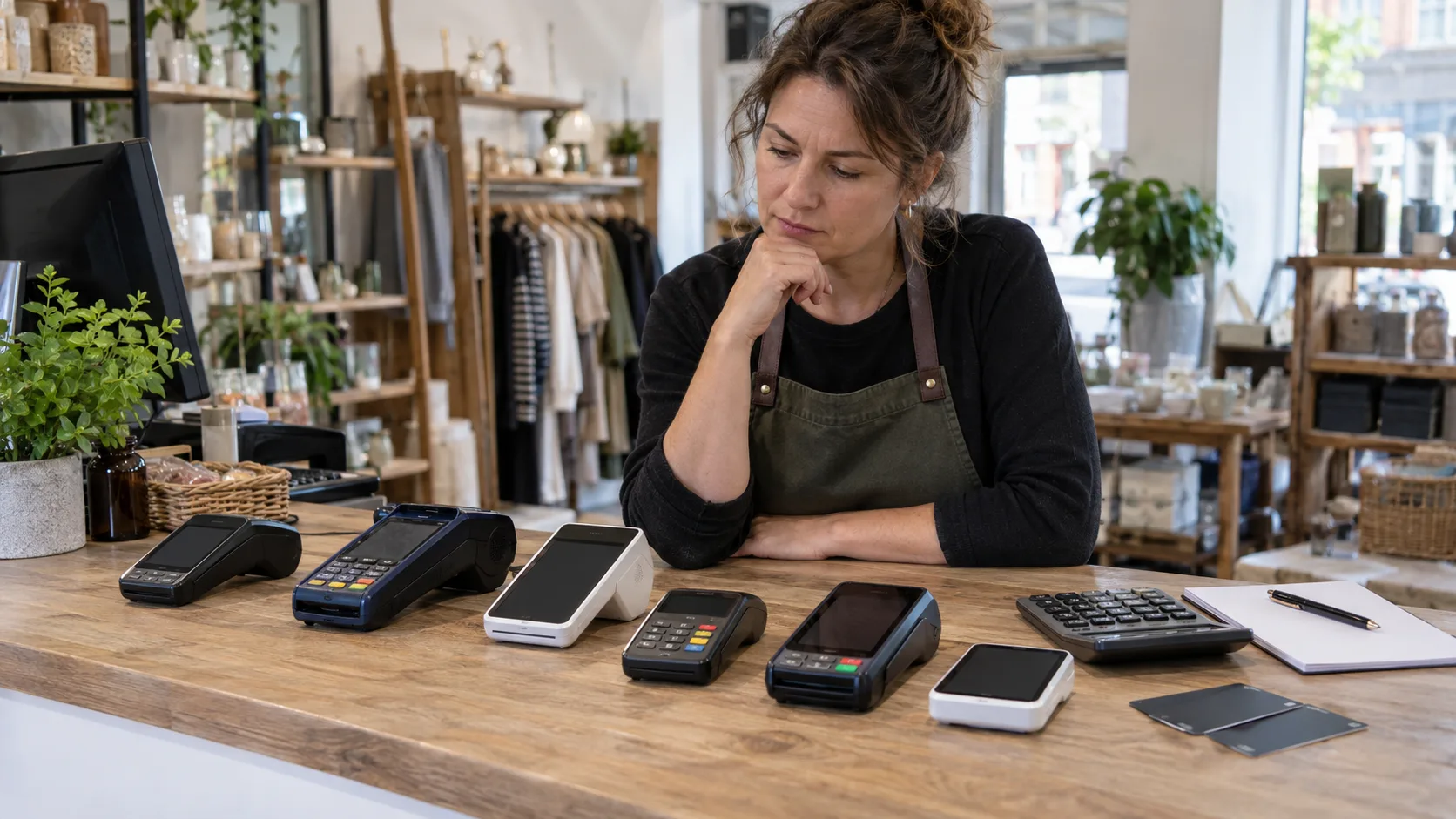
Choosing the best card reader for a small business is no longer simply about finding the lowest transaction fee.
UK businesses now need to compare hardware costs, monthly charges, contract length, payout speed, connectivity and whether the machine can operate without a smartphone.
The market has also changed considerably in 2026.
SumUp has expanded its reader range, Zettle is now branded as PayPal Point of Sale, smartphone Tap to Pay is becoming a realistic alternative to physical hardware, and providers such as Revolut, myPOS and Flatpay have created more competition around fees and settlement times.
There is no single card reader that will be cheapest for every business because transaction volume, average sale value and the cards customers use can change the total cost.
However, these are some of the strongest options for different small-business requirements in 2026:
- Best Overall: Square Reader
- Best For Low-Cost PAYG Payments: SumUp Solo Lite
- Best For PayPal Users: PayPal Reader
- Best For Competitive Domestic Card Fees: Revolut Lite Terminal
- Best Standalone Mobile Reader: myPOS Go 2
- Best For Growing Businesses: Tyl By NatWest
- Best For Personalised Support: takepayments
- Best For Higher Card Turnover: Worldpay
- Best For Simple Flat-Rate Pricing: Flatpay
- Best For Established Businesses: Barclaycard
The cheapest option on paper will not necessarily remain the cheapest once hardware, subscriptions, fixed transaction charges and international card fees are included.
Last Updated: 19.09.2026
What Should A Small Business Look For In A Card Reader?
Start with how and where customers actually pay. A market trader has very different requirements from a busy restaurant or retailer processing thousands of pounds every week.
The main factors worth comparing are:
- Transaction Fees: Check both percentage and fixed per-payment charges
- Hardware Cost: Decide whether buying outright or renting works better
- Monthly Fees: PAYG readers may suit businesses with irregular sales
- Contract Length: Check minimum terms and cancellation conditions
- Connectivity: Compare Bluetooth, Wi-Fi and built-in mobile data
- Settlement Speed: Find out when sales actually reach an account you can use
- Card Types: Commercial and international cards can cost more
- Integrations: Consider accounting, inventory and POS compatibility
- Portability: Mobile sellers may need a standalone 4G-enabled terminal
- Support: Fast technical help matters when card payments are a major source of revenue
Card Reader Costs And Fees In 2026
Card-reader pricing generally falls into two models. PAYG providers sell the hardware and charge each time a customer pays, while traditional merchant-service providers may rent the terminal and offer pricing based on turnover.
A 1.5% transaction rate does not automatically make one provider cheaper than another charging 1.7%. A provider charging a fixed amount on every transaction could become expensive for businesses taking large numbers of small payments.
Businesses should therefore compare their likely total annual payment cost, rather than choosing purely from an advertised percentage.
Best Card Readers For Small Business In The UK
1. Square Reader – Best Overall
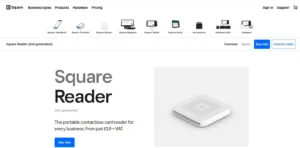
Square Reader is a strong all-round option for smaller businesses because it keeps the initial commitment low while giving access to a wider POS ecosystem.
It is particularly useful for businesses that want to start taking card payments quickly without negotiating merchant-service rates.
| Key Detail | Square Reader |
| Hardware Cost | £19 + VAT |
| In-Person Fee | 1.75% |
| Monthly Reader Fee | £0 |
| Contract | None |
| Connection | Bluetooth Through Phone Or Tablet |
What Makes It Stand Out:
- Simple Setup: Businesses can start without arranging a traditional merchant account contract
- POS Ecosystem: Works with Square’s till, invoicing, online payments and business-management tools
- Offline Capability: Supported transactions can continue during temporary connectivity problems under Square’s offline-payment conditions
- Easy To Scale: Businesses can move to more advanced Square hardware without changing payment ecosystems
The main trade-off is that the basic Reader depends on a compatible phone or tablet. It therefore works particularly well for start-ups, pop-ups, salons and independent retailers where portability matters more than having a fully standalone terminal.
2. SumUp Solo Lite – Best For Low-Cost PAYG Payments
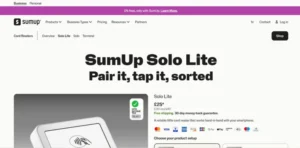
SumUp Solo Lite is aimed at businesses that want a straightforward pay-as-you-go setup without paying for features they may not need. Its low upfront hardware price makes it particularly attractive to businesses taking their first card payments.
| Key Detail | SumUp Solo Lite |
| Standard Hardware Price | £25 |
| PAYG Transaction Fee | 1.69% |
| Monthly PAYG Fee | £0 |
| Contract | None |
| Device Type | Smartphone-Connected Reader |
What Makes It Stand Out:
- Low Entry Cost: Useful for businesses unsure how much card turnover they will initially generate
- Broader Hardware Choice: Businesses can later move to SumUp Solo or Terminal if they need standalone operation
- Digital Wallet Support: Accepts common contactless wallet payments alongside physical cards
- Suitable For Irregular Sales: No fixed PAYG subscription helps seasonal and occasional sellers
Solo Lite makes most sense when keeping fixed costs low is more important than having built-in mobile connectivity. Businesses that regularly take payments away from a smartphone may find SumUp’s standalone hardware more suitable.
3. PayPal Reader – Best For PayPal Users

PayPal Reader is the current entry-level hardware within PayPal Point of Sale, the branding that has replaced Zettle. Its main advantage is not simply the reader itself but how naturally in-person payments can sit alongside an existing PayPal Business setup.
| Key Detail | PayPal Reader |
| First Reader Price | £29 Excluding VAT |
| Card Payment Fee | 1.75% |
| Monthly Reader Fee | £0 |
| Connection | Bluetooth |
| Funds | PayPal Business Account |
What Makes It Stand Out:
- Online And Offline Sales: Useful for businesses already collecting online payments through PayPal
- Recognisable Ecosystem: Staff familiar with PayPal may require less adjustment
- Flexible Hardware Path: PayPal Terminal is available for businesses wanting a standalone device
- Fast Account Access: Card sales can become available inside the PayPal environment without waiting for a conventional merchant settlement cycle
This is most compelling for businesses already using PayPal rather than companies choosing solely on transaction price. An existing PayPal workflow can make reconciliation and access to funds simpler.
4. Revolut Lite Terminal – Best For Competitive Domestic Card Fees
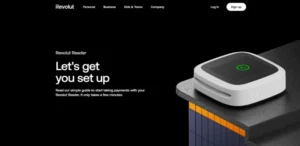
Revolut Lite Terminal is particularly interesting for businesses where a large share of customers pay using UK-issued consumer Visa or Mastercard cards.
Its headline domestic rate is lower than many flat-rate PAYG competitors, although the fixed fee and higher rates for other cards need to be considered.
| Key Detail | Revolut Lite Terminal |
| Hardware Cost | £129 + VAT |
| Domestic Consumer Cards | From 0.8% + 2p |
| Commercial/International Cards | Higher Rate Applies |
| Settlement | Within Revolut Business |
| Requirement | Revolut Business Account |
What Makes It Stand Out:
- Lower Domestic Headline Rate: Can become meaningful as eligible payment volumes increase
- Payments And Banking Together: Revenue sits within the wider Revolut Business environment
- Standalone Hardware: Removes dependence on an employee’s personal smartphone
- Useful Reporting: Payments can be viewed alongside other business-finance activity
The key consideration is card mix. A business serving mostly domestic consumers may see a very different effective rate from one serving tourists or corporate customers, so transaction data should be reviewed before choosing it purely for the advertised 0.8% rate.
5. myPOS Go 2 – Best Standalone Mobile Reader
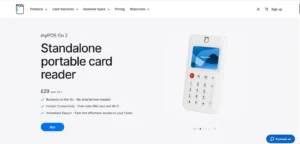
myPOS Go 2 is built around mobility. Unlike basic Bluetooth readers, it has its own connectivity, making it useful in situations where carrying both a smartphone and card reader would be inconvenient.
| Key Detail | myPOS Go 2 |
| Hardware Price | £39 + VAT |
| Transaction Fee | From 1.10% + 7p |
| Monthly PAYG Fee | £0 |
| Connectivity | Wi-Fi And Built-In Mobile Data |
| Settlement | Instant To myPOS Account |
What Makes It Stand Out:
- No Phone Needed: Staff can take the terminal directly to customers
- Built-In Mobile Connectivity: Useful where fixed broadband is unavailable
- Instant Internal Settlement: Sales become available rapidly inside the myPOS account
- Compact Format: Suitable for workers moving between locations throughout the day
The fixed 7p element makes average transaction size worth considering. A tradesperson taking £100 payments may view that very differently from a café processing large numbers of £3 or £4 sales.
6. Tyl By NatWest – Best For Growing Businesses
Tyl sits between simple PAYG readers and more traditional acquiring arrangements. Its current PAX range offers dedicated terminals with features suited to businesses that have moved beyond occasional card acceptance.
| Key Detail | Tyl PAX A50 |
| Terminal Rental | £14.99 + VAT Per Month |
| Contract | 12 Months |
| Connectivity | Wi-Fi, Mobile Data And Bluetooth |
| Smartphone Needed | No |
| Standard Settlement | Next Business Day |
What Makes It Stand Out:
- Dedicated Business Hardware: Better suited to daily, repeated use than entry-level Bluetooth readers
- Multiple Terminal Choices: Countertop and portable PAX models cover different operating environments
- Next-Day Settlement: Useful for businesses monitoring short-term working capital
- Traditional Merchant Support: Pricing can reflect the individual business rather than a universal flat rate
Tyl becomes more relevant once card payments are an established part of everyday operations. The monthly terminal cost means it may be less attractive for very occasional sellers but more practical for busy shops, cafés and hospitality venues.
7. takepayments – Best For Personalised Support
takepayments is less focused on displaying one universal price online and more focused on tailoring the package to the merchant. That makes it harder to compare immediately, but it can benefit businesses whose turnover or payment pattern could justify a negotiated rate.
| Key Detail | takepayments |
| Pricing | Quote Based |
| Terminal Types | Countertop, Portable, Mobile And Smart |
| Typical Contract | 12 Months |
| Settlement | Next Business Day Subject To Conditions |
| Best Feature | Tailored Merchant Setup |
What Makes It Stand Out:
- Individual Pricing: Transaction rates can reflect actual business circumstances
- Multiple Hardware Types: Businesses are not limited to one reader format
- Onboarding Support: Helpful for owners who prefer assistance rather than self-service setup
- Shorter Commitment Than Some Traditional Providers: Its 12-month structure may appeal to businesses cautious about longer terminal agreements
The strongest candidates are businesses with enough predictable turnover to justify requesting a quote. Very small sellers may prefer providers where hardware and processing costs can be compared instantly online.
8. Worldpay – Best For Higher-Turnover Businesses
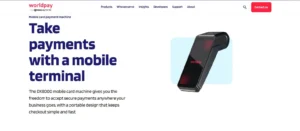
Worldpay is particularly relevant when card acceptance has become a major part of a company’s revenue. Rather than positioning itself solely as a cheap reader, it offers acquiring, physical terminals and broader payment infrastructure.
| Key Detail | Worldpay |
| Example Pricing | 1.50% Simplicity Rate For Eligible Visa/Mastercard Payments |
| Minimum Terminal Term | 18 Months |
| Hardware | Countertop And Mobile Options |
| Pricing Choice | Standard Or Tailored |
| Target User | Established Merchants |
What Makes It Stand Out:
- Negotiated Pricing Potential: Higher-volume businesses may benefit from obtaining a tailored quote
- Broader Payment Infrastructure: Useful where payments extend beyond one portable reader
- Dedicated Terminal Hardware: Designed for regular commercial use
- Established Acquiring Network: Suitable for businesses where payment reliability is operationally important
Worldpay should be judged on the complete proposal rather than a single headline percentage. Terminal rental, contract duration and the business’s actual card profile are particularly important when comparing it with PAYG alternatives.
9. Flatpay – Best For Simple Flat-Rate Pricing
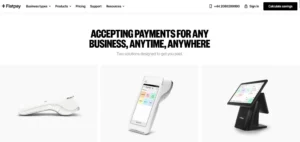
Flatpay’s attraction is simplicity. Instead of presenting a long menu of standard consumer-card percentages, it promotes a flat transaction rate for qualifying businesses combined with terminal hardware.
| Key Detail | Flatpay |
| Advertised Transaction Rate | 1.49% |
| Relevant Turnover | Below £200,000 Annual Card Turnover |
| Upfront Terminal Cost | £0 Under Standard Offer |
| Payouts | Daily |
| Higher Turnover | Custom Pricing Available |
What Makes It Stand Out:
- Predictable Pricing: Easier budgeting when common card types are charged under a simple structure
- No Large Hardware Purchase: Reduces upfront setup expense
- Daily Payouts: Helps businesses maintain regular cash movement
- Custom Path For Growth: Businesses exceeding the standard turnover band can discuss tailored rates
The headline structure is appealing, but businesses should still check the full terms attached to the provided terminal. A zero upfront cost should not automatically be treated as the same thing as owning hardware outright.
10. Barclaycard – Best For Established Businesses
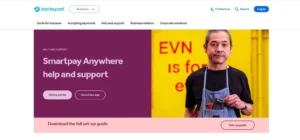
Barclaycard gives businesses a wider choice than the traditional countertop terminal many associate with bank card services. Its range includes both lightweight mobile acceptance and more advanced merchant hardware.
| Key Detail | Smartpay Anywhere |
| Hardware Cost | £29 + VAT |
| Standard Contract | None For Smartpay Anywhere |
| Smartphone Required | Yes |
| Settlement | Next Day Subject To Terms |
| Broader Terminal Range | Available |
What Makes It Stand Out:
- Different Hardware Levels: Businesses can choose simple mobile acceptance or more capable terminals
- Established Payment Provider: Useful for owners who favour a traditional acquiring relationship
- Turnover-Based Pricing Options: Larger merchants can seek pricing aligned to their sales profile
- Room To Expand: More advanced Barclaycard payment products are available if requirements grow
Smartpay Anywhere may work for smaller merchants wanting lighter hardware, while Barclaycard’s wider range is more relevant for established businesses that need dedicated terminals and individually structured merchant services.
Best Card Readers Compared
| Provider | Hardware Or Rental Cost | Standard In-Person Pricing | Monthly Cost | Contract | Settlement | Phone Required? | Best For |
| Square Reader | £19 + VAT | 1.75% | £0 Basic Reader Fee | None | Next Day Standard | Yes | Overall Flexibility |
| SumUp Solo Lite | £25 Standard | 1.69% PAYG | £0 PAYG | None | Depends On Account | Yes | Low-Cost PAYG |
| PayPal Reader | £29 First Reader | 1.75% | £0 | None | Fast To PayPal Balance | Yes | PayPal Users |
| Revolut Lite Terminal | £129 + VAT | From 0.8% + 2p | Business Plan Applies | None For Hardware | Within 24 Hours | No | Domestic Consumer Cards |
| myPOS Go 2 | £39 + VAT | From 1.10% + 7p | £0 PAYG | PAYG | Instant To myPOS | No | Mobile Businesses |
| Tyl PAX A50 | £14.99 + VAT/Month | Quote Based | Rental Applies | 12 Months | Next Business Day | No | Growing SMEs |
| takepayments | Quote Based | Quote Based | Quote Based | 12 Months | Next Business Day* | No | Personal Support |
| Worldpay | Rental/Quote Based | 1.50% Simplicity Option | Plan Dependent | 18 Months | Next Business Day | No | Higher Turnover |
| Flatpay | £0 Upfront Terminal Cost* | 1.49% Under £200k Turnover | No Subscription On Terminal Plan | Check Terms | Daily | No | Flat Pricing |
| Barclaycard Smartpay Anywhere | £29 + VAT | Tailored | £0 Standard Monthly Reader Fee | None | Next Day | Yes | Established Businesses |
*Eligibility, payment terms and provider conditions apply. Pricing can change, so businesses should confirm current quotes before signing an agreement.
How Much Does A Card Reader Really Cost?
The hardware price is only one part of the total expense. A cheap reader can become expensive if its transaction rate does not suit the number and value of payments being processed.
| Cost | Typical Structure | Why It Matters |
| Reader Or Terminal | One-Off Purchase Or Monthly Rental | Buying outright can suit smaller businesses while rental may include support and replacement services |
| Transaction Fee | Percentage Of Every Sale | Becomes increasingly important as card turnover rises |
| Fixed Transaction Fee | Pence Added To Each Payment | Can have a large impact on businesses taking many small transactions |
| Monthly Subscription | £0 PAYG Or Paid Plan | Paid plans may reduce transaction rates |
| Contract Cost | None To 18 Months Or More | Longer contracts reduce flexibility |
| Commercial Card Fee | Often Higher Than Consumer Cards | Important for B2B businesses |
| International Card Fee | May Be Higher | Relevant in tourism and international retail |
| Chargeback Fee | Provider Dependent | Disputed transactions can create additional costs |
| Settlement Fee | Usually Included, But Faster Options May Cost More | Check whether money reaches a bank account or provider wallet |
| PCI And Compliance Costs | Provider Dependent | Traditional merchant accounts may have additional compliance charges |
Businesses processing £1,000 per month may care more about avoiding subscriptions and expensive hardware. At £5,000 or £10,000 per month, even a small reduction in the transaction rate can become increasingly significant.
What Card Reader Fees Should You Compare?
The headline transaction percentage is only the starting point.
A provider advertising 0.8% may also apply a fixed fee to every transaction, while a provider charging 1.49% may include a wider range of cards within that headline rate.
Before choosing, check:
- Domestic Consumer Card Rates
- Commercial Card Rates
- International Card Rates
- American Express Charges
- Refund Charges
- Chargeback Fees
- Terminal Rental
- PCI Fees
- Early Cancellation Charges
- Premium Settlement Fees
Estimate these against your normal transaction size rather than relying on the lowest advertised percentage.
Do You Need A Physical Card Reader Or Can You Use Tap To Pay?
Not every business needs dedicated card-reader hardware in 2026.
Tap to Pay allows compatible smartphones to accept contactless cards and digital wallets directly. Providers including Square, SumUp, PayPal, Revolut and Tyl have moved into phone-based acceptance.
It can work particularly well for occasional sellers, tradespeople and businesses testing card payments for the first time.
A dedicated terminal remains more practical when staff need to share equipment, customers frequently use chip and PIN, battery life matters or the business wants an integrated printer, product catalogue or checkout system.
Does A Card Reader Need Wi-Fi Or A Mobile Phone?
It depends on the device.
Simple readers such as Square Reader, SumUp Solo Lite and PayPal Reader rely on another compatible device. They can therefore be inexpensive and compact but add dependence on a phone or tablet.
Standalone options such as myPOS Go 2, Tyl PAX A50, SumUp Solo and several traditional card terminals include Wi-Fi or mobile connectivity.
Businesses operating outdoors, at festivals or at customer premises should prioritise built-in mobile data rather than assuming reliable Wi-Fi will always be available.
How Quickly Do Card Reader Payments Reach Your Account?
Settlement descriptions can be misleading unless businesses check where the money actually goes.
Some services send funds directly to an external business bank account. Others make sales available quickly inside their own business account or payment wallet before the money is transferred elsewhere.
A business that depends heavily on daily cash flow should compare:
- Settlement Time
- Weekend Settlement
- Bank Holiday Processing
- Destination Account
- Instant Transfer Charges
- Daily Cut-Off Times
For high-volume businesses, these details can matter almost as much as transaction fees.
Which Card Reader Is Best For Different Types Of Small Business?
| Business Type | Features To Prioritise |
| Start-Ups | Low Hardware Cost And No Contract |
| Market Traders | Mobile Data And Long Battery Life |
| Tradespeople | Standalone Portable Reader |
| Cafés | Fast Payments And Tipping |
| Restaurants | Portable Terminals And POS Integration |
| Retail Shops | Inventory And Checkout Integration |
| Salons | Portable Payments And Booking Integration |
| High-Turnover SMEs | Negotiated Transaction Rates |
| Seasonal Businesses | PAYG And No Monthly Commitment |
| Online And Physical Sellers | Omnichannel Payment Tools |
Should You Choose A Card Reader With No Contract?
A no-contract reader gives a small business more flexibility. It can be particularly useful for start-ups, seasonal sellers or businesses that do not know how much card turnover they will generate.
Contracts can still make financial sense when they provide lower negotiated rates, specialist hardware or stronger support.
Before signing one, check the minimum term, terminal rental, cancellation charge, notice period and what happens when the initial contract expires.
How To Choose The Best Card Reader For Your Small Business?
Work from your own sales pattern rather than choosing whichever terminal has the lowest advertised fee.
- Estimate Monthly Card Turnover: Use realistic rather than optimistic sales figures
- Calculate Average Transaction Value: Fixed fees affect low-value sales more heavily
- Check Customer Card Types: International and commercial cards can change costs
- Choose The Right Connectivity: Consider where payments will actually take place
- Compare Settlement: Faster access to cash can improve working capital
- Review Integrations: POS and accounting connections can save administration time
- Check Contract Terms: Read cancellation and renewal conditions carefully
- Calculate The Full Annual Cost: Include hardware, subscriptions and payment fees
How We Compared The Best Card Readers For 2026
The card readers in this comparison were assessed using factors that directly affect small UK businesses:
- Hardware Cost
- Transaction Pricing
- Monthly Fees
- Contract Length
- Settlement Speed
- Connectivity
- Portability
- Standalone Operation
- POS Features
- Suitability For Different Business Sizes
Pricing changes regularly and promotional hardware offers may be temporary, so businesses should obtain a current quote before committing.
FAQs
What Is The Cheapest Card Reader For A Small Business?
The cheapest option depends on hardware costs, monthly turnover and transaction size. Low-cost PAYG readers such as Square Reader and SumUp Solo Lite can suit new businesses, while lower transaction rates may matter more as turnover increases.
Can I Get A Card Reader With No Monthly Fee?
Yes. Square, SumUp, PayPal and myPOS are among the providers offering options without a standard fixed monthly card-reader subscription under certain PAYG arrangements.
Can I Take Card Payments Without A Card Machine?
Yes. Tap to Pay technology can turn compatible smartphones into contactless payment devices. It can remove the need to buy separate hardware for businesses mainly accepting contactless transactions.
Do I Need A Business Bank Account For A Card Reader?
Requirements differ by provider. Some payment services settle directly to a linked bank account, while providers such as PayPal, Revolut, SumUp and myPOS can also operate within their own payment or business-account ecosystems.
Which Card Reader Pays Out The Fastest?
Several providers now advertise next-day or faster access to funds. However, businesses should check whether “instant” settlement means funds reach their normal bank account or initially arrive in an account operated by the payment provider.
Can A Card Reader Work Without Wi-Fi?
Yes. Readers with built-in mobile connectivity can process payments without Wi-Fi where mobile coverage is available. Examples include myPOS Go 2 and several standalone SumUp, Tyl, Worldpay and takepayments terminals.
Are Card Reader Fees Tax Deductible In The UK?
Business financial charges can generally qualify as allowable business expenses when they relate to running the business.
GOV.UK specifically lists bank, overdraft and credit-card charges among allowable financial costs for eligible self-employed businesses.
The correct treatment depends on the business structure and accounting method, so records should be retained and uncertain cases checked with an accountant or HMRC.

Startup mentor & Blogger | Sharing leadership tips for UK business owners
Related Articles in Startup
View All →
Meet the Startup Turning Screen Time Into a New Way to Make Money
Britain does not exactly have a shortage of side hustles. You can deliver takeaways, sell clothes online, start freelancing, walk dogs, tutor in the evenings or attempt to…

8 Best Coworking Spaces for Bootstrapped London Startups to Launch and Scale in 2026
Bootstrapped founders don’t have the luxury of a fitted-out HQ from day one. What you need is a London coworking space that flexes with you: a hot desk…