
How to Become a Childminder in the UK? | Step-by-Step Guide


UK Startup Blog Archive
Table of Contents
Last updated: July 2026
To become a childminder in England, you usually need to register with Ofsted or a registered childminder agency if you are paid to look after children under 8 for more than 2 hours a day. You will normally need suitable childcare training, paediatric first aid training, safeguarding knowledge, DBS checks, references, a health declaration, safe premises, policies, insurance, and business records.
For Wales, Scotland, and Northern Ireland, you should check the relevant regulator before applying because the registration process is different outside England.
What Is a Childminder?
A childminder is someone who provides paid childcare, usually in their own home or another approved home-based setting. Childminders often care for small groups of children, which can make the environment more personal and flexible than larger nursery settings.
A childminder may provide:
- care for babies and toddlers
- early years learning and development support
- school drop-off and collection
- after-school care
- holiday care
- meals, play, rest, and routine support
- communication with parents about the child’s day
Childminding is not only about supervising children. Registered childminders must understand safeguarding, child development, health and safety, behaviour support, record keeping, and how to work professionally with families.
Is Ofsted Registration for the Whole UK?
No. This is an important point.
Ofsted regulates childminders in England. If you are becoming a childminder in Scotland, Wales, or Northern Ireland, you will need to follow the rules of the relevant regulator or local early years team.
| UK Nation | Main Registration Body |
| England | Ofsted or a registered childminder agency |
| Wales | Care Inspectorate Wales |
| Scotland | Scottish Care Inspectorate |
| Northern Ireland | Local Health and Social Care Trust or local early years team |
This matters because a guide that only explains Ofsted is not fully accurate for the whole UK. If the title says “UK”, the content should clearly explain these differences so readers do not apply through the wrong route.
Who Needs to Register as a Childminder in England?
In England, you may need to register if you are paid to look after children under 8 for more than 2 hours a day. You can check the official GOV.UK guidance on how to register as a childminder in England before you apply.
Registration may apply if:
- you are paid to look after children
- the children are under 8
- you care for them for more than 2 hours a day
- the care takes place in your home, someone else’s home, or approved childminding premises
Payment can include money or payment in kind. If you are not sure whether you need to register, check the official guidance before offering childcare.
You may not need to register in some situations, such as certain babysitting, tutoring, nannying, or family and friend arrangements. However, exemptions can be specific, so it is safer to check the official rules before assuming you are exempt.
Do You Need Qualifications to Become a Childminder?
You do not always need a formal Level 2 or Level 3 childcare qualification to become a childminder in England. This is one of the most common misunderstandings.
However, you do need to complete the registration process and show that you can meet the required childcare, safeguarding, welfare, and safety standards. You will usually need training that helps you understand how to care for children safely and how to meet the Early Years Foundation Stage framework if you care for early years children in England.
A Level 2 or Level 3 childcare qualification can still be helpful. It may improve your confidence, knowledge, and credibility with parents, especially if you are new to childcare. But it should not be presented as a universal legal requirement for every childminder application in England.
What Training Does a Childminder Need?
The training you need depends on the age of the children you plan to care for and the register you join.
In England, childminders commonly need:
- a childminding or home-based childcare course
- paediatric first aid training
- safeguarding or child protection training
- knowledge of the Early Years Foundation Stage if caring for young children
- food hygiene knowledge if preparing food
- health and safety awareness
- understanding of record keeping and policies
Paediatric first aid is especially important. Childminders and any assistant who may be left in sole charge of children should hold a current paediatric first aid certificate. This training must be kept up to date.
Which Register Should You Join?
In England, the correct register depends on the age of the children you plan to care for.
If you care for children from birth to the 31 August after their fifth birthday, you usually need the Early Years Register. If you care for children from 1 September after their fifth birthday up to their eighth birthday, you usually need the compulsory part of the Childcare Register.
Some childminders join both registers because they care for both early years children and school-age children. If you plan to care mainly for older children, check the official compulsory Childcare Register requirements before applying.
Ofsted or Childminder Agency: Which Route Should You Choose?
In England, childminders can usually choose between registering directly with Ofsted or registering with a childminder agency.
| Option | What It Means | Things to Consider |
| Ofsted registration | You apply directly to Ofsted and manage your own business support, records, training, and compliance. | More independence, but you manage more yourself. |
| Childminder agency registration | You register with an agency that may provide support, training, business guidance, and help finding parents. | More support may be available, but agencies usually charge fees. |
There is no single best option for everyone. A confident applicant with childcare experience may prefer direct Ofsted registration. Someone who wants more support with policies, setup, and business processes may prefer a childminder agency.
Step-by-Step Guide to Becoming a Childminder in England
Step 1: Decide What Type of Childcare You Will Provide

Before applying, decide whether you will work from your own home, another home, or a non-domestic setting. You should also decide the age range you want to care for.
Ask yourself:
- Will I care for babies, toddlers, preschool children, or school-age children?
- Will I offer full-day care, after-school care, or holiday care?
- Will I work alone or with an assistant?
- Will I use my home, another home, or another approved setting?
- Will I register with Ofsted or a childminder agency?
This decision affects the register you need to join and the requirements you must meet.
Step 2: Complete Suitable Childminder Training
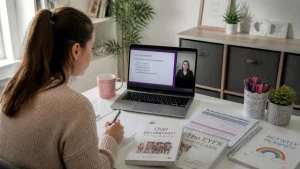
You will need to understand how to provide safe, high-quality care. If you plan to care for early years children, your training should help you understand the Early Years Foundation Stage.
Training should cover areas such as:
- child development
- play and learning
- safeguarding
- health and safety
- behaviour support
- working with parents
- inclusion and special educational needs
- policies and record keeping
This training is important not only for registration, but also for confidence. Parents want to know that their childminder understands children’s needs, routines, safety, and emotional wellbeing.
Step 3: Complete Paediatric First Aid Training

Paediatric first aid is a key requirement for childminders caring for young children. The training should be suitable for the age group you will look after.
This helps you respond to emergencies such as:
- choking
- allergic reactions
- falls
- burns
- breathing difficulties
- seizures
- injuries during play
You should renew first aid training before it expires and keep evidence of your certificate.
Step 4: Complete Safeguarding Training

Safeguarding is one of the most important responsibilities of a childminder. You must understand how to recognise signs that a child may be at risk and what action to take.
Safeguarding training should help you understand:
- signs of abuse or neglect
- how to report concerns
- local safeguarding procedures
- online safety
- safer recruitment if using assistants
- whistleblowing
- keeping children safe in the setting
You should also have clear safeguarding policies and be able to explain them to parents, carers, inspectors, or your childminder agency.
Step 5: Apply for DBS Checks

In England, an enhanced DBS check with barred lists is normally required for the applicant. Other people aged 16 or over who live or work at the home where childcare takes place may also need checks.
This may include:
- partners
- adult children
- assistants
- regular workers in the home
- other adults living at the premises
These checks are part of the suitability process and help protect children from unsuitable adults having unsupervised access.
Step 6: Complete a Health Declaration

You will usually need to complete a health declaration as part of the application. This helps Ofsted or the relevant agency assess whether you are physically and mentally able to provide childcare safely.
A health declaration does not automatically prevent someone from becoming a childminder. The aim is to understand whether any health condition could affect childcare responsibilities and whether suitable arrangements are needed.
Step 7: Gather References
Ofsted or your childminder agency may ask for references. These help assess your suitability to work with children.
A strong reference may come from:
- a previous childcare employer
- a school, nursery, or family support setting
- a professional contact
- a person who can comment on your reliability, character, and suitability
Make sure your referees know they may be contacted.
Step 8: Prepare Your Home or Setting

Your home or setting must be safe and suitable for children. This does not mean it needs to look like a nursery, but it should be clean, safe, organised, and appropriate for the ages of children you care for.
You should consider:
- secure doors and gates
- safe storage of medicines and cleaning products
- safe sleep arrangements
- fire safety
- hygiene
- outdoor play safety
- suitable toilets and handwashing
- safe food preparation
- age-appropriate toys and resources
- risk assessments for outings
If you have a garden, it should also be risk assessed. If you do not have a garden, you should plan how children will access outdoor activity safely.
Step 9: Create Your Childminding Policies and Procedures

Policies help show how you will keep children safe and manage your setting professionally.
Useful policies may include:
- safeguarding policy
- behaviour policy
- complaints policy
- health and safety policy
- medication policy
- accident and incident policy
- emergency evacuation procedure
- sickness policy
- food and allergy policy
- privacy and data protection policy
- fees and payment policy
Your policies should be practical and easy to explain. Do not simply download templates and leave them unchanged. Adapt them to your home, routine, children’s ages, and local safeguarding arrangements.
Step 10: Submit Your Registration Application
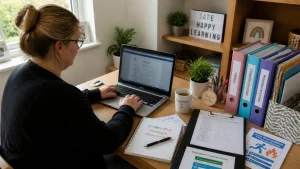
Once you have the correct documents and training, you can submit your application to Ofsted or contact a childminder agency.
For Ofsted registration, you should prepare:
- DBS details
- first aid certificate
- health declaration
- references
- address history
- details of the childcare setting
- information about adults living or working at the premises
- relevant training evidence
- registration fee
Ofsted may reject or delay applications if key documents are missing. It is better to prepare everything carefully before applying.
Step 11: Prepare for the Registration Visit

If you apply to join the Early Years Register, there may be a registration visit. This is where your suitability, understanding, environment, and readiness are checked.
You may be asked about:
- safeguarding
- behaviour management
- child development
- risk assessment
- first aid
- routines
- How you will support learning
- How you will work with parents
- How you will keep records
- What would you do in an emergency
This is not just about your home. It is also about whether you understand your responsibilities.
Step 12: Set Up Your Childminding Business

Once registered, you are usually self-employed. This means you need to manage your business properly.
You may need to:
- register with HMRC
- keep income and expense records
- understand self-assessment
- arrange public liability insurance
- check home and car insurance
- register with the Information Commissioner’s Office if required
- create contracts for parents
- set your fees and payment terms
- plan your working hours
- market your childminding service locally
If this is your first self-employed venture, our guide on how to start a business in the UK can help you think through business structure, records, insurance, finances, and early planning.
Childminding is both childcare and business ownership. You are responsible for care quality, safety, finances, parent communication, and legal compliance.
How Much Does It Cost to Become a Childminder?
Costs can vary depending on training provider, registration route, insurance, equipment, home setup, and whether you register through Ofsted or a childminder agency.
Common costs may include:
| Cost Area | What It Covers |
| Registration fee | Ofsted or childminder agency application and annual fees |
| DBS checks | Suitability checks for you and relevant adults |
| Paediatric first aid | Required first aid training |
| Safeguarding training | Child protection training |
| Insurance | Public liability and possible home/car policy updates |
| ICO registration | If you process children’s personal data in a way that requires registration |
| Equipment | Toys, safety equipment, sleeping resources, books, high chairs, storage |
| Business setup | Contracts, policies, accounting support, marketing, website, or local directory listings |
Do not rely on old cost figures from outdated blogs. Fees can change, so check official sources before applying.
When setting your childminding fees, compare your local childcare market, your experience, your operating costs, and your working hours. Our guide on how to work out your hourly rate can help you estimate whether your pricing is realistic once unpaid admin time, training, tax, insurance, and expenses are considered.
Childminding is different from casual babysitting, but babysitting rates can still give useful context when researching local childcare prices. You can also read our guide on how much to charge for babysitting to compare informal childcare rates with a registered childminding service.
How Many Children Can a Childminder Look After?
In England, childminders must follow ratio rules. The general rule is that a childminder may care for a maximum of six children under the age of eight at any one time. This includes the childminder’s own children and other children they are responsible for.
Within this number, there are further limits for younger children. Usually, no more than three may be young children, and normally only one should be under the age of one.
There may be limited exceptions, such as caring for siblings, but the childminder must still be able to show that children’s safety, welfare, and quality of care are not affected.
Tax, Records and HMRC Responsibilities
Most childminders are self-employed. This means you need to understand tax, business records, allowable expenses, and Self Assessment.
Once your childminding business is running, check HMRC’s guidance on claiming expenses and keeping records as a childminder. This guidance explains how childminders should keep records and claim tax relief for relevant business expenses.
You should keep clear records of:
- parent payments
- childcare fees
- food costs
- toys and learning resources
- cleaning supplies
- insurance
- training
- mileage or travel where relevant
- household costs used for childminding
- equipment and furniture used for childcare
Good records make tax returns easier and help you understand whether your childminding business is profitable.
Insurance and Data Protection Duties
Childminders should have suitable insurance before caring for children. Public liability insurance is especially important because it can protect you if a child is injured or property is damaged in connection with your childcare business.
You should also check:
- home insurance
- car insurance if using your vehicle for childminding
- business use permissions
- landlord or mortgage conditions if working from home
If you store parent contact details, child records, photographs, observations, development notes, invoices, or digital documents, check whether you need to pay a data protection fee to the ICO. Childminders handle sensitive personal information, so privacy and record security should be treated seriously.
Real-Life Example: Becoming a Childminder After Working in a Nursery
Imagine Sarah has worked part-time in a nursery and wants to start childminding from her home in England. She enjoys early years care but wants more flexibility around her own family.
Sarah first checks whether she needs to register. Because she plans to look after children under 5, in her own home, for more than 2 hours a day, and will be paid, she needs to register.
She completes a home-based childcare course, updates her paediatric first aid training, completes safeguarding training, applies for DBS checks, prepares her home, writes policies, and gathers references. She then applies to Ofsted and prepares for the registration visit.
After registration, she sets up contracts, registers for tax, arranges insurance, and starts advertising through local parent groups and childcare directories. By taking the process step by step, she reduces mistakes and builds trust with parents from the beginning.
Confirmed Facts About Becoming a Childminder
The confirmed facts are:
- Ofsted registration applies to England, not the whole UK.
- England allows childminders to register with Ofsted or a childminder agency.
- Registration may be required if you are paid to care for children under 8 for more than 2 hours a day.
- Early years childminders must understand and follow the relevant Early Years Foundation Stage requirements.
- DBS checks, health declarations, references, first aid, safeguarding, and suitability checks are key parts of the process.
- Childminders must provide safe premises and appropriate care.
- Registered childminders have ongoing legal, safeguarding, welfare, record-keeping, and business responsibilities.
Proposed or Discussed Changes to Watch
Childcare rules can change. Over recent years, the government and Ofsted have discussed and introduced changes around childminder flexibility, safeguarding requirements, registration routes, and early years frameworks.
Before applying, check the current official guidance for:
- registration route
- fees
- ratios
- working with assistants
- working from non-domestic premises
- safeguarding requirements
- EYFS updates
- childminder agency rules
Do not rely only on older blog posts or social media advice.
Misinformation to Avoid
There are several common misunderstandings about becoming a childminder.
- “Ofsted covers all UK childminders.”: This is false. Ofsted regulates childminders in England. Wales, Scotland, and Northern Ireland have separate systems.
- “You must always have a Level 3 childcare qualification.” : This is misleading for England. A Level 3 qualification may be useful, but it is not always a universal requirement to apply as a childminder.
- “You can start childminding while waiting for registration.”: This can be risky. If registration is required, you should not provide paid childcare in a way that needs registration until approval is granted.
- “A childminder is the same as a nanny.”: This is not correct. A nanny usually works in the child’s home. A childminder usually cares for children in the childminder’s own home or approved childminding premises.
- “Policies are just paperwork.”: This is wrong. Policies show how you keep children safe, communicate with parents, manage risks, and follow legal duties.
What Should You Do Before Applying?
Before applying, make a checklist.
You should:
- Check the regulator for your UK nation
- Confirm whether your childcare needs registration
- decide whether to register with Ofsted or an agency if you are in England
- complete suitable training
- Arrange paediatric first aid
- complete safeguarding training
- Prepare DBS checks
- Review your home safety
- prepare policies
- estimate startup costs
- check tax, insurance, and data protection duties
- Speak to your local authority early years team if unsure
Taking time to prepare can reduce delays and help you feel more confident during the application process.
Key Takeaways
Becoming a childminder can be a flexible and rewarding childcare career, but it involves serious responsibilities. You must understand the rules for your UK nation, complete the correct registration route, prepare your home or setting, and show that you can keep children safe and supported.
For England, most applicants will register with Ofsted or a childminder agency. You do not always need a formal Level 2 or Level 3 qualification, but you do need suitable training, paediatric first aid, safeguarding knowledge, DBS checks, references, a health declaration, and safe childcare arrangements.
The safest approach is to check official guidance before applying and keep your knowledge updated after registration.
Conclusion
Learning how to become a childminder is about more than completing a form. It is about preparing to provide safe, reliable, and nurturing care for children while running a responsible childcare business.
If you are based in England, start by checking whether you need to register with Ofsted or a childminder agency. If you are in Wales, Scotland, or Northern Ireland, check the relevant regulator before taking the next step.
With the right training, preparation, policies, and professional approach, childminding can become a meaningful career that supports children, families, and your own working life.
FAQs
Can I become a childminder with no childcare experience?
Yes, in England you do not always need previous childcare experience to apply. However, you must complete the required registration process and show that you understand safeguarding, child development, first aid, safety, and the responsibilities of caring for children.
Do I need a Level 3 qualification to become a childminder?
Not always. A Level 3 childcare qualification can be helpful, but it is not always a universal legal requirement for becoming a childminder in England. You should complete suitable childminder training and check the current official requirements before applying.
How long does Ofsted childminder registration take?
Ofsted guidance says childminder applications can usually take up to 12 weeks once the application has been accepted. It may take longer if documents are missing, checks are delayed, or further information is needed.
Can I childmind before my registration is approved?
If the childcare you plan to provide legally requires registration, you should wait until your registration is approved before starting paid childminding. Providing childcare without required registration can lead to enforcement action.
Is a childminder the same as a babysitter?
No. A babysitter usually provides occasional care, often in the child’s home or during limited hours. A childminder usually provides regular paid childcare in the childminder’s own home or another approved setting and may need registration.
Do childminders need insurance?
Yes, childminders should have suitable insurance, including public liability insurance. You should also check whether your home and car insurance policies cover childminding-related activities.
Do childminders need to register with HMRC?
Most childminders are self-employed, so they usually need to register with HMRC, keep business records, report income, and pay tax where due. It is sensible to keep clear records from the start.
Do childminders need to pay a data protection fee?
Some childminders may need to register with the Information Commissioner’s Office if they process children’s personal information digitally, such as photos, learning records, development updates, or parent contact details. You should check the ICO guidance for your situation.
Can I become a childminder in a rented home?
Possibly, but you should check your tenancy agreement and get permission from your landlord if needed. You must also make sure the property is safe and suitable for childcare.
Can a childminder work with an assistant?
Yes, childminders can work with assistants, but suitability checks, supervision, ratios, parental permissions, and registration requirements must be followed. The registered childminder remains responsible for the children’s welfare and safety.
Sources
- GOV.UK – Become a childminder or nanny in England
- GOV.UK – Register as a childminder in England
- GOV.UK – Childminders on the compulsory Childcare Register
- GOV.UK – Early Years Foundation Stage framework
- GOV.UK – Childminder registration fees
- HMRC – Claiming expenses and keeping records if you’re a childminder
- ICO – Data protection fee guidance
- Care Inspectorate Wales
- Scottish Care Inspectorate
- nidirect – Childminders in Northern Ireland

Expert Blogger | Strategic thinker anticipating future directions for UK business
Related Articles in Business
View All →
Is Raising Cane’s Opening in the UK? | London Locations Revealed
Yes, Raising Cane’s is officially coming to the UK. The American chicken restaurant brand plans to open its first UK restaurant at 22 Coventry Street in London’s West…

Best Parking App UK: 10 Startup-Led Parking Apps Compared for 2026
For most drivers, JustPark is the best parking app UK users can consider in 2026 because it combines parking search, advance booking and app-based payments in one platform.…

Cardzone UK Store Closures: Full List and Latest 2026 Update
Cardzone UK store closures are continuing in 2026, with several branches already gone from high streets and further shops now preparing to shut. The latest confirmed closures include…