


If you are running a UK limited company, understanding how to pay corporation tax is essential to staying compliant with HMRC rules in 2026.
In most cases, you must pay your Corporation Tax 9 months and 1 day after the end of your accounting period, using your 17 character payment reference so HMRC can match the payment to your company’s records.
Payments are usually made electronically through your HMRC business tax account, online banking, Direct Debit, or approved bank transfer methods.
Failing to meet deadlines may result in interest charges or penalties, even if your tax return is submitted on time. That is why knowing the process early helps you avoid costly mistakes.
Key points you should know:
- Corporation Tax must usually be paid before filing your CT600 return
- The standard payment deadline is 9 months and 1 day after the accounting period
- HMRC recommends electronic payments through online banking or your tax account
- Every payment requires a unique 17 character reference number
- Large companies may need to pay quarterly instalments instead of one payment
Understanding these rules ensures your business pays the correct tax at the right time.
What Is Corporation Tax And Who Needs To Pay It In The UK?
Corporation Tax is a tax that UK limited companies must pay on their taxable profits. These profits include money earned from trading, investments, or selling company assets after allowable business expenses have been deducted.
If your company is registered with Companies House and operating in the UK, you are generally required to register with HMRC for Corporation Tax and pay it annually.
Corporation Tax applies to various organisations, not only standard limited companies. Foreign companies that operate through a UK branch or generate profits in the UK may also be required to pay it.
In the UK, Corporation Tax rates depend on your company’s profit levels. Smaller businesses typically benefit from a lower rate, while larger businesses pay the main rate.
| Company Profit Level | Corporation Tax Rate | Explanation |
| Up to £50,000 | 19 percent | Small profits rate for smaller companies |
| £50,000 to £250,000 | Marginal relief applies | Reduced tax relief depending on profit level |
| Above £250,000 | 25 percent | Main Corporation Tax rate |
Your company must also file a Company Tax Return known as CT600 to declare profits and calculate the tax due. Importantly, the payment deadline usually arrives before the filing deadline, which means you often pay the tax first and submit the return later.
Many new business owners assume they only deal with tax when filing accounts, but Corporation Tax works differently,” says Sarah Bennett, a UK chartered accountant who advises start ups. “You normally pay the tax months before submitting the CT600, so planning cash flow early is extremely important.
Understanding the basics of Corporation Tax helps you manage financial obligations and prevents unexpected penalties.
When Do You Need To Pay Corporation Tax In 2026?
Knowing the payment deadline is the first step in learning how to pay corporation tax correctly. For most UK companies, the rule is straightforward. Your Corporation Tax must reach HMRC 9 months and 1 day after the end of your accounting period.
The accounting period is usually your company’s financial year. For example, if your company’s financial year ends on 31 March 2026, the Corporation Tax payment deadline would normally be 1 January 2027.
Although the payment deadline comes first, your Company Tax Return CT600 can be submitted later. HMRC allows up to 12 months after the accounting period ends to file the return.
Important points to remember:
- Corporation Tax is normally paid before filing the CT600
- The deadline is 9 months and 1 day after your accounting period ends
- The CT600 tax return deadline is 12 months after the accounting period
- New companies may have two accounting periods in their first year
- Large companies may need to pay tax earlier through instalments
If the payment deadline falls on a weekend or bank holiday, HMRC expects the payment to arrive on the last working day before the deadline.
Setting reminders for your accounting period end date is one of the simplest habits that prevents tax stress,” explains Martin Lewis, a small business mentor who works with early stage founders. “If you know when the period ends, calculating the nine month deadline becomes much easier.
Planning ahead ensures that your payment reaches HMRC on time and avoids unnecessary interest charges.
What Information Do You Need Before Paying Corporation Tax?
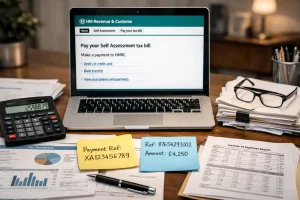
Before you make a payment to HMRC, you must gather a few important details to ensure the payment is processed correctly. Missing or incorrect information can delay the payment or cause it to be applied to the wrong accounting period.
The most important detail is the 17-character Corporation Tax payment reference. This unique reference ensures that HMRC allocates your payment to the correct accounting period for your company.
You can usually find this reference in several places provided by HMRC:
- Your notice to deliver a Company Tax Return
- Reminder letters from HMRC
- Your HMRC business tax account
- The Corporation Tax statement inside your online account
This payment reference changes with each accounting period. Using the wrong reference can cause delays because HMRC may apply the payment to a different year.
Other information you should prepare before paying includes:
- Your company’s Unique Taxpayer Reference UTR
- The exact Corporation Tax amount due
- The accounting period you are paying for
- Your HMRC business tax account login details
- Access to your online or business banking system
It is also important to confirm the payment method you intend to use because processing times vary between bank transfers, Direct Debit, and card payments.
We often tell clients to double check the reference number before confirming payment,” says Daniel Carter, a UK tax advisor who supports growing companies. “One small mistake in the reference field can delay HMRC processing and cause unnecessary confusion later.
Taking a few minutes to confirm these details helps ensure your payment reaches the correct HMRC account without issues.
How To Pay Corporation Tax Online Through Your HMRC Account?
The easiest and most recommended way to pay Corporation Tax is through your HMRC online business tax account. This digital system allows you to manage your tax obligations, view statements, and make secure payments directly from your company’s bank account.
When you sign in to your HMRC account, you can choose the option to pay Corporation Tax and connect the payment to your bank. This method is secure and usually processes quickly.
The typical steps involved include:
- Sign in to your HMRC business tax account
- Select the option to pay Corporation Tax
- Choose the pay by bank account option
- Enter the 17-character payment reference
- Approve the payment through your online or mobile banking
After approving the transaction, the payment is normally processed immediately or within a short period, depending on your bank.
Many companies prefer this method because it allows you to track payments directly through the HMRC portal. You can also confirm whether HMRC has received the payment within your online account.
Benefits of paying through your HMRC account include:
- Secure payment approval through your bank
- Faster processing times
- Easy access to your Corporation Tax statement
- Reduced risk of entering incorrect bank details
This method is particularly helpful for small business owners who manage their finances independently.
What Are The Main Payment Methods For Corporation Tax In The UK?
HMRC allows several electronic payment methods when you pay Corporation Tax. The government recommends electronic payments because they are secure, faster to process, and easier to track compared with traditional payment options.
Your choice of payment method often depends on how quickly you need the payment to reach HMRC. Some methods are processed on the same day, while others may take several working days.
Below is a comparison of the most common Corporation Tax payment options available to UK businesses.
| Payment Method | Typical Processing Time | Key Notes |
| Faster Payments | Same or next day | Most common and fastest |
| CHAPS | Same working day | Often used for large payments |
| Bacs | Around 3 working days | Standard bank transfer |
| Direct Debit | 3 to 5 working days | Good for automated payments |
| Debit or Corporate Credit Card | Same day | Corporate cards may include fees |
Each method has its own advantages depending on your business needs. Faster Payments and CHAPS are commonly used when companies need to make payments close to the deadline. Bacs transfers are typically used when payments are scheduled earlier.
Direct Debit is useful for businesses that want to automate payments and reduce the risk of missing deadlines. Card payments are also available online, although HMRC charges a fee for payments made with corporate cards. Choosing the right method ensures your tax payment reaches HMRC on time.
How Do You Pay Corporation Tax By Bank Transfer?
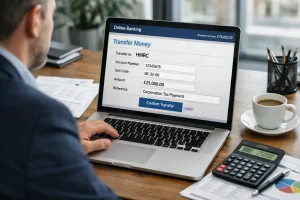
Bank transfer is one of the most common ways to pay Corporation Tax in the UK. Many businesses prefer this option because it allows them to send payments directly from their company bank account to HMRC.
When making a bank transfer, you must include your 17-character Corporation Tax payment reference. This reference ensures that HMRC correctly matches the payment to your company and the correct accounting period.
Depending on your bank, you may be able to send the payment through online banking, mobile banking, or telephone banking. Some companies also use their accountant or finance team to arrange these transfers.
Before sending the payment, it is important to check that you are using the correct HMRC bank account and that the payment will arrive before the deadline.
What HMRC Bank Details Should You Use?
HMRC provides specific bank details for Corporation Tax payments. These accounts are typically held with Barclays Bank and may vary depending on the instructions provided on your Corporation Tax payslip or official letter.
Common HMRC bank details used for UK bank transfers include:
- Account name: HMRC Cumbernauld
- Sort code: 08 32 10
- Account number: 12001039
Another account that may appear on your payment notice is:
- Account name: HMRC Shipley
- Sort code: 08 32 10
- Account number: 12001020
If you are unsure which account to use, HMRC guidance often recommends paying the Cumbernauld account. For overseas payments, HMRC also provides IBAN and BIC details that allow international transfers to be processed correctly.
Regardless of the account used, the most important element is including your 17-character payment reference so HMRC can correctly apply the payment.
How Long Do Bank Transfers Take?
The time required for a Corporation Tax bank transfer depends on the transfer method you choose.
- Faster Payments usually arrive the same day or the next day
- CHAPS transfers normally arrive within the same working day
- Bacs transfers usually take around three working days
Because of these time differences, it is important to choose a payment method that ensures your tax reaches HMRC before the deadline.
If your deadline falls close to a weekend or bank holiday, Faster Payments or CHAPS are often safer options because they process more quickly.
Planning the payment in advance reduces the risk of late payment interest and ensures your business stays compliant with HMRC rules.
Can You Pay Corporation Tax By Direct Debit Or Card?
Yes, HMRC allows businesses to pay Corporation Tax using Direct Debit or debit and corporate credit cards through the official GOV.UK payment service. These methods provide flexible options for companies that prefer automated payments or online transactions.
Direct Debit can be set up through your HMRC online business tax account. Once authorised, HMRC can collect the payment directly from your bank account for the specific accounting period you select.
There are a few important points to remember when using Direct Debit:
- The first Direct Debit setup usually takes about five working days
- Future Direct Debit payments normally take around three working days
- Payments will appear on your bank statement as HMRC NDDS
- You must still include your 17-character payment reference
Card payments are another option available through the GOV.UK website.
Important card payment rules include:
- Personal debit cards can be used without additional fees
- Corporate debit or credit cards may include processing fees
- Personal credit cards are not accepted
- Payments are considered received on the date you make them
These options give businesses flexibility when deciding how to pay their tax bill.
How Do Large Companies Pay Corporation Tax In Instalments?

Some companies in the UK must pay Corporation Tax earlier and in multiple instalments instead of a single annual payment. This rule generally applies to businesses with higher profit levels, which HMRC categorises as large companies.
Under this system, businesses estimate their Corporation Tax liability for the year and pay it in quarterly instalments during the accounting period. This approach ensures that large companies contribute tax more frequently rather than waiting until after the financial year ends.
These instalments must be paid electronically through methods such as online banking, bank transfer, or Direct Debit.
When Is A Company Considered “Large”?
A company is usually classified as large when its annual taxable profits exceed £1.5 million but remain below £20 million.
However, the threshold may change if the company is part of a group. HMRC divides the £1.5 million threshold by the number of associated companies within the group.
Key points about large company status include:
- Profit threshold typically above £1.5 million
- Group companies may have lower adjusted thresholds
- Instalments are usually required if tax liability is significant
- Electronic payment methods must be used
Companies with tax liabilities below certain limits may still qualify to pay in a single payment depending on their circumstances.
What Is The Instalment Payment Schedule?
Large companies normally make four instalment payments during and after their accounting period. Each payment represents a portion of the estimated Corporation Tax owed.
Example instalments for a typical 12-month accounting period:
| Instalment | When It’s Due |
| First | 6 months + 13 days after the period begins |
| Second | 3 months later |
| Third | 14 days after the period ends |
| Fourth | 3 months + 14 days after the period ends |
Companies must estimate their expected tax liability and divide it across these instalments. If profits increase during the year, businesses may need to adjust payments to avoid underpayment.
How Do Very Large Companies Pay Corporation Tax Earlier?
Very large companies follow a slightly different Corporation Tax schedule because their profits exceed £20 million in a single accounting period. HMRC requires these businesses to start paying tax earlier in the financial year.
Instead of waiting until midway through the accounting period, very large companies must begin instalment payments around two months and thirteen days after the period begins. Payments then continue every three months.
Because these payments occur during the accounting year, companies must estimate their tax liability early and adjust payments if profits change.
The £20 million threshold may also be reduced if the company is part of a group with associated companies. HMRC divides the threshold across the group to determine which companies fall under the very large company rules.
This system ensures that businesses generating significant profits contribute tax regularly throughout the year.
What Happens If You Miss The Corporation Tax Payment Deadline?

Missing a Corporation Tax payment deadline can lead to interest charges and additional penalties from HMRC. Even if your Company Tax Return is submitted on time, late payment of the tax itself may still trigger charges.
HMRC applies interest to unpaid Corporation Tax from the day after the deadline until the payment is received.
Common consequences of late payment include:
- Interest charges on outstanding tax
- Possible penalties if the return is also late
- HMRC estimates your tax liability in severe cases
- Increased scrutiny from HMRC if delays occur repeatedly
If your business is struggling to pay the full amount on time, HMRC may allow a Time to Pay arrangement. This allows companies to spread payments across an agreed period.
Contacting HMRC early is important because it demonstrates that your business is trying to resolve the issue responsibly.
What Should You Do If Your Company Has No Corporation Tax To Pay?
Even if your company does not owe any Corporation Tax, you must still inform HMRC about the situation. Many businesses mistakenly assume that no action is required when profits are low or when the company has made a loss.
In these cases, HMRC requires you to submit a Nil to Pay notification. This tells the tax authority that your company has no Corporation Tax liability for the accounting period.
Submitting this notification prevents HMRC from sending payment reminders or assuming that the tax has not been paid.
However, it is important to understand that this notification does not replace your Company Tax Return. Your company must still file the CT600 tax return to report profits, losses, and financial information for the accounting period.
Completing both steps ensures your company remains fully compliant with HMRC requirements.
How Can You Check That HMRC Received Your Corporation Tax Payment?
After making a Corporation Tax payment, it is important to confirm that HMRC has successfully received and recorded the transaction. Most businesses can verify this through their HMRC online business tax account.
When you log in to your account, you can view your Corporation Tax statement and check whether the payment has been applied to the correct accounting period.
Payment updates usually appear within a few days, depending on the method used.
Ways to confirm your payment include:
- Logging into your HMRC business tax account
- Viewing the Corporation Tax statement
- Checking the accounting period payment history
- Reviewing confirmation from your bank transaction
If the payment does not appear after several days, it may be worth checking that the 17-character reference number was entered correctly when the payment was made. You can also contact HMRC if you believe there is an issue with the payment allocation.
Keeping a record of payment confirmations and bank statements can help resolve any disputes or questions quickly.
What Are The Best Tips To Make Paying Corporation Tax Easier?
Managing Corporation Tax becomes much easier when you plan ahead and organise your company finances properly. Many business owners experience stress around tax deadlines simply because payments were not prepared in advance.
One practical strategy is setting aside money regularly throughout the year so the funds are ready when the deadline arrives.
Useful tips for managing Corporation Tax include:
- Set aside 19 to 25 percent of profits in a separate tax savings account
- Track your accounting period end date
- Use accounting software to monitor profits
- Keep copies of HMRC letters and payment references
- Schedule reminders several months before the deadline
Maintaining accurate financial records throughout the year also makes it easier to calculate your tax liability. Businesses that work with accountants often benefit from additional support in forecasting tax bills and planning payments.
These simple habits can significantly reduce financial pressure and help you stay organised when dealing with HMRC obligations.
Conclusion
Understanding how to pay corporation tax is a crucial responsibility for every UK limited company. In most cases, the payment must be made 9 months and 1 day after your accounting period ends, using your unique 17 character payment reference to ensure HMRC allocates the payment correctly.
Businesses can pay their tax through several electronic methods including online banking, Direct Debit, bank transfer, or debit card payments. Large companies may need to follow different rules and pay their tax in quarterly instalments during the accounting period.
Planning ahead, keeping accurate financial records, and setting reminders for key deadlines can make the entire process much easier.
By following HMRC guidance and preparing your payments early, your business can stay compliant, avoid penalties, and manage Corporation Tax with confidence.
FAQs
Can You Pay Corporation Tax Before Filing Your CT600?
Yes. In most cases, Corporation Tax must be paid before submitting the CT600 return because the payment deadline comes earlier than the filing deadline.
What Happens If You Use The Wrong Payment Reference?
HMRC may not be able to match the payment to the correct accounting period. This can delay processing and may lead to payment reminders or interest charges.
Can A Company Pay Corporation Tax Early?
Yes. HMRC allows companies to pay their Corporation Tax earlier than the deadline, and interest may sometimes apply for early payments.
Do All Companies Pay Corporation Tax In Instalments?
No. Instalment payments usually apply only to large or very large companies with higher taxable profits.
Can You Pay Corporation Tax From An Overseas Bank Account?
Yes. HMRC provides international bank details including IBAN and BIC codes so businesses can transfer payments from overseas accounts.
What Is The Difference Between The UTR And Payment Reference?
The UTR identifies your company’s tax record, while the 17 character payment reference links your payment to a specific accounting period.
Can HMRC Confirm Your Corporation Tax Payment Immediately?
HMRC usually updates your online account within a few days after receiving the payment, depending on the payment method used.