
What is Public Liabilities Insurance in the UK?


UK Startup Blog Archive
Table of Contents
Public liability insurance is a type of business insurance designed to protect a business when a customer, client, supplier or other member of the public makes a claim for injury or property damage connected with its activities.
For example, a customer could slip on a wet floor inside a shop, a contractor might accidentally damage property while working at a client’s premises, or equipment used by a business could injure a visitor.
Depending on the circumstances and policy terms, public liability insurance may help cover compensation and legal costs arising from these claims.
Although people sometimes search for public liabilities insurance, the standard term used by UK insurers is public liability insurance.
Public liability cover can be particularly important for sole traders, tradespeople, shops, cafes, salons, contractors and other businesses that regularly interact with customers or work on third-party premises.
Business.gov.uk describes public liability insurance as protection against claims where a member of the public is injured or their property is damaged because of business activities.
What Does Public Liability Insurance Cover?
Public liability insurance normally deals with claims made by third parties rather than employees of the business.
The precise protection depends on the insurer, occupation, policy wording, cover limit and exclusions.
Typical areas of cover can include:
- Accidental Injury To Members Of The Public: This could include a customer falling over equipment left in a walkway or suffering an injury connected with business activities.
- Damage To Third-Party Property: Cover may apply when a business accidentally damages property belonging to a customer or another person.
- Legal Defence Costs: Policies may contribute towards legal expenses incurred when defending an insured claim.
- Compensation Payments: If the business is found liable, the policy may meet eligible compensation costs up to the policy limit.
- Incidents Away From Business Premises: Depending on the policy, protection may extend to work performed at customer sites, offices, homes or other locations.
Businesses should not assume every accident will automatically be covered. Policy conditions, exclusions, excesses and the activities declared to the insurer all matter.
Small companies comparing their options can also consider how public liability insurance for small businesses applies to different industries and working arrangements.
What Does Public Liability Insurance Not Cover?
Public liability insurance is not designed to protect a business against every possible loss.
Common areas that may fall outside standard public liability cover include:
- Employee Injuries: Claims made by employees are generally dealt with through employers’ liability insurance.
- Professional Advice Or Service Errors: Financial loss caused by professional advice, designs or services may require professional indemnity insurance.
- Damage To Your Own Property: Business equipment, stock and premises usually require separate property or contents insurance.
- Business Vehicle Accidents: Appropriate motor insurance is normally required for vehicles used for business purposes.
- Intentional Damage Or Illegal Acts: Deliberate actions are generally excluded.
- Contractual Liabilities Outside The Policy: Some liabilities accepted through a contract may not automatically be insured.
- Excluded Business Activities: Work that has not been disclosed to the insurer or is specifically excluded by the policy may not be covered.
Business.gov.uk distinguishes public liability insurance from professional indemnity and product liability insurance because they protect against different types of risk.
Always check the individual policy wording instead of assuming that the policy name alone determines what will be covered.
Is Public Liability Insurance a Legal Requirement in the UK?
Public liability insurance is not generally a legal requirement for UK businesses.
However, that does not necessarily mean a business can operate without it in every situation.
Clients, landlords, event organisers, trade bodies, councils and organisations awarding contracts may require a specific level of public liability cover before allowing work to begin.
AXA states that public liability insurance is not legally required but notes that customers may require businesses to hold particular levels of cover before agreeing to work with them.
Public-sector contracts can also impose insurance requirements.
For example, current Home Office procurement guidance states that public liability requirements can vary according to the size, risk and subject of a contract, with typical minimum requirements of between £1 million and £5 million for relevant contracts.
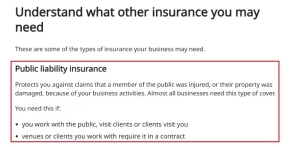
The official Business.gov.uk page shows legally required business insurance separately from public liability insurance and explains when businesses may need public liability cover.
Businesses should therefore check:
- Customer Contracts
- Tender Documents
- Landlord Requirements
- Local Authority Conditions
- Professional Body Rules
- Event Or Venue Requirements
Insurance should ideally be checked before signing a contract rather than after work has already started.
Anyone setting up a new company should treat insurance as part of the broader process of starting a business in the UK alongside registration, tax, accounting, licences and risk management.
Who Needs Public Liability Insurance?
Any business that regularly comes into contact with customers, clients or other members of the public should consider whether public liability insurance is appropriate.
Sole Traders
A sole trader may still face a substantial compensation claim even if the business consists of only one person.
A self-employed electrician could damage a customer’s property. A photographer might damage equipment belonging to a venue. A cleaner could leave a wet floor that causes someone to fall.
Operating alone does not remove these risks.
Tradespeople And Contractors
Builders, plumbers, painters, electricians, gardeners and other tradespeople often work inside customers’ homes or commercial premises.
The possibility of accidentally damaging property or causing an injury can make public liability cover particularly relevant.
Shops, Cafes And Salons
Businesses operating premises that customers visit can face risks involving slips, trips, falling objects, equipment and other accidents.
Freelancers And Consultants
Some freelancers assume public liability insurance is unnecessary because their work is primarily office-based.
However, a freelancer who regularly visits client premises could still accidentally damage equipment or cause an injury. Professional indemnity insurance may also be appropriate where the freelancer provides specialist advice.
Home-Based Businesses
Working from home does not automatically remove public liability risk.
Customers, suppliers or contractors may visit the property, while a home-based business may also work at customers’ premises or attend markets and events.
Home and motor insurers should also be informed where property or vehicles are used for business purposes.
Business.gov.uk specifically advises businesses to update existing home or vehicle insurance where they are being used commercially.
The amount and type of insurance required should therefore reflect what the business actually does rather than simply whether it operates from an office, shop or home.
Public Liability Insurance Claim Examples
Understanding potential claims can make the purpose of public liability insurance clearer.
Customer Slips Inside a Shop
A customer walks across a recently cleaned floor, slips and suffers an injury. If the customer alleges that the business failed to take reasonable precautions, a claim could follow.
Contractor Damages a Customer’s Property
A tradesperson carrying equipment through a client’s home accidentally damages an expensive door or piece of furniture.
Consultant Damages Office Equipment
A consultant visiting a client’s workplace accidentally knocks a drink onto electronic equipment.
Equipment Injures a Member of the Public
A piece of business equipment falls or is incorrectly positioned and injures someone passing nearby.
Market Trader Causes Property Damage
Equipment used at a market stall is blown over and damages another trader’s property.
Whether an insurer pays a particular claim depends on the facts of the incident and the terms of the policy. Businesses should report potential claims promptly and follow their insurer’s instructions.
Public Liability vs Employers’ Liability And Professional Indemnity Insurance
Public liability insurance is often confused with other types of business insurance, but each policy addresses a different risk.
| Insurance Type | Main Purpose |
| Public Liability Insurance | Third-party injury or property damage connected with business activities |
| Employers’ Liability Insurance | Employee injury or illness arising from their employment |
| Professional Indemnity Insurance | Claims relating to professional advice, errors or services that cause client loss |
| Product Liability Insurance | Injury or damage caused by products made, sold or supplied by a business |
The distinction between public and employers’ liability insurance is particularly important.
HSE guidance explains that public liability insurance covers claims from members of the public or other businesses rather than employees, while employers’ liability insurance is compulsory for most employers.
Under the Employers’ Liability (Compulsory Insurance) Act 1969 and associated regulations, most employers in Great Britain must maintain qualifying employers’ liability insurance. The statutory minimum cover is £5 million, subject to applicable exemptions.
Businesses employing staff can look more closely at employers’ liability insurance costs when planning their overall insurance budget.
Professional indemnity is different again. It is mainly relevant where a business provides professional advice, designs or services and a mistake could cause a client financial loss.
A business may therefore need more than one type of liability insurance.
How Much Public Liability Insurance Do You Need?
There is no single level of public liability cover that suits every business.
Common policy limits can run into millions of pounds, but the appropriate amount depends on the business and the potential scale of a claim.
Consider:
- Nature Of The Business
- Number Of Customers
- Type Of Work Performed
- Locations Where Work Takes Place
- Potential Property Damage
- Maximum Possible Injury Claim
- Contract Requirements
- Previous Claims
- Industry Expectations
A small consultant visiting offices occasionally will have different risks from a construction contractor working on major commercial sites.
Clients can also influence the amount required. A customer may specify that contractors must hold £2 million, £5 million or another amount of public liability cover before being approved.
AXA currently states that it offers public liability limits of up to £10 million while recommending that businesses consider both their risk exposure and any cover requirements imposed by clients.
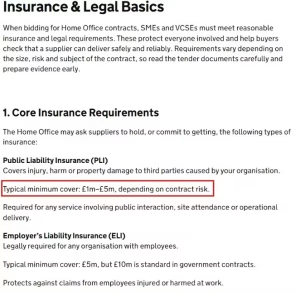
The GOV.UK Home Office guidance shows that public liability insurance requirements vary by contract risk, with typical minimum cover of £1 million to £5 million.
Higher cover is not automatically better if it does not match the business’s actual needs. The aim is to choose a level that reflects realistic exposure while satisfying contractual requirements.
How Much Does Public Liability Insurance Cost in the UK?
There is no fixed price for public liability insurance in the UK.
Two businesses with similar turnover can receive very different quotes if one operates in a much higher-risk industry.
Insurers may consider factors including:
- Business Activities
- Industry Risk
- Annual Turnover
- Number Of Workers
- Claims History
- Trading Location
- Level Of Public Interaction
- Selected Cover Limit
- Policy Excess
- Additional Insurance Options
A desk-based consultant may generally represent a different insurance risk from a roofing contractor, builder or business regularly using heavy equipment.
This is why estimating insurance solely from business size or turnover can be misleading.
Businesses should obtain quotes based on their actual circumstances and compare more than the headline premium. A cheaper policy may have a higher excess, lower cover limit or exclusions that make it unsuitable.
Founders reviewing insurance alongside finance, legal requirements and operational planning may also benefit from identifying the wider help needed to start a business before trading begins.
What Is a Public Liability Insurance Certificate?
A public liability insurance certificate or evidence of cover confirms that a business has an active public liability insurance policy.
The document will commonly contain details such as:
- Policyholder Name
- Policy Number
- Business Or Occupation
- Policy Start Date
- Policy End Date
- Limit Of Indemnity
- Insurer Details
AXA explains that clients, councils, professional bodies and other organisations may request proof of public liability insurance before entering into a contract.
Unlike employers’ liability insurance certificates, there is no general legal requirement for businesses to publicly display a public liability insurance certificate simply because they have the cover.
However, keeping evidence readily available can make it easier to respond to customers, tender applications and contractors asking for proof.
Businesses should also check that the certificate remains current when renewing the policy.
What Happens If You Do Not Have Public Liability Insurance?
Because public liability insurance is not generally compulsory, operating without it does not automatically mean a business is breaking UK insurance law.
However, the financial and commercial consequences can still be significant.
Without suitable insurance, the business could potentially have to meet eligible costs arising from a successful third-party claim from its own resources. Depending on the circumstances, these could include compensation, legal expenses and property damage.
Operating without cover may also create other problems.
A business could:
- Lose Contract Opportunities
- Fail Tender Requirements
- Be Refused Access To Certain Sites
- Be Unable To Attend Certain Events
- Face Significant Legal Costs
- Pay Compensation From Business Funds
- Damage Important Client Relationships
The risk is particularly important for sole traders because the individual and the business are not legally separate in the same way as a limited company.
Public liability insurance does not eliminate the need for good safety procedures. Businesses should still identify hazards, maintain equipment properly and take reasonable precautions to prevent injuries and property damage.
How To Make a Public Liability Insurance Claim?
If an incident occurs that could result in a claim, businesses should follow their insurer’s reporting procedure as soon as reasonably possible.
A typical process may include:
- Make the Area Safe: Take reasonable steps to prevent further injury or damage.
- Record What Happened: Note the date, time, location and circumstances of the incident.
- Keep Relevant Evidence: Preserve photographs, CCTV footage, correspondence, risk assessments and other useful records.
- Record Witness Details: Obtain contact information from people who witnessed the incident where appropriate.
- Contact the Insurer: Notify the insurer in accordance with the policy conditions.
- Provide Requested Information: Supply documents or evidence requested by the insurer or claims handler.
- Avoid Making Unauthorised Settlements: Do not agree compensation or settle a claim without checking the policy requirements and speaking with the insurer.
Even where a person has not formally demanded compensation, an incident that appears likely to develop into a claim may still need to be reported.
Businesses should read their individual policy carefully because reporting requirements and deadlines can vary.
How To Choose the Right Public Liability Insurance Policy?
Price is important, but it should not be the only consideration when choosing public liability insurance.
Compare policies based on the protection they actually provide.
Check The Cover Limit
Make sure the limit is appropriate for the potential risks associated with the business and meets any client or contract requirements.
Review The Policy Exclusions
Check whether any important business activities, locations, products or types of work are excluded.
Check The Excess
The excess is the amount the policyholder may have to contribute towards an eligible claim under the terms of the policy.
A lower premium accompanied by a substantially higher excess may not always represent better value.
Describe Business Activities Accurately
Insurers need accurate information about what the business does.
A company should disclose its actual activities rather than choosing a cheaper occupation description that does not properly represent the work being performed.
Consider Other Insurance
Public liability insurance may only be one part of the protection required.
Depending on the business, additional policies could include:
- Employers’ Liability Insurance
- Professional Indemnity Insurance
- Product Liability Insurance
- Business Contents Insurance
- Cyber Insurance
- Business Interruption Insurance
- Commercial Vehicle Insurance
Compare Policy Terms Rather Than Price Alone
Look at the cover level, exclusions, excess, optional extras and insurer requirements before choosing a policy.
The right policy should reflect the risks the business genuinely faces rather than simply being the cheapest available option.
Conclusion
Public liability insurance can provide important financial protection when a customer, client or other third party claims that a business caused injury or property damage.
Although it is not generally a legal requirement in the UK, it can be an important practical requirement for businesses that interact with the public, visit customer premises or bid for contracts.
The right level of cover depends on the business’s activities, potential risks and contractual obligations.
Business owners should compare cover limits, exclusions, excesses and policy conditions rather than choosing insurance purely on price.
Public liability insurance should also be considered as part of a wider risk-management approach.
Employers’ liability, professional indemnity, product liability and other forms of business insurance may be required depending on how the company operates.
Frequently Asked Questions
Is Public Liability Insurance Compulsory in the UK?
No. Public liability insurance is not generally compulsory under UK law. However, clients, councils, venues or organisations awarding contracts may require businesses to hold it before allowing them to work.
Do Sole Traders Need Public Liability Insurance?
It is not generally compulsory simply because someone is a sole trader. However, it can be valuable where a sole trader works with customers, visits client premises or could accidentally cause injury or property damage.
Does Public Liability Insurance Cover Employees?
Generally, no. Public liability insurance is intended for claims involving third parties. Employee injury and work-related illness are normally dealt with through employers’ liability insurance.
Do I Need Public Liability Insurance If I Work From Home?
It depends on your business activities. Cover may still be relevant if customers visit your home, you visit customer premises, attend events or carry out work that could cause third-party injury or property damage.
Does Public Liability Insurance Cover Damage to a Customer’s Property?
It can cover accidental damage to third-party property where the incident falls within the policy terms. Always check the specific exclusions and conditions of your policy.
What Does £1 Million Public Liability Insurance Mean?
It generally refers to a policy limit of indemnity of up to £1 million for covered claims, subject to the insurer’s wording and any applicable limits or exclusions.
Can a Client Require £5 Million Public Liability Insurance?
Yes. A client can make a particular level of insurance a contractual requirement even though public liability insurance itself is not generally required by law.
What Is Not Covered by Public Liability Insurance?
Public liability insurance will not normally replace employers’ liability, professional indemnity, motor, property or other specialist insurance. Exact exclusions vary between policies.
Do I Need to Display My Public Liability Insurance Certificate?
There is no general requirement to publicly display a public liability certificate. However, customers, councils and organisations awarding contracts may ask to see evidence that suitable cover is in place.

Blogger | Business Writer | Sharing startup advice on UK business blogs
Related Articles in Finance
View All →
If I Take Home £1,600 a Month, What Is My Salary in the UK?
If an employee takes home £1,600 per month in the UK, their estimated gross salary is approximately £21,780 per year. This is equal to about £1,815 per month…

Why the Two Year Accounts Rule is Not Actually a Rule?
Ask most new business owners when they can first apply for a mortgage and the answer comes back the same way every time: two years of accounts, minimum,…

Snap-on Franchise Cost: Fees, Investment and Earnings
The Snap-on franchise cost in the UK is currently quoted at £166,597 to £168,487 for the franchise investment, with Snap-on stating that a new franchisee may need to…