


The digital landscape is continually evolving, and businesses are persistently adapting to these changes. One significant technological advancement that is currently revolutionising the way businesses conduct meetings is Virtual Reality (VR). What was once a concept limited to science fiction movies and gaming industries is now being utilised in corporate boardrooms worldwide.
How VR is Being Used in Business Meetings?
In today’s fast-paced business environment, the need for effective and efficient communication is paramount. VR technology is providing an innovative solution to this requirement.
The Pico 4 Ultra Enterprise, a high-end VR headset, is one such tool that is gaining popularity in the corporate world. This device offers businesses a platform for immersive, interactive meetings where attendees can virtually be in the same room, irrespective of their geographical locations.
This technology presents numerous benefits, including enhanced collaboration, improved decision-making, and cost and time savings.
The Benefits of VR in Business Meetings
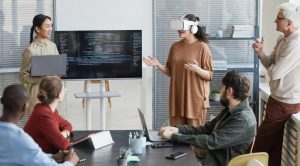
Virtual Reality brings several advantages to business meetings. Firstly, VR provides a sense of presence and engagement that traditional video conferencing methods cannot match.
Attendees can interact with each other and the environment in a realistic, immersive manner, leading to more productive and engaging meetings. Additionally, VR can also help reduce travel costs and time as professionals can attend meetings from anywhere in the world.
This technology also allows for innovative presentations and demonstrations, as complex data and ideas can be visualised and manipulated in a three-dimensional space, aiding in better understanding and decision-making.
The Rise of VR in Remote Working
The recent global pandemic has accelerated the adoption of VR in business meetings. As remote working has become the norm, businesses are looking for ways to keep their employees connected and engaged.
VR technology provides a realistic and immersive platform that replicates the physical office environment, thereby maintaining the team’s cohesion and productivity. This trend is expected to continue even as businesses gradually return to the office, as hybrid working models become more popular.
Addressing the Challenges of VR in Business Meetings
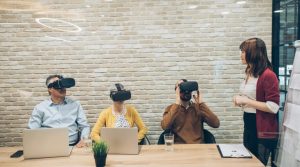
Although VR technology offers numerous benefits, there are also challenges that businesses must address. One common issue is the cost associated with implementing VR technology.
High-end devices are an investment, and businesses must also account for the cost of training employees to use the technology effectively. Additionally, not everyone is comfortable with virtual reality.
Some users may experience physical discomfort or disorientation, known as ‘cybersickness’. To overcome these challenges, businesses should provide training and support to employees, gradually introducing them to the VR environment.