
Is It Safe to Travel to Cyprus With the Trouble in Israel?

UK Startup Blog Archive
Table of Contents
Yes. At the time of writing, it is still considered safe to travel to Cyprus even with the trouble in Israel, and the UK government has not issued advice against visiting the island.
However, regional tensions in the Middle East mean you should stay alert, monitor official travel updates, and be prepared for possible flight disruptions or security precautions.
Cyprus remains one of the most popular Mediterranean holiday destinations for British travellers, and most tourist areas are operating normally. Still, the island’s proximity to the Middle East means that developments in the Israel conflict can sometimes affect the region.
Key points you should know before travelling:
- The UK Foreign Office does not currently advise against travel to Cyprus
- Regional tensions have increased security awareness across the Eastern Mediterranean
- Some flights and airspace routes have experienced disruption
- Cyprus remains generally safe for tourists with low crime rates
- Travellers should follow guidance from local authorities and the FCDO
Understanding the current situation helps you decide whether your trip to Cyprus should go ahead as planned.
Why Are Travellers Asking If It Is Safe to Travel to Cyprus With the Trouble in Israel?
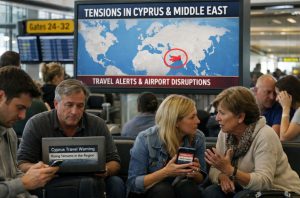
Interest in whether it is safe to travel to Cyprus with the trouble in Israel has increased due to the ongoing conflict in the Middle East and the island’s location in the Eastern Mediterranean.
Cyprus sits relatively close to Israel and other countries affected by regional tensions, which naturally raises concerns among travellers planning holidays.
News reports about missile strikes, drone incidents, and military activity across the region have led many British tourists to question whether their Mediterranean holiday destination could be impacted. Cyprus itself remains stable, but events nearby often influence public perception and travel decisions.
Several factors explain why travellers are asking this question now:
- Cyprus is geographically close to Israel and the wider Middle East region
- Military bases belonging to the UK are located on the island
- Regional conflict between Israel and Iran has increased tensions across the Eastern Mediterranean
- Reports of a drone incident near a British RAF base in Cyprus have gained international attention
- Temporary flight disruptions in the region have affected travel routes
Despite these concerns, Cyprus continues to operate as a major tourist destination, welcoming millions of visitors every year. Resorts, beaches, and airports are open, and the local tourism sector remains active.
Understanding why these concerns exist can help you evaluate the real level of risk when planning a trip to Cyprus during regional tensions.
What Does the Latest UK Government Travel Advice Say About Cyprus?
Before travelling anywhere during a period of geopolitical tension, the most reliable information comes from official government guidance. For British travellers considering a trip to Cyprus, the latest advice from the UK Foreign, Commonwealth and Development Office provides important clarity.
At present, the UK government continues to consider Cyprus a safe destination for travel. However, officials acknowledge that regional escalation in the Middle East may pose potential security risks or travel disruption in the future.
Does the UK Foreign Office Warn Against Travel to Cyprus?
The UK Foreign Office does not currently warn against travel to Cyprus. This means British tourists are still free to visit the island for holidays, business trips, or family visits.
The FCDO has confirmed that both major international airports in Cyprus remain open and that tourism operations continue as normal. British nationals travelling to Cyprus should still follow general safety guidance and remain aware of the evolving situation in the wider region.
Officials have also highlighted that Cyprus remains a stable member of the European Union with strong security systems and functioning infrastructure. Most British visitors experience trouble free holidays on the island.
What Safety Risks Does the UK Government Highlight?
Although travel is still allowed, the government warns that certain risks exist which travellers should understand before visiting.
According to official safety guidance, the main concerns include:
- A global risk of terrorism that could affect many countries
- The possibility of political demonstrations in major cities
- Regional tensions connected to events in the Middle East
- Security concerns near military installations
- Possible disruption to transport routes during heightened tensions
Authorities stress that terrorist attacks in Cyprus cannot be ruled out, although incidents are rare. Demonstrations may also occur with little warning, particularly when international conflicts attract public attention.
Crime levels on the island remain relatively low, especially in tourist areas, but visitors should still take common sense precautions with valuables and personal safety.
What Should British Travellers Do According to the FCDO?
The Foreign Office encourages British travellers to stay informed and prepared rather than cancelling trips unnecessarily.
Recommended actions include:
- Monitoring FCDO travel advice updates regularly
- Signing up for government travel alerts before departure
- Following instructions from local authorities in Cyprus
- Avoiding protests or political gatherings
- Staying away from military or security sensitive locations
Travellers should also monitor airline announcements and international news updates. Situations connected to regional conflicts can change quickly, so staying informed helps you react appropriately if circumstances shift.
Officials also advise visitors to keep travel documents accessible and review their emergency plans before travelling.
How Close Is Cyprus to Israel and the Middle East Conflict?
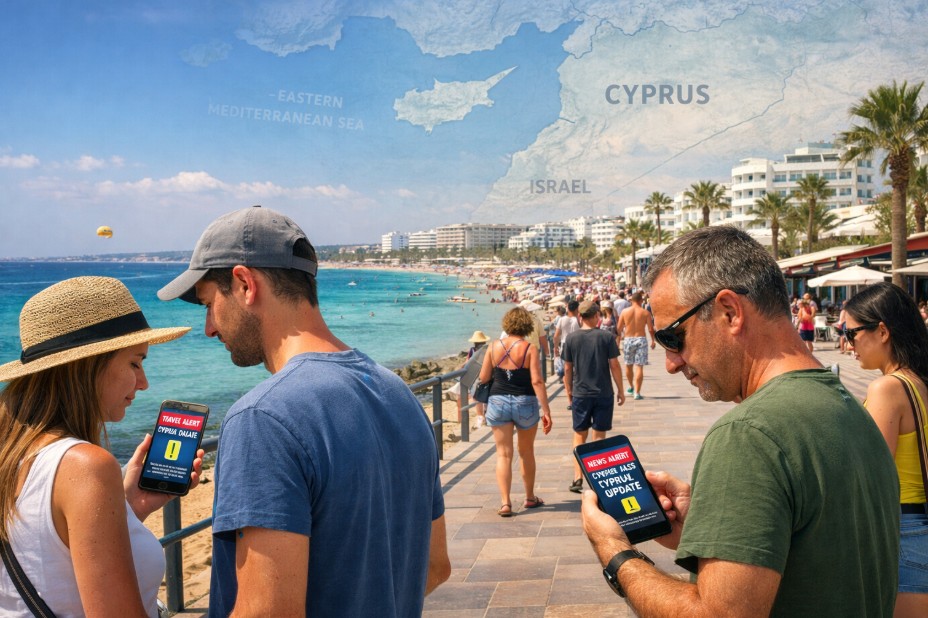
Cyprus is located in the Eastern Mediterranean and lies relatively close to several Middle Eastern countries, including Israel. This geographic proximity is one of the main reasons travellers ask whether the island could be affected by regional conflict.
The distance between Cyprus and Israel is roughly 250 to 300 kilometres, depending on the location. Flights between the two destinations typically take less than an hour. Despite this closeness, Cyprus is politically and geographically separate from the conflict areas.
Several important points help explain the situation:
- Cyprus is an independent European Union member state
- The island maintains stable governance and security structures
- Most conflict activity occurs far from Cypriot territory
- Tourism areas are located well away from military facilities
Cyprus also hosts two British Sovereign Base Areas, including RAF Akrotiri. These bases sometimes attract attention during periods of regional tension because they play a role in international military operations.
Even so, daily life and tourism across the island generally continue unaffected. Popular resorts such as Ayia Napa, Limassol, and Paphos remain focused on tourism and hospitality.
Travel analysts often note that many Mediterranean destinations sit near politically sensitive regions yet remain safe for visitors. Cyprus falls into this category, where geopolitical developments may influence headlines but rarely affect travellers directly.
Understanding the geographical context helps clarify why Cyprus appears in discussions about Middle Eastern security while still remaining a functioning tourist destination.
Has the Israel Conflict Affected Cyprus So Far?
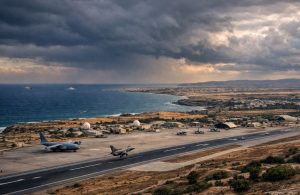
Although Cyprus has not become directly involved in the conflict, recent developments connected to the Israel-Iran tensions have drawn attention to the island’s strategic importance in the Eastern Mediterranean.
The presence of British military facilities and its geographic position between Europe and the Middle East mean Cyprus occasionally becomes part of wider security discussions.
RAF Akrotiri Drone Incident Explained
One of the most widely reported incidents involved a suspected drone impact near the RAF Akrotiri base. According to official updates, the drone strike occurred amid escalating hostilities between Israel and Iran.
Cypriot President Nikos Christodoulides confirmed that the incident affected a runway at the base. The event led to increased security measures and temporarily disrupted some activity in the area.
Officials stressed that the situation remained under control and did not pose a broader threat to civilians or tourist areas.
The UK government also issued guidance advising British nationals in the Sovereign Base Areas to follow instructions from local authorities.
Prime Minister Keir Starmer addressed the situation in statements reported by European media, saying the UK would deploy defensive naval assets to support regional security.
Increased Military Activity in the Eastern Mediterranean
Regional tensions have also resulted in increased military presence around Cyprus and nearby waters. Several countries have taken precautionary steps to protect strategic assets and ensure stability across the region.
Reports indicate the following developments:
- British naval ships have been deployed to strengthen defence capabilities
- European warships have entered the Eastern Mediterranean
- Greek aircraft have temporarily operated from bases on the island
- Additional air defence systems have been positioned nearby
These actions are primarily precautionary and aimed at protecting military installations rather than responding to threats against civilians.
Security experts often emphasise that such deployments are common during periods of international tension and do not necessarily signal immediate danger to travellers.
Tourism authorities in Cyprus continue to promote the island as a safe destination, and daily life across the country remains largely unaffected.
Are Flights and Holidays to Cyprus Being Cancelled or Disrupted?
The ongoing Middle East tensions have occasionally caused disruption to regional airspace, which in turn affects some flights to Cyprus. However, most travel routes between the UK and the island remain operational.
Several airlines temporarily cancelled or adjusted flights when security concerns increased. Airports such as Larnaca and Paphos have continued operating normally overall, though delays or rerouting can occur when airspace restrictions are introduced.
Airlines are monitoring the situation closely and adjusting schedules when necessary to prioritise passenger safety.
Here is an overview of current airline operations reported in travel updates:
| Airline | Current Status | Notes |
| easyJet | Some cancellations | Due to regional airspace disruption |
| British Airways | Some disruption | Monitoring situation |
| Ryanair | Operating | Some delays possible |
| Jet2 | Operating | Situation monitored |
Travel experts say that disruptions are often temporary and depend on airspace conditions across the wider Middle East.
If your flight is cancelled by the airline, you are normally entitled to a refund or an alternative booking. However, if you decide to cancel your holiday voluntarily while flights are still running, standard booking policies usually apply.
For most travellers, the best approach is to stay updated with airline announcements and avoid making sudden changes unless official advice recommends doing so.
What Safety Risks Should You Consider Before Travelling to Cyprus?
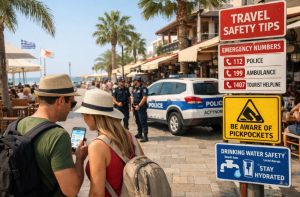
Even though Cyprus remains generally safe, travellers should still understand the potential risks highlighted by official guidance. These risks are mostly precautionary and apply to many international destinations.
Being aware of them allows you to travel responsibly and avoid unnecessary problems during your holiday.
Security Risks Linked to Regional Tensions
Regional escalation in the Middle East has increased security awareness across parts of the Eastern Mediterranean.
Travellers should keep the following in mind:
- Avoid military bases or security sensitive areas
- Stay away from demonstrations or political gatherings
- Follow updates from local authorities and emergency services
- Monitor news and government travel advice
Authorities also warn that terrorist attacks cannot be ruled out anywhere in the world. While Cyprus has not experienced frequent incidents, awareness and caution are recommended.
General Safety Risks for Tourists
Crime rates in Cyprus are relatively low, especially in tourist areas. However, the government still advises travellers to take sensible precautions.
Important safety tips include:
- Keep passports and valuables secure
- Avoid leaving drinks unattended to reduce the risk of drink spiking
- Stay with friends when going out at night
- Respect local laws regarding drugs and public behaviour
Cyprus has strict drug laws and severe penalties for possession or trafficking of illegal substances. Visitors should avoid bringing restricted items into the country.
Environmental and Travel Risks
In addition to security considerations, some environmental and travel risks are worth noting. Cyprus experiences hot summers and occasional natural hazards that can affect visitors.
Examples include:
- Wildfires during the summer months
- Strong currents in certain coastal areas
- Occasional earthquakes or tremors
- Higher road accident rates compared to the UK
Travellers should follow local safety signs at beaches and ensure they have appropriate travel insurance when participating in adventure sports. By understanding these risks and preparing accordingly, you can enjoy a safe and comfortable holiday in Cyprus.
Is Cyprus Still Safe for British Tourists and Holidaymakers?
Overall, Cyprus continues to be considered one of the safer destinations for British tourists in the Mediterranean. Despite regional tensions in the Middle East, daily life on the island remains stable and tourism continues to operate normally.
Many popular resorts welcome thousands of UK visitors each week, and the country has a long history of providing a secure and friendly environment for travellers.
Several factors support Cyprus’s reputation as a safe destination:
- Low levels of serious crime
- Strong tourism infrastructure
- Membership in the European Union
- Close cooperation with UK authorities
Holiday hotspots such as Paphos, Ayia Napa, Limassol, and Protaras remain lively and well managed. Local authorities maintain strong security measures and emergency services.
Travel industry experts often remind tourists that news about geopolitical events can make nearby regions appear more dangerous than they actually are. While caution is sensible, the majority of visitors experience peaceful holidays in Cyprus each year.
What Should You Do If You Already Have a Holiday Booked to Cyprus?
If you already have a holiday booked to Cyprus, the best step is to stay informed rather than cancelling immediately. Since the UK government has not advised against travel, most holidays are continuing as planned.
You should consider the following actions before your trip:
- Check airline updates regularly
- Sign up for FCDO travel alerts
- Monitor local news for regional developments
- Confirm accommodation policies regarding cancellations
Travel providers may offer flexible options if flights are disrupted due to security concerns. If your airline cancels a flight, you will usually be entitled to a refund or rebooking.
Experts recommend avoiding cancelling bookings independently unless official guidance changes. Doing so could affect your eligibility for refunds or travel insurance claims.
Should You Cancel Your Cyprus Holiday Because of the Israel Conflict?

At present, cancelling a holiday to Cyprus purely because of the Israel conflict may not be necessary.
The UK Foreign Office still considers Cyprus safe to visit and has not issued restrictions against travel. Because of this, many travel companies treat voluntary cancellations as a change of mind rather than a safety related cancellation.
This means standard booking conditions usually apply. However, the situation could change if regional tensions escalate. Travellers should monitor official updates and airline announcements regularly.
If your flight is cancelled or the government advises against travel in the future, you would normally be eligible for a refund or alternative arrangements through your travel provider.
Practical Safety Tips If You Travel to Cyprus During Regional Tensions
If you decide to travel to Cyprus while tensions remain in the region, a few simple precautions can help you stay safe and informed. Most tourists will experience no problems during their trip, but preparation can make your journey smoother.
Here are practical tips to consider:
- Register for FCDO travel alerts before leaving the UK
- Keep emergency contact numbers saved on your phone
- Avoid visiting military installations or restricted areas
- Follow guidance from local authorities if security advice changes
- Monitor airline updates regarding flights or airspace conditions
Travellers should also maintain normal holiday safety habits such as protecting valuables, staying aware in crowded areas, and respecting local laws.
Taking these precautions ensures you can enjoy your time in Cyprus while remaining prepared for any unexpected developments.
Final Verdict: Is It Safe to Travel to Cyprus With the Trouble in Israel?
In most cases, yes. Cyprus remains safe for tourists despite the ongoing trouble in Israel and wider Middle East tensions.
The UK Foreign Office has not issued advice against travelling to the island, and major tourist destinations continue to operate normally. Airports remain open, flights are still running, and local authorities maintain strong security measures.
However, regional tensions can sometimes cause temporary flight disruptions or increased security activity near military facilities. Because of this, travellers should stay informed through official government updates and airline announcements.
If you are planning a holiday, the key is to remain aware rather than alarmed. With sensible precautions and attention to travel advice, visiting Cyprus can still be a safe and enjoyable experience.
FAQs
Is Cyprus currently safe for British tourists?
Yes, Cyprus is generally considered safe for British tourists and the UK government has not advised against travel. Visitors should still monitor official travel updates.
Has the Israel conflict affected Cyprus airports?
Some temporary disruptions have occurred due to regional airspace issues. However, Cyprus airports continue to operate and most flights still run.
Can you still fly from the UK to Cyprus?
Yes, flights from the UK to Cyprus are still operating with several airlines. Some delays or schedule changes may occur depending on airspace conditions.
Is Cyprus close to Israel geographically?
Cyprus is located about 250 to 300 kilometres from Israel in the Eastern Mediterranean. Despite this proximity, the island remains politically separate from the conflict.
Will travel insurance cover cancellations due to conflict?
Travel insurance usually only covers cancellations if official travel advice changes or flights are cancelled. Voluntary cancellations may not be covered.
Are British military bases in Cyprus at risk?
British bases such as RAF Akrotiri are monitored closely during regional tensions. Security measures are in place to protect military personnel and surrounding areas.
Should you cancel your holiday to Cyprus right now?
In most cases cancelling is not necessary because travel is still permitted. Travellers should simply monitor government and airline updates.

Blogger & Content creator | An insightful writer sharing practical advice for UK entrepreneurs
Related Articles in Lifestyle
View All →
The Instinctive Balancing of Choices We Make Each Day
Every day brings moments where we quietly weigh options, listen to gut feelings, and judge whether a small risk feels worth taking. This instinctive balancing of choices and…

Common Moving Mistakes UK Homeowners Make and How to Avoid Them
It’s not hyperbole to say that moving is one of the most stressful things you can do. The physical and administrative demands of a move stack up fast,…

UK vs US Healthcare: A Comparative Case Study on Vein Treatment
Vein conditions — from spider veins to varicose veins — affect millions of people around the world, but how individuals receive care can vary significantly depending on where…