
Solar for Small Business Premises: Is It Worth It?

UK Startup Blog Archive
Table of Contents
Energy bills are one of the few costs that can quietly eat into a small business’s margins without anyone noticing until it’s too late. For a lot of UK business owners, solar has started to look like a credible fix, not just a green gesture, but a genuine way to take back some control over what they spend on electricity. The question is whether the numbers actually stack up once you factor in what it costs to get up and running.
What a Commercial Solar Installation Actually Cost?
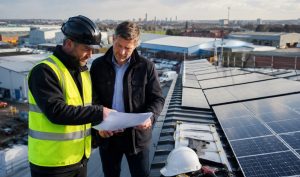
The price of a commercial system varies considerably depending on the size of your premises, the condition of your roof, and how much electricity you currently use. A small retail unit or workshop might get away with a modest 5–10 kW system. A larger warehouse or light industrial site could need 30 kW or more to make a meaningful dent in its bills.
It’s useful to have a baseline before you start talking to installers. A detailed breakdown of solar panels cost by system size will give you a sense of what to budget, including what the price covers and what the variables are.
For small commercial setups, installed costs typically fall somewhere between £8,000 and £30,000 depending on the specification, though this can change based on access, roof type and whether battery storage is included.
How Payback Periods Work for Small Businesses?
Payback period is the number most business owners want to know first. For commercial solar, the picture is often more favourable than it is for domestic installs.
That’s partly because businesses tend to use more electricity during the day, when the panels are generating, which means a higher proportion of what’s produced gets used on-site instead of exported.
A business that’s open Monday to Friday from nine to five will capture far more value from solar than a household where everyone’s out all day.
In a reasonable scenario, small commercial systems can pay back within five to eight years, with the panels themselves carrying 25 to 30-year performance warranties. The maths gets more compelling the higher your current electricity tariff.
Tax Considerations Worth Knowing About
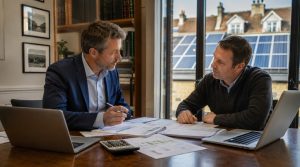
One thing that often gets overlooked in the initial conversation about solar is the tax treatment. In the UK, commercial solar installations qualify for the Annual Investment Allowance (AIA), which allows the full cost of the system to be deducted from taxable profits in the year of purchase, up to the current £1 million annual limit. This is separate from the Full Expensing scheme, which does not apply to solar panels as they are classified as special rate assets.
There are two additional incentives worth knowing about:
- Rooftop solar installations on commercial premises are exempt from business rates until 2035, so the investment will not increase your property’s rateable value.
- Second, any surplus electricity your system generates can be sold back to the grid through the Smart Export Guarantee (SEG), providing a small but steady additional income stream.
It’s worth speaking to an accountant before you commit, as the rules around capital allowances can depend on how your business is structured and what other expenditure you’ve made in the same tax year.
That said, for many small businesses, the tax relief can take a meaningful chunk off the effective upfront cost, which changes the payback calculation significantly.
What Affects Whether Solar Makes Sense for Your Site?
Not every business premises is equally suited to solar.
Before getting quotes, it’s worth thinking through a few key factors:
- Roof condition and orientation: South-facing roofs at a pitch of around 30–40 degrees will generate the most, but east/west-facing setups can still be viable
- Ownership vs. lease: If you don’t own the building, you’ll need your landlord’s sign-off, and the lease term needs to be long enough to justify the investment
- Daytime electricity use: The more you consume during daylight hours, the faster the return
- Grid connection capacity: Some sites will need a grid upgrade to export surplus, which adds cost and lead time
Businesses that run equipment during the day, refrigeration, machinery, air conditioning, EV charging, tend to see the best results. If your main electricity use is in evenings or weekends, the case for solar alone is weaker, though pairing it with battery storage can help balance that out.
To Summarise
For the right premises, commercial solar is a solid long-term move. The economics have improved as panel prices have stabilised, electricity tariffs have stayed high, and the business rates exemption for rooftop solar runs until 2035.
The AIA tax relief reduces the effective outlay, and payback periods for businesses with strong daytime usage can be competitive with other capital investments. The main risk is making a decision based on vague estimates.
Get a proper site survey, understand what your current bills look like broken down by time of day, and run the numbers with your accountant before signing anything. Solar won’t suit every small business, but for many, it’ll look better the closer you look at it.

Blogger | Business Writer | Sharing startup advice on UK business blogs
Related Articles in Business
View All →
Chick-fil-A Franchise Cost in 2026: UK Investment, Fees, Profits and Requirements
The Chick-fil-A franchise cost in the UK is approximately £10,000, making it an unusually accessible entry point into the international fast-food franchise market. In the United States, the…

The Best Digital Marketing Agencies for Enterprise Brands in the UK
When it comes to enterprise-scale marketing campaigns, the toughest challenge is ensuring coordination between the different channel teams. It’s understandable when you consider the complexity, with teams targeting…

Pass the Keys Franchise Cost: Investment, Fees and Profit Potential in 2026
The Pass the Keys franchise cost is currently best understood as a two-part investment: the franchise entry cost and the wider capital needed to launch and operate the…