

The RMT union train strike threats signal a serious risk of nationwide rail disruption across the UK, with millions of passengers potentially affected by delays, cancellations, and reduced services.
The dispute centres on pay, working conditions, and government funding constraints, with coordinated strike action now a real possibility.
Key highlights:
- RMT is threatening nationwide coordinated strikes across 11 train operators
- Pay demands are tied to RPI inflation (5.3%), higher than CPI (3.4%)
- Government resists unconditional wage increases due to funding limits
- Passengers may face widespread delays and uncertainty
- Other unions like ASLEF could escalate disruption further
This evolving situation places the UK rail network at a critical point, with implications for commuters, businesses, and the wider economy.
What Are the Latest RMT Union Train Strike Threats in the UK?

The latest RMT union train strike threats reflect a significant escalation in industrial tensions across the UK rail network.
The union has warned it will “maximise disruption” through coordinated national strikes unless its demands are met. This marks a shift from isolated action to a broader strategy targeting multiple operators simultaneously.
At the centre of the dispute is a formal conflict involving 11 out of 14 train operating companies, a level of coordination not seen in recent years.
This approach increases pressure on both the Government and rail operators, as disruption would affect key routes nationwide.
A transport policy expert summarised the situation:
“When disputes reach this scale, the rail system loses its flexibility. Coordinated action makes disruption far more widespread and difficult to manage.”
The threat comes as the rail sector continues recovering from earlier strike waves between 2022 and 2024, making the potential impact even more significant.
Why Is the RMT Union Demanding Above-Inflation Pay Rises?
The dispute is rooted in disagreements over pay structures and economic pressures. The RMT is pushing for wage increases that exceed inflation, using the Retail Price Index (RPI) as its benchmark.
Inflation Comparison Driving the Dispute:
| Inflation Measure | Current Rate | Preferred By |
| RPI | 5.3% | RMT Union |
| CPI | 3.4% | Government |
The union argues that RPI better reflects real household costs, while the Government favours CPI as a more stable measure. This gap has become a central sticking point.
In addition, the RMT opposes linking pay rises to productivity improvements or technological changes. Workers are concerned that such conditions could lead to long-term job insecurity.
A rail workforce representative explained:
“The frustration is not just about pay levels but the conditions attached. Workers feel they are being asked to trade stability for short-term gains.”
This highlights deeper structural tensions within the rail industry.
What Did Eddie Dempsey Say About Coordinated Rail Strikes?

RMT General Secretary Eddie Dempsey has taken a firm stance, warning that the union is prepared to escalate action if negotiations fail. In communications to members, he emphasised the possibility of coordinated strikes across all train operating companies.
His message to the Government was explicit:
“Our message to the Government is clear: unshackle these pay talks and allow meaningful negotiations to take place, or we will escalate our campaign, including moving towards a co-ordinated ballot for industrial action across all TOCs where we will co-ordinate strikes to maximise disruption.”
The strategy aims to apply maximum pressure by disrupting services nationwide rather than targeting specific routes.
His statement makes it clear that without “meaningful negotiations,” industrial action will intensify and expand across the rail network.
This coordinated approach represents a major shift in union tactics, signalling a more unified and aggressive strategy aimed at increasing leverage in ongoing disputes.
Which Train Companies Are Involved in the RMT Dispute?
The scale of the dispute is reflected in the number of operators involved. A total of 11 train companies are currently part of the conflict, covering both nationalised and private services.
Key Train Operators Affected:
| Train Operator | Region Covered | Type |
| Avanti West Coast | Intercity | Mixed |
| Great Western Railway | South West | Private |
| LNER | East Coast | Public |
| Northern Trains | North England | Public |
| Southeastern | South East | Public |
| TransPennine Express | Northern routes | Public |
This broad coverage means disruption could affect both urban commuter routes and long-distance travel corridors.
The involvement of nationalised operators also underlines the Government’s central role in resolving the dispute. This widespread impact reinforces the seriousness of the current situation.
When Could Train Strike Dates Be Announced and How Should Passengers Prepare?

Train strike announcements usually follow a structured process, starting with union ballots and followed by official confirmation. Once approved, strike dates can be announced with relatively short notice, giving passengers limited time to adjust their plans.
Expected Timeline for Announcements
Unions typically begin with a formal ballot of members. If the vote supports industrial action, official strike dates are announced, often at short notice.
In some cases, advance warning may be given, but last-minute changes or additional strike dates can still occur.
Rail operators may also publish revised timetables closer to the strike, meaning passengers should check updates frequently in the days leading up to travel.
How Passengers Can Prepare?
To minimise disruption, passengers should take proactive steps:
- Check National Rail and operator updates regularly
- Plan alternative routes, including buses or car travel
- Avoid peak travel times where possible
- Allow extra time for journeys and connections
- Consider flexible or refundable tickets where available
Passengers should also monitor service changes on the day of travel, as schedules can shift quickly. Even with preparation, uncertainty remains a challenge, so staying informed and flexible is key to reducing disruption.
How Will UK Train Delays Affect Daily Commuters and Businesses?
The impact of train delays extends far beyond inconvenience. For daily commuters, reduced service frequency and overcrowding can significantly disrupt routines. Businesses also face productivity losses as employees struggle to travel reliably.
A traveller I spoke with during a previous strike shared their experience in detail. I recall asking about their journey, and they said:
“I left two hours early and still arrived late. The trains that were running were packed, and no one knew which services would actually show up.”
From my perspective, this highlights a key issue: unpredictability often causes more disruption than cancellations themselves. When passengers cannot rely on schedules, planning becomes nearly impossible.
For businesses, the consequences include missed meetings, delayed operations, and reduced workforce efficiency. This creates a ripple effect across the economy.
What Happened During Previous UK Rail Strikes Between 2022 and 2024?

Past strikes provide valuable insight into what may happen next. During the 2022–2024 period, service levels dropped significantly across the network.
Typical Service Levels During Previous Strikes:
| Service Type | Availability |
| Intercity Routes | 30–40% |
| Regional Services | 20–30% |
| Rural Lines | Often suspended |
Entire sections of the network were temporarily closed, particularly in rural areas. These disruptions affected not only commuters but also businesses reliant on staff mobility.
The lessons from this period suggest that even partial strikes can cause widespread disruption.
How Did Recent London Underground Strikes Impact Transport Services?
Recent strikes on the London Underground showed that disruption does not always mean a complete shutdown. While some Tube lines continued to operate, services were often reduced, less frequent, and subject to last-minute changes, making travel unpredictable for passengers.
Service levels across Tube lines
During the strikes, several lines ran at limited capacity, with fewer trains and longer waiting times. However, not all services were maintained, some lines experienced full suspensions depending on staff availability. This uneven service pattern made it difficult for commuters to rely on normal travel routes.
Impact on Commuters and Mobility
Despite partial operations, passengers experienced widespread delays, overcrowding, and uncertainty across the network.
While some lines continued running at reduced capacity, others, such as the Circle line, had no service at all, making travel planning difficult for many commuters.
Key impacts included:
- Increased overcrowding on operating lines
- Longer waiting times and frequent delays
- Sudden cancellations and last-minute schedule changes
- Greater reliance on buses, taxis, and alternative routes
- Increased road congestion and extended journey times
As a result, many commuters were forced to adjust their daily routines, often leaving earlier or seeking alternative transport options. Overall, even a limited disruption had a significant impact on mobility across London.
What Is the Wider Economic Impact of Nationwide Rail Strikes in the UK?
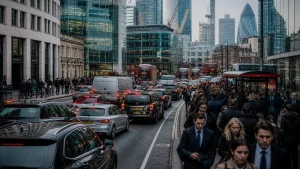
Rail strikes have a measurable and often immediate impact on the UK economy. The rail network plays a vital role in supporting commuting, tourism, and business operations, making any disruption particularly costly.
Key economic effects include:
- Reduced productivity due to employee travel disruptions
- Decline in retail, hospitality, and tourism activity
- Increased reliance on more expensive alternative transport
With the rail industry already receiving around £12 billion in subsidies, financial pressures further complicate negotiations between unions and the Government.
A senior rail executive noted:
“Public funding cannot stretch indefinitely, so every pay decision has wider implications for taxpayers.”
This situation highlights the delicate balance between ensuring fair wages for workers and maintaining long-term economic sustainability within the rail sector.
What Could Happen Next If RMT Union Train Strike Threats Escalate?
If the dispute continues without resolution, several potential outcomes could unfold. Coordinated nationwide strikes may bring large parts of the rail network to a standstill, while phased action could target specific days or regions.
The involvement of other unions, such as ASLEF, adds another layer of complexity and increases the likelihood of compounded disruption. Even limited additional action from train drivers could significantly reduce service availability.
In the coming weeks, negotiations between unions, rail operators, and the Government will be crucial in determining the direction of events. However, the current trajectory suggests a high risk of continued uncertainty and disruption.
Passengers and businesses alike should remain prepared and adaptable as the situation develops.
Key Statistics on UK Rail Disruption
Understanding the key figures behind the dispute provides important context on the financial pressures and scale of disruption across the UK rail network.
Core Metrics Behind the Dispute:
| Metric | Value |
| RPI Inflation | 5.3% |
| CPI Inflation | 3.4% |
| Rail Subsidy | £12 billion |
| Operators in Dispute | 11 |
These figures underline the scale and complexity of the situation.
Conclusion
The RMT union train strike threats represent a pivotal moment for the UK rail network. With disputes involving most major operators and demands centred on above-inflation pay, the risk of coordinated nationwide disruption is high.
While negotiations continue, uncertainty remains the defining factor. The outcome will depend on whether the Government, rail operators, and unions can find common ground.
Until then, passengers and businesses must prepare for potential delays, cancellations, and ongoing disruption across the UK.
Frequently Asked Questions (FAQs)
How do train strikes affect ticket refunds in the UK?
Passengers are usually eligible for refunds or compensation under Delay Repay schemes, depending on the level of disruption and ticket type.
Are freight rail services impacted by strikes?
Yes, strikes can disrupt freight operations, affecting supply chains and delivery timelines.
Can rail strikes increase demand for other transport?
Demand for buses, coaches, and flights often rises, sometimes leading to higher prices.
How reliable are reduced timetables during strikes?
They can be unpredictable, as staff shortages and operational challenges may still cause cancellations.
Do weekend strikes have less impact than weekday strikes?
Weekend travel may see slightly less disruption, but key routes can still be heavily affected.
What role does the Treasury play in rail disputes?
The Treasury controls funding for pay increases, making it a key decision-maker in negotiations.
Can remote working reduce disruption effects?
Yes, remote work can help mitigate commuter impact, though not all industries can adopt it.

Blogger | Business Writer | Sharing startup advice on UK business blogs