
What Helps to Reduce Traffic Bunching on a Motorway?

UK Startup Blog Archive
Table of Contents
If you have ever driven on a motorway and wondered why traffic suddenly slows down without an obvious reason, you have likely experienced traffic bunching. This occurs when vehicles begin clustering together, creating stop-start movement that reduces efficiency and increases the risk of collisions.
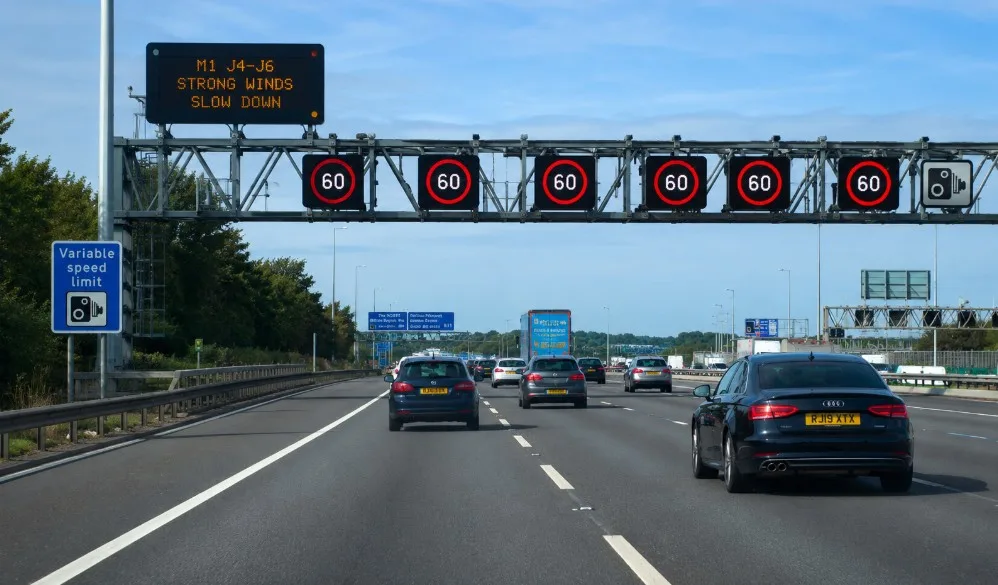
The primary factor that helps reduce traffic congestion on a motorway is variable speed limits. These dynamically controlled limits are designed to regulate vehicle flow, reduce sudden braking, and create more consistent spacing between vehicles.
Key takeaways:
- Variable speed limits are the primary method used to reduce traffic bunching.
- Smart motorways use technology to improve traffic flow.
- Safe following distances help minimise ripple-effect braking.
- Lane discipline supports smoother motorway movement.
- Driver behaviour remains a major factor in preventing congestion.
Understanding how motorway systems and driving habits work together can help you travel more safely and efficiently across the UK road network.
What Is the Main Thing That Helps to Reduce Traffic Bunching on a Motorway?
The correct answer to this common UK motorway and driving theory question is variable speed limits. Variable speed limits are displayed on overhead motorway gantries and are adjusted according to traffic conditions.
Rather than allowing vehicles to continue at higher speeds until they suddenly encounter congestion, these systems slow traffic earlier and more gradually. This controlled approach helps reduce the chain reaction of braking that causes traffic to compress into dense groups.
When traffic travels at a more consistent speed, several benefits appear immediately:
- Fewer abrupt stops
- Reduced congestion build-up
- Improved journey predictability
- Better spacing between vehicles
- Lower collision risk
Traffic Control Measures and Their Impact on Bunching:
| Traffic Measure | Purpose | Impact on Traffic Bunching |
| Variable Speed Limits | Control traffic flow | High reduction |
| Contraflow Systems | Redirect traffic | Limited effect |
| Lane Closures | Manage incidents | May increase bunching |
| National Speed Limits | Standard regulation | Minimal direct effect |
Unlike fixed speed restrictions, variable limits respond to real-time conditions, making them more effective for managing traffic density.
“Variable speed management remains one of the most effective tools available for improving motorway reliability and reducing congestion.” — National Highways operational guidance
What Does Traffic Bunching Mean on a Motorway?
Traffic bunching refers to vehicles gathering too closely together instead of maintaining consistent gaps and steady movement.
It often begins with a relatively small event, a driver brakes suddenly, changes lanes unexpectedly, or joins traffic aggressively. Drivers behind react slightly more strongly, and the slowdown travels backwards through traffic.
This process creates what traffic engineers commonly describe as a ripple effect. Eventually, motorway traffic begins operating in clusters instead of flowing continuously.
Smooth Traffic Flow vs Traffic Bunching:
| Smooth Traffic Flow | Traffic Bunching |
| Consistent spacing | Vehicles cluster together |
| Predictable speeds | Frequent speed changes |
| Lower braking frequency | Heavy stop-start movement |
| Reduced stress | Increased driver workload |
Although traffic bunching may seem harmless initially, prolonged bunching reduces motorway efficiency and increases accident exposure.
Why Does Traffic Bunching Happen on UK Motorways?
Traffic bunching happens when road conditions, vehicle volume, and driver behaviour disrupt smooth motorway flow. Even small changes, such as sudden braking or uneven speeds, can create waves of congestion.
Motorways rely on steady movement, so when gaps between vehicles become inconsistent, traffic starts to cluster. Understanding these causes helps drivers stay aware and reduce avoidable delays.
Common Causes of Traffic Bunching
Several common motorway conditions contribute to bunching:
- Sudden braking events
- Congestion during peak periods
- Speed differences between lanes
- Heavy merging activity at junctions
- Ignoring variable speed limits
- Frequent overtaking movements
One braking action can trigger hundreds of reactions further behind.
Driver Behaviour That Increases Congestion
Driver decisions play a larger role than many realise. Tailgating reduces reaction time and forces sharper braking. Lane hogging disrupts natural lane distribution. Constant acceleration and deceleration increase instability.
Drivers attempting to “close gaps” often unintentionally make congestion worse.
Driver Actions and Their Effects:
| Driver Behaviour | Result |
| Tailgating | Increased stop-start flow |
| Smooth driving | Improved spacing |
| Frequent lane changes | Traffic disruption |
| Keeping left | Better lane balance |
Small behavioural improvements across many drivers can significantly improve motorway flow.
How Do Variable Speed Limits Reduce Traffic Bunching?
Variable speed limits reduce traffic bunching by keeping vehicles moving at a more consistent pace on busy motorway sections. Instead of allowing drivers to continue at 70mph until they suddenly meet congestion, speed limits are lowered earlier so traffic can slow down gradually.
This is known as speed harmonisation. It helps maintain safer gaps between vehicles and reduces sudden braking, which is one of the main causes of stop-start traffic.
The system uses:
- Traffic sensors
- CCTV monitoring
- Control centres
- Overhead gantries
- Traffic prediction systems
These tools help detect congestion early and adjust speed limits before conditions worsen. A motorway moving steadily at 50mph can often carry traffic more efficiently than one where vehicles repeatedly accelerate and brake.
“Stable traffic conditions create greater network capacity than repeated acceleration and braking cycles.” — UK traffic management operational principle
By smoothing out vehicle speeds, variable limits reduce the conditions that allow bunching to form.
How Do Smart Motorways Keep Traffic Moving More Efficiently?
Smart motorways use technology and active traffic management to improve motorway performance and reduce congestion.
Unlike traditional motorways that depend mainly on fixed speed limits and driver judgement, smart motorways continuously monitor traffic conditions and adjust operations in real time. Their goal is to reduce disruption before congestion becomes severe.
These systems are increasingly used across key UK motorway routes to support safer and more predictable journeys.
Traffic Monitoring and Overhead Gantries
One of the most visible features of smart motorways is the overhead gantry system. These structures play an important role in communicating changing road conditions and helping drivers respond safely and efficiently.
Overhead gantries provide real-time instructions to drivers.
They display:
- Variable speed limits
- Lane closure warnings
- Incident alerts
- Congestion notifications
Sensors monitor traffic volume and speed patterns to identify developing congestion before conditions worsen.
Lane Management and Capacity Control
Smart motorways may temporarily adjust lane use to maintain smoother flow. These adjustments can include opening additional lanes where permitted and controlling lane availability during incidents.
Smart Motorway Technologies:
| Technology | Function |
| Gantries | Display instructions |
| Cameras | Monitor movement |
| Sensors | Detect congestion |
| Variable Limits | Regulate speed |
These technologies work together rather than independently. Sensors identify developing traffic conditions, cameras confirm the situation, gantries communicate with drivers, and variable limits influence vehicle behaviour.
Emergency Features That Support Traffic Flow
Emergency refuge areas provide designated safe stopping locations where continuous hard shoulders are not available. These areas are designed to improve safety while preventing broken-down vehicles from creating unnecessary lane blockages and traffic disruption.
Emergency facilities are supported by monitoring systems and communication infrastructure that help motorway operators respond quickly to incidents.
Smart motorway systems aim to reduce disruption before drivers even notice developing congestion.
Why Are Variable Speed Limits More Effective Than Other Traffic Control Measures?
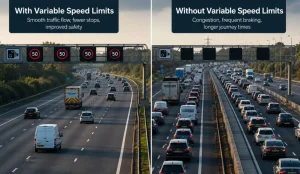
Many people assume all traffic management methods work equally well, but each method serves a different purpose.
Variable speed limits focus directly on preventing unstable traffic conditions before congestion forms. Other traffic measures often manage existing problems rather than preventing them.
Contraflow systems are mainly introduced during roadworks or road restrictions and are not designed specifically to regulate traffic density.
Lane closures are usually necessary for incidents or maintenance work but can temporarily reduce motorway capacity. National speed limits provide a consistent legal framework but do not adapt to changing traffic conditions.
Comparing Traffic Management Methods:
| Method | Dynamic | Reduces Bunching |
| Variable Speed Limits | Yes | Excellent |
| National Speed Limit | No | Limited |
| Contraflow | No | Low |
| Lane Closure | No | Often negative |
Variable speed systems stand out because they respond to real-time motorway conditions and influence driver behaviour before traffic conditions deteriorate.
Variable limits remain the strongest direct intervention because they actively influence traffic behaviour in real time.
What Can You Do as a Driver to Help Prevent Traffic Bunching?
Motorway systems help manage congestion, but driver decisions remain one of the most influential factors in maintaining smooth traffic flow. Small changes in driving habits can reduce unnecessary braking, improve lane usage, and create safer conditions for everyone using the motorway.
Safe Driving Habits for Better Traffic Flow
You can support smoother traffic by:
- Following the two-second rule
- Braking progressively
- Avoiding tailgating
- Maintaining a steady speed
These habits reduce unnecessary ripple effects and allow traffic to absorb changes more gradually. Maintaining distance gives you more time to react calmly rather than making sudden movements that affect surrounding vehicles.
Motorway Positioning and Lane Awareness
Good lane discipline contributes significantly to efficient traffic movement. Stay left unless overtaking and avoid unnecessary lane switching. Consistent positioning allows vehicles to spread more evenly across lanes and reduces interruptions.
Read overhead signs early rather than reacting at the final moment. Anticipating traffic changes supports smoother transitions and reduces abrupt braking.
“Driver consistency is often as important as infrastructure when improving motorway performance.” — UK road safety advisory principle
When thousands of drivers apply these habits together, traffic conditions improve noticeably.
What Is the Connection Between Traffic Bunching and the UK Driving Theory Test?
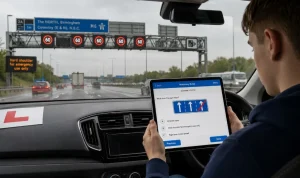
Traffic bunching appears in theory tests because it reflects practical motorway knowledge. Learner drivers are expected to understand that reducing congestion is not always about driving faster.
Theory questions commonly test:
- Variable speed limits
- Smart motorway signs
- Lane discipline
- Safe spacing
- Traffic management principles
A typical theory question asks:
What helps to reduce traffic bunching on a motorway?
Correct answer: Variable speed limits
Understanding the reason behind the answer helps learners apply motorway knowledge in real driving situations rather than memorising test responses.
This knowledge supports safer driving decisions and improves confidence when using modern motorway networks.
What Should You Remember About Reducing Traffic Bunching on a Motorway?
Traffic bunching is a common motorway challenge, but it can be reduced through a combination of smarter traffic control and responsible driving behaviour.
Variable speed limits remain the most effective motorway tool because they regulate speed before congestion escalates and help maintain more stable traffic movement.
At the same time, drivers play an equally important role by maintaining safe distances, responding early to changing conditions, following motorway instructions, and avoiding unnecessary braking.
Modern motorway systems continue to evolve, but their effectiveness still depends on cooperation between technology and road users. When traffic moves at a steady pace, journeys become safer, more predictable, more fuel efficient, and less stressful for everyone on the road.
Conclusion
Traffic bunching can lead to congestion, unpredictable driving conditions, and increased collision risk, but it can often be reduced through smarter traffic management and better driving habits.
The most effective solution is variable speed limits, which help maintain steady traffic flow and reduce sudden braking.
Smart motorway technology, combined with safe following distances, lane discipline, and driver awareness, creates smoother and safer motorway journeys across the UK.
Frequently Asked Questions
Can motorway speed cameras influence traffic flow?
Yes. Speed cameras support compliance with variable speed limits, helping maintain more consistent speeds.
Does keeping a larger gap improve motorway safety?
Yes. Safe gaps reduce braking pressure and lower the chance of bunching.
Are smart motorways used across all UK motorways?
No. Smart motorway sections currently operate on selected major routes.
What happens if drivers ignore variable speed signs?
Drivers may face penalties, and ignoring instructions can worsen congestion.
Can weather conditions make traffic bunching worse?
Yes. Rain, fog, and poor visibility often increase braking and vehicle clustering.
Do motorway gantries only display speed limits?
No. They also show lane instructions, incidents, and traffic alerts.
Is maintaining a constant speed better than frequent acceleration?
Generally, yes. Consistent speeds support smoother traffic flow and reduce congestion.

Blogger & Content creator | An insightful writer sharing practical advice for UK entrepreneurs
Related Articles in Lifestyle
View All →
The Instinctive Balancing of Choices We Make Each Day
Every day brings moments where we quietly weigh options, listen to gut feelings, and judge whether a small risk feels worth taking. This instinctive balancing of choices and…

Common Moving Mistakes UK Homeowners Make and How to Avoid Them
It’s not hyperbole to say that moving is one of the most stressful things you can do. The physical and administrative demands of a move stack up fast,…

Is It Safe to Travel to Cyprus With the Trouble in Israel?
Yes. At the time of writing, it is still considered safe to travel to Cyprus even with the trouble in Israel, and the UK government has not issued…