
How to Advertise on Instagram for New Business?


UK Startup Blog Archive
Table of Contents
To advertise a new business on Instagram, first create a professional account, define one measurable campaign goal and prepare a strong offer or landing page.
The business can then promote an existing post or build a more targeted campaign through Meta Ads Manager. New businesses should begin with a controlled test budget, compare several creative variations and increase spending only when the results support it.
Why Should a New Business Advertise on Instagram?
Instagram is a highly visual platform where businesses can introduce products, demonstrate services and communicate directly with potential customers. Paid advertising provides faster reach than relying entirely on organic growth, particularly when an account has few followers.
Instagram advertising can help a new business:
- Introduce its brand to a relevant audience
- Generate website visits or enquiries
- Promote products and special offers
- Collect leads through online forms
- Build an engaged social media following
- Retarget people who have shown interest
- Generate measurable sales or bookings
Advertising should still form part of a broader plan to market your business online. A campaign may generate attention, but the business also needs a trustworthy profile, competitive offer and straightforward buying process.
What Do You Need Before Advertising on Instagram?
Running an advertisement before the business is ready can waste money. Several basic elements should be completed first.
A Professional Instagram Account
The Instagram profile should be changed to a business or creator account. A professional account provides advertising options, contact buttons, audience information and performance insights.
The profile should include:
- A recognisable profile image
- A simple and accurate business description
- A link to the relevant website or landing page
- Contact information
- Several high-quality organic posts
- Story Highlights answering common customer questions
A completely empty profile may make potential customers cautious. Publishing useful content before launching an advert helps demonstrate that the business is genuine and active.
A Clear Customer Profile
The business must know whom it wants to reach. Relevant factors may include the customer’s location, age range, interests, occupation, needs and purchasing behaviour.
Businesses that are uncertain about their customers can use market research tools to investigate audience segments, market demand and competitors.
A Specific Campaign Goal
Every campaign should have one primary goal. Trying to gain followers, website traffic, leads and sales from the same advertisement usually produces unclear results.
A campaign goal might be:
- Receiving 30 qualified enquiries
- Selling 50 units of a new product
- Generating 500 visits to a landing page
- Collecting email addresses for a launch
- Increasing awareness within a local area
- Encouraging appointment bookings
A Suitable Destination
Customers must have somewhere relevant to go after clicking an advert. This could be a product page, booking system, contact form, Instagram profile or direct-message conversation.
The destination should match the advertisement. If the advert promotes one product but sends users to a general homepage, the additional steps may reduce conversions.
How Can a New Business Advertise on Instagram?
There are two principal ways to advertise: promoting an Instagram post or creating a campaign in Meta Ads Manager.
Promoting an Existing Instagram Post
The Promote button offers the simplest route. A business selects an existing post, chooses a goal, defines an audience, sets a budget and confirms the campaign duration.
This method is useful when:
- The business has never advertised before
- A particular organic post is already performing well
- The objective is profile visits, messages or simple website traffic
- The owner wants to launch a small test quickly
However, promoted posts provide less control over campaign structure, targeting, placements and testing.
Using Meta Ads Manager
Meta Ads Manager provides more detailed campaign options. It allows businesses to manage audiences, placements, budgets, conversion tracking and multiple creative variations from one dashboard.
It is generally the better option when the business wants to:
- Generate sales or qualified leads
- Advertise several products
- Test different audiences
- Retarget website visitors
- Control individual placements
- Compare several adverts
- Measure conversions more accurately
Instagram advertising is one of several types of online advertising, so it should be compared with search advertising, display campaigns, email marketing and organic social media before the entire marketing budget is committed.
How Do You Create an Instagram Ad Step by Step?
1. Prepare the Instagram Business Profile
Create or convert the account into a professional profile. Add the business details, upload branded images and publish enough content to give visitors a clear understanding of the company.
2. Set Up the Business Advertising Account
Create the necessary Meta business and advertising account, add a payment method and connect the Instagram profile. Businesses should confirm that authorised team members have the correct access without sharing personal login details.
3. Select a Campaign Objective
The available objectives generally cover goals such as:
- Awareness
- Traffic
- Engagement
- Leads
- App promotion
- Sales
The objective influences how the advertising system delivers the campaign. A traffic campaign is optimised for clicks, whereas a sales campaign attempts to find people more likely to complete a purchase.
Businesses should choose the outcome they genuinely need rather than selecting the objective that appears to provide the cheapest initial results.
4. Define the Conversion Location
Depending on the objective, the desired action may take place on a website, mobile app, Instagram profile, instant form, messaging service or telephone call.
A local service business may prefer messages or calls. An online retailer will normally direct customers to a product page and measure completed purchases.
5. Create the Target Audience
Audience targeting can include:
- Country, city or local radius
- Age range
- Language
- Interests
- Online behaviour
- Existing customer information
- Previous website or social media activity
New advertisers should avoid making the audience unnecessarily narrow. Layering too many interests can restrict delivery and raise costs.
A local restaurant, for example, may begin with people of a suitable age who live within a realistic travelling distance. It does not necessarily need a long list of interests.
Businesses advertising housing, employment, credit, financial services, politics or social issues may face additional targeting and disclosure requirements. The correct special advertising category should be selected where applicable.
6. Set the Budget and Schedule
Instagram advertising does not have a single fixed price. Costs are influenced by the audience, campaign objective, competition, advert quality, placement and time of year.
Businesses can normally choose between:
- Daily budget: The approximate amount available each day
- Lifetime budget: The total amount available throughout the campaign
A new business might begin by testing £5 to £15 per day for seven to fourteen days. This is a practical testing range rather than a guaranteed requirement. Businesses operating in highly competitive sectors may need a larger budget to generate enough meaningful data.
The first campaign should be treated as a test. Its purpose is to discover which audience, offer and advert combination performs best.
7. Choose Instagram Placements
Advertisements may appear across placements such as:
- Instagram Feed
- Instagram Stories
- Instagram Reels
- Instagram Explore
- Other eligible surfaces within Instagram
Automatic placements can give the advertising system more opportunities to find cost-effective results. Manual placements offer greater control but may restrict delivery.
A sensible approach is to use a range of placements while preparing creative material that fits each format. Results can then be reviewed separately before low-performing placements are removed.
8. Create the Advertisement
The business can use an existing Instagram post or upload new advertising material. Every advert should include:
- A strong opening visual
- One clear message
- A customer benefit
- A credible reason to act
- A direct call to action
- A destination that matches the offer
The advert should explain what the business offers and why it matters within the first few seconds.
9. Review and Publish
Before publishing, check the spelling, destination link, audience, budget, schedule and tracking setup. A small error in a landing-page link or location setting can consume the campaign budget without producing useful results.
The advertisement will then be submitted for review before delivery begins.
Which Instagram Ad Format Should a New Business Use?
Different formats support different messages and customer journeys.
| Format | Best suited to | Practical use |
| Image advert | Simple products and clear offers | Present one product, service or promotion |
| Video advert | Demonstrations and brand stories | Show how a product works or explain a service |
| Carousel advert | Multiple products or benefits | Allow users to browse several cards |
| Stories advert | Urgent offers and mobile engagement | Deliver a brief, full-screen message |
| Reels advert | Discovery and short demonstrations | Capture attention with vertical video |
| Collection advert | Ecommerce product discovery | Combine a main creative with products |
| Lead advert | Quotations and registrations | Collect customer details without a separate website |
A new business does not need to use every format. One strong image and one short vertical video can provide enough material for an initial comparison.
What Makes an Effective Instagram Advertisement?
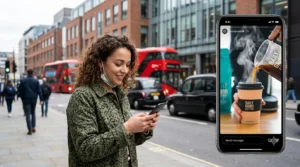
A Strong Opening
People scroll quickly, particularly through Stories and Reels. The first frame should make the subject immediately understandable.
Effective openings may include:
- The product being used
- A recognisable customer problem
- A surprising result
- A before-and-after demonstration
- A direct benefit
- A brief customer question
Benefits Rather Than Features
A feature describes what the product has. A benefit explains how it improves the customer’s situation.
For example:
- Feature: “The bottle holds 750 ml.”
- Benefit: “Stay hydrated throughout the working day without constant refills.”
Benefits tend to make advertising more relevant because they connect the product to a real need.
Authentic Visuals
Highly polished advertising is not always necessary. Demonstrations, customer experiences, behind-the-scenes clips and founder-led videos can feel more credible than generic stock photography.
Visuals should remain clear, well-lit and consistent with the company’s wider branding.
A Single Call to Action
The advert should request one action, such as:
- Shop now
- Book an appointment
- Request a quotation
- Send a message
- Join the waiting list
- Download the app
- Learn more
Several competing instructions can confuse the customer and weaken the campaign.
How Should a New Business Target Instagram Users?
New businesses can use three broad audience types.
Cold Audiences
These are people who have not interacted with the business before. They may be selected using location, age, interests or other relevant characteristics.
Cold advertising is useful for reaching new customers, but the advert may need to introduce the business and establish trust before asking for a purchase.
Warm Audiences
Warm audiences may include people who have:
- Visited the Instagram profile
- Watched a business video
- Engaged with a post
- Sent a message
- Visited the website
- Joined an email list
These users are already familiar with the business, making them suitable for follow-up offers and reminders.
Similar or Lookalike Audiences
Where the business has enough reliable customer or conversion data, it may be able to build an audience resembling its existing customers.
The quality of the source information is important. A list of genuine buyers is generally more valuable than a list of people who entered a low-value competition but never purchased.
How Much Should a New Business Spend on Instagram Ads?
There is no universal budget that guarantees success. The appropriate amount depends on the product price, profit margin, conversion rate and customer value.
A practical testing structure could be:
| Stage | Suggested approach | Main purpose |
| Initial test | £5–£15 per day | Compare audiences and creative ideas |
| Validation | £15–£30 per day | Confirm that results remain consistent |
| Expansion | Increase gradually | Reach more customers without disrupting performance |
| Retargeting | Smaller dedicated budget | Reconnect with interested users |
These figures are starting points, not mandatory spending levels.
Before advertising, calculate the maximum affordable customer acquisition cost. If a product sells for £40 but provides only £12 in profit before advertising, paying £20 for each new customer would normally be unsustainable unless repeat purchases raise the customer’s overall value.
Which Instagram Advertising Metrics Matter?
Businesses should measure results against the campaign objective rather than focusing on likes alone.
Important metrics include:
- Reach: Number of individual accounts shown the advertisement
- Impressions: Total number of times the advertisement was displayed
- Click-through rate: Percentage of impressions that generated a click
- Cost per click: Average advertising cost for each click
- Cost per lead: Amount spent to generate one enquiry or lead
- Conversion rate: Percentage of visitors completing the desired action
- Cost per acquisition: Amount spent to gain one customer
- Return on ad spend: Revenue attributed to the campaign divided by advertising cost
- Frequency: Average number of times each person saw the advertisement
A business generating leads should also assess their quality. Ten genuine sales enquiries may be more valuable than 100 incomplete or irrelevant forms.
Learning about cost-per-action marketing can help business owners connect campaign spending with measurable customer actions.
How Can a Business Track Instagram Conversions?
Businesses directing users to a website should configure appropriate conversion tracking. Depending on the website and sales journey, this may involve a tracking pixel, server-side conversion connection, analytics software or unique campaign parameters.
Useful events can include:
- Product view
- Add to basket
- Checkout started
- Purchase completed
- Form submitted
- Appointment booked
- Telephone button clicked
UK businesses must also consider privacy and electronic marketing requirements. Visitors should receive appropriate information about how their data is collected and, where required, be given a genuine choice before non-essential tracking technologies operate.
If tracking is unreliable, the campaign may appear more or less profitable than it really is. The advertising system may also have less useful information for campaign optimisation.
How Should Instagram Ads Be Tested?
Testing allows the business to identify which campaign elements produce results.
A simple test might compare:
- Two audiences
- Two images or videos
- Two opening hooks
- Two calls to action
- Two landing-page headlines
Only one major variable should be changed at a time. If the audience, offer, copy and visual are all changed together, it becomes difficult to identify what caused the difference.
Businesses should also avoid stopping advertisements after only a few hours. Small campaigns can fluctuate substantially from one day to another. Allow enough time and budget to collect useful results unless the advertisement is clearly broken or attracting inappropriate responses.
The same principles used to improve PPC return on investment apply to Instagram: measure performance, control spending and make adjustments using evidence.
What Common Instagram Advertising Mistakes Should Be Avoided?
Advertising From an Empty Profile
Customers often inspect a profile before purchasing. An incomplete account with no useful content can reduce trust.
Targeting Everyone
A broad, undefined audience makes it difficult to create a relevant message. The advert should speak to a recognisable customer group.
Choosing Engagement Instead of the Real Goal
An engagement campaign can attract likes and comments without generating sales. If the business needs purchases, leads or bookings, the chosen objective should reflect that outcome.
Sending Every Click to the Homepage
A specific advert should normally lead to a specific page. Customers should not have to search for the advertised offer.
Changing Campaigns Too Frequently
Constant edits can make it harder to evaluate performance. Significant changes should be planned and recorded.
Judging Success by Followers
Follower growth can support long-term brand development, but followers do not automatically become customers. Revenue, qualified leads and acquisition costs provide a clearer commercial picture.
Scaling an Unprofitable Campaign
Increasing the budget does not correct a weak offer or poor conversion rate. The underlying problem should be identified before more money is committed.
Ignoring Comments and Messages
Questions and comments are part of the customer journey. Slow or unhelpful replies can result in lost sales, even when the advert itself performs well.
What Is a Simple 30-Day Instagram Advertising Plan?
Days 1–7: Build the Foundation
- Complete the business profile
- Publish several useful organic posts
- Define the ideal customer
- Select one product or service
- Prepare a focused landing page
- Confirm conversion tracking
Days 8–14: Launch the First Test
- Create two advert variations
- Select one campaign objective
- Test a cold audience
- Use a controlled daily budget
- Check that links and forms operate correctly
Days 15–21: Review the Data
- Compare creative performance
- Review audience quality
- Measure cost per result
- Check comments and messages
- Pause adverts that clearly underperform
- Keep a record of every change
Days 22–30: Improve and Expand
- Allocate more budget to the strongest advert
- Introduce a warm retargeting audience
- Test one new creative idea
- Improve the landing page
- Calculate customer acquisition cost
- Decide whether the campaign is ready to scale
New businesses can use appropriate startup marketing tools to organise content, analyse results and support future campaigns.
Should a New Business Hire an Instagram Advertising Agency?
A new business can manage a straightforward campaign independently, especially when the budget is small and the owner understands the customer.
Professional support may be useful when:
- The monthly budget has become substantial
- Conversion tracking is complicated
- The company sells several products
- Campaign performance has stopped improving
- The business operates in a regulated sector
- Nobody internally has time to manage campaigns
- Advertising is central to the company’s growth plan
Before hiring anyone, ask how performance will be measured, who owns the advertising account and how frequently results will be reported. Businesses considering external support can compare digital marketing and advertising companies before making a decision.
Is Instagram Advertising Worth It for a New Business?
Instagram advertising can be worthwhile when the business has a well-defined audience, strong visual content, a clear offer and an effective conversion process.
It is particularly useful for consumer products, ecommerce companies, hospitality businesses, fitness brands, beauty services, creative companies and local firms with visually demonstrable work.
However, Instagram will not suit every company equally. A specialist business-to-business service may achieve better results through professional networking, search advertising, industry publications or direct outreach.
The safest approach is to start with a measurable test. If the campaign generates customers at an affordable cost, spending can be increased gradually. If it does not, the business should examine its audience, message, offer and landing page before investing more.
Final Thoughts
The most effective way for a new business to advertise on Instagram is to begin with a narrow commercial objective rather than an ambitious campaign covering every possible customer.
Prepare the profile, understand the audience, create a strong offer and launch a controlled test using at least two creative variations.
Measure leads, sales and customer acquisition costs instead of relying on likes or follower numbers. Once the business finds a profitable combination, it can increase the budget gradually and use the results to guide its wider marketing strategy.
Frequently Asked Questions
Can a new business advertise on Instagram without followers?
Yes. Paid advertising can reach selected audiences even when the account has very few followers. The profile should still contain enough useful content to establish credibility.
Can Instagram ads be run without a website?
Yes. A campaign can direct customers to an Instagram profile, direct messages, an instant lead form or another supported contact method. A website may still improve credibility and provide greater control over the customer journey.
How long should the first Instagram campaign run?
A first test should usually run for at least seven days, provided the campaign is functioning correctly. A longer period may be necessary when the budget or conversion volume is low.
Is it better to promote a post or use Ads Manager?
Promoting a post is simpler, while Ads Manager provides more control over objectives, testing, audiences, placements and conversion measurement. Ads Manager is normally preferable for serious lead-generation or sales campaigns.
Do Instagram advertisements guarantee sales?
No. Results depend on the audience, product, price, offer, creative material and buying process. Advertising can generate attention, but it cannot guarantee that users will purchase.
How often should Instagram adverts be changed?
Creative material should be refreshed when performance declines, frequency rises or the audience shows signs of fatigue. Advertisements should not be changed simply because they have been active for a few days.
What should a business do if an advert gets clicks but no sales?
Check whether the advertisement matches the landing page, whether the page loads correctly and whether the offer is competitive. Pricing, trust signals, checkout problems and weak calls to action can also prevent conversions.

Startup mentor & Blogger | Sharing leadership tips for UK business owners
Related Articles in Marketing
View All →
How Headwear Can Shape Your Startup’s Identity? – The Power of Customisation:
Building a recognisable brand when you’re just starting out is genuinely hard. There’s noise everywhere, budgets are tight, and you need every penny to work as hard as possible. That’s…

Why Outsourced Lead Generation Delivers Better ROI?
In the competitive landscape of the UK business market, the pressure to maintain a healthy sales pipeline is constant. Many organisations struggle to balance the demands of product…

Single-Use Card Numbers for Campaign Spending: Benefits & Best Practices
Single-use card numbers reduce fraud risk, simplify reconciliation, and help teams control campaign budgets. Here’s how to use them correctly. Campaign spending is messy by default. You’ve got…