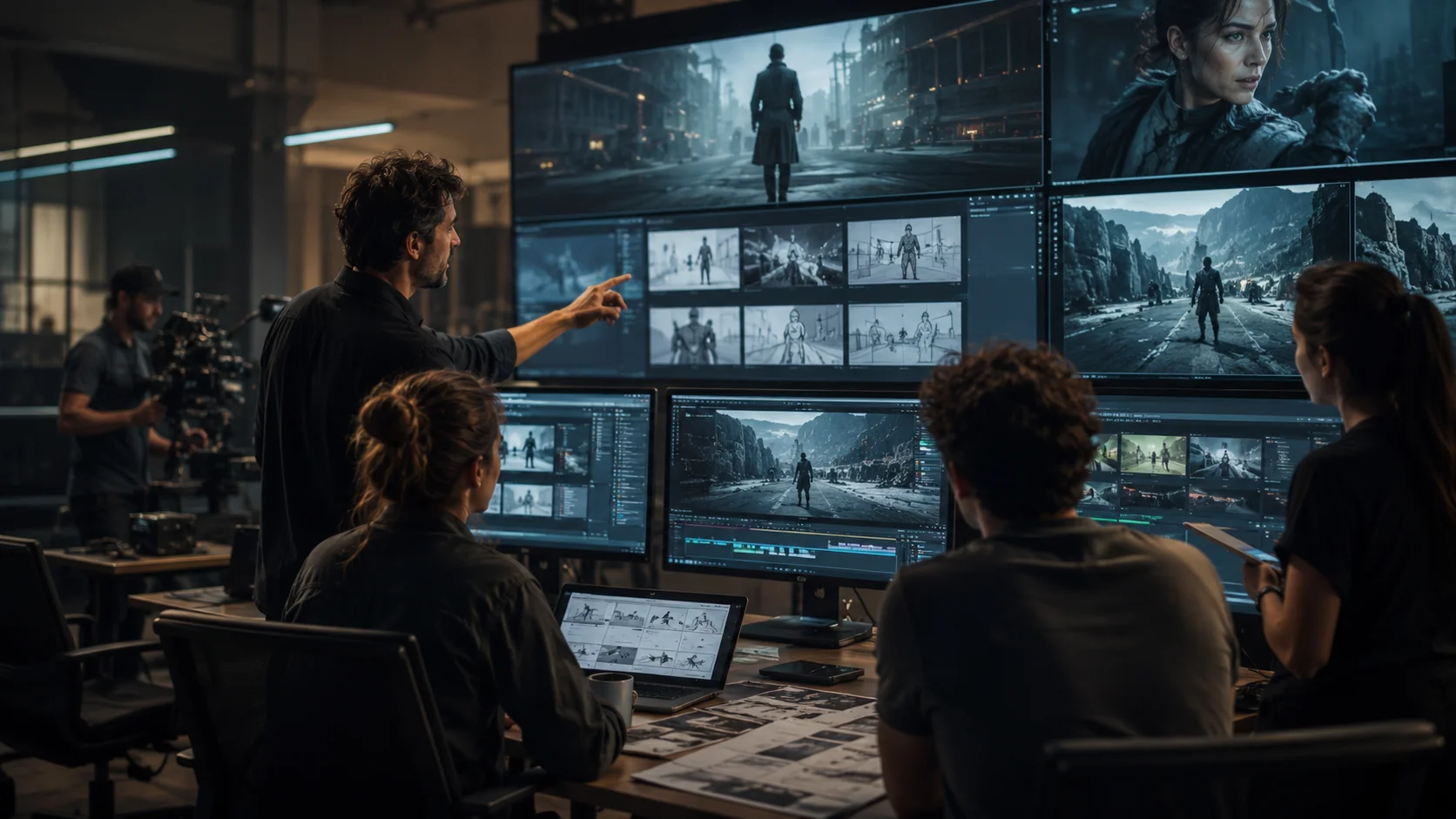

The traditional pre-production phase of filmmaking is undergoing a seismic shift. For decades, directors and creative leads relied on hand-drawn storyboards to bridge the gap between a script and the screen. This process was often slow, expensive, and limited by the artist’s ability to translate complex camera movements into static frames.
Today, the emergence of the professional ai video generator is making these manual workflows obsolete. We are entering an era where high-fidelity pre-visualization happens in minutes rather than weeks. This transformation allows creators to iterate on shots with a level of precision that was previously impossible without a massive studio budget.
Generative AI is poised to unlock trillions in value across various industries. In the world of cinema and content creation, that value is most visible in the pre-production pipeline. By utilizing advanced neural networks, creators can now generate entire sequences that include motion, lighting, and sound before a single camera is even rented.
This article explores the top tools leading this revolution. These platforms are not just simple filters: they are sophisticated engines capable of understanding cinematic language.
The Quiet Death of the Storyboard: How AI Video Is Changing Pre-Production Forever
1. Higgsfield
Higgsfield stands at the forefront of the pre-production revolution. As a flagship platform for cinematic production, it provides creators with unprecedented control over the visual narrative. While many tools focus on short, single clips, Higgsfield is designed for the complex needs of professional filmmakers and digital storytellers.
The platform is powered by Seedance 2.0, a state-of-the-art model developed by ByteDance. This model represents a massive leap forward in how an ai video generator interprets creative intent. Unlike first-generation models that struggle with logic, Seedance 2.0 understands physics, lighting, and character continuity at a foundational level.
Key Features of Higgsfield:
- Multi-Shot Sequence Generation: Unlike tools that only output five-second clips, this platform allows for the creation of cohesive multi-shot sequences. This is essential for building actual scenes rather than just visual vignettes.
- 12-Asset Input Support: To ensure total creative control, the platform allows users to input up to 12 different assets. This can include text prompts, reference images, specific video clips, and audio files.
- Industry-Leading Character Consistency: One of the hardest problems in AI video is keeping a character looking the same across different shots. The Seedance 2.0 model excels here, ensuring your protagonist remains recognisable throughout a sequence.
- Native Audio Sync: High-quality video needs high-quality sound. The platform integrates native audio synchronisation, allowing for a more immersive and professional pre-visualisation experience.
- Flexible Access: Users can access the power of Seedance 2.0 across all subscription plans, making professional-grade tools accessible to creators at any level.
By using Higgsfield, production houses can effectively kill the traditional storyboard. Instead of showing a client a series of static drawings, they can present a cinematic “rip-o-matic” that looks and feels like a finished product.
2. Runway Gen-3 Alpha
Runway has long been a pioneer in the generative video space. Their latest model, Gen-3 Alpha, is a powerhouse for professional artists who need high-fidelity motion. It has been trained on a massive dataset of high-quality video content, allowing it to produce hyper-realistic textures.
Best Use Cases:
- Motion Brush Control: Runway offers a unique feature that allows users to “paint” motion onto specific areas of a static image.
- High-Fidelity Textures: It is particularly good at rendering difficult materials like water, fire, and human skin.
- Advanced Camera Controls: Users can specify complex camera movements like pans, tilts, and zooms with high accuracy.
Runway remains a staple for those who need a robust toolset for specific visual effects and experimental video art.
3. Luma Dream Machine

Luma AI made waves with its “Dream Machine” model. This tool is built on a highly efficient architecture that prioritises speed and physical accuracy. It is designed to be a fast ai video generator that doesn’t sacrifice visual quality for processing time.
Key Features:
- Rapid Rendering: Luma is incredibly fast, making it ideal for rapid prototyping during a brainstorming session.
- Physical Realism: The model has a strong grasp of how objects move through 3D space, which reduces “warping” or “hallucinations”.
- Image-to-Video Excellence: It is widely considered one of the best tools for taking a high-quality static image and turning it into a 5-second cinematic clip.
4. Kling AI
Kling AI has emerged as a major competitor in the global market. Developed with a focus on long-form consistency and high resolution, Kling has become a favourite for creators who need longer clips without a drop in quality.
Best Use Cases:
- Extended Clip Length: Kling can generate videos up to 10 seconds in length in a single pass, which is longer than many of its western counterparts.
- 1080p Output: The native resolution is sharp, making it suitable for professional presentations and pitch decks.
- Complex Human Motion: It handles complex human actions, like walking or eating, with surprising fluidity.
Kling represents the growing international talent in the video generation space, providing a high-quality alternative for those looking for cinematic detail.
5. OpenAI Sora
Sora is perhaps the most famous name in the industry, even though it is not yet fully available to the general public. It set the benchmark for what is possible in the world of generative video.
Professional Context:
- World Building: Sora can generate complex scenes with multiple characters and intricate background details.
- Long-Term Consistency: It demonstrated the ability to keep a scene stable for up to a full minute.
- The Benchmark: While currently limited to a select group of “red teamers” and creative partners, Sora serves as the gold standard that other platforms strive to match.
6. Pika Labs
Pika (formerly Pika Labs) focuses on the “fun” and “creative” side of video generation. It is particularly popular among social media creators and those looking for a specific stylised aesthetic.
Key Features:
- Lip-Syncing: Pika has integrated impressive lip-sync features that allow characters to speak text-to-speech or upload audio.
- Sound Effects (SFX): It can automatically generate sound effects based on the visual content of the video.
- Style Modification: Users can easily change the “style” of a video, turning a live-action shot into an animation or a 3D render.
7. Midjourney
While primarily known as an image generator, Midjourney is an essential part of the AI video pipeline. Most high-end video workflows start with a Midjourney image that is then animated by an AI video generator.
Why is it essential?
- Unrivalled Aesthetics: Midjourney still leads the pack in terms of artistic composition and lighting.
- Character Reference: Their “Character Reference” (–cref) feature allows creators to lock in a look before moving to video.
- Ideation: It remains the best tool for the initial “blue sky” phase of a project where visual styles are being established.
8. Adobe Firefly Video
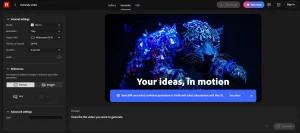
Adobe is slowly integrating generative video into its Creative Cloud suite. This is a game-changer for editors who already spend their day in Premiere Pro or After Effects.
Key Features:
- Generative Extend: This allows editors to add a few frames to the beginning or end of a clip to make a transition smoother.
- Text-to-Video: Built directly into the interface, allowing for a more seamless editing workflow.
- Commercial Safety: Adobe ensures that its models are trained on licensed content, making them safer for corporate and commercial use.
9. Flux.1 (with Video Extensions)
Flux.1 has quickly become the darling of the open-source community. While it is primarily an image model, various extensions and workflows allow it to be used for video pre-visualization.
Best Use Cases:
- Open-Source Control: For those who want to run models locally or on their own servers.
- Photorealism: Flux offers a level of skin texture and lighting detail that rivals Midjourney.
- Custom Training: Advanced users can train Flux on specific people or products, which can then be used as the basis for video sequences in higgsfield or other platforms.
The Future of Pre-Production
The death of the storyboard is not the death of creativity. On the contrary, it is the democratization of it. When a director can use an AI video generator to see their vision in motion before hiring a crew, the risks of production drop significantly.
Platforms like Higgsfield are leading this charge by offering professional tools that respect the nuances of cinematography. The ability to control multiple assets and maintain character consistency means that the “AI look” is being replaced by a truly “cinematic look.”
As these tools continue to evolve, the line between pre-production and production will continue to blur. We are moving toward a future where the “first draft” of a movie might be just as visually stunning as the final cut. For the modern creator, the message is clear: master these tools now, or get left behind in the static frames of the past.