
What Is the VAT Rate in the UK? 2026 Guide for Businesses and Consumers


UK Startup Blog Archive
Table of Contents
Value Added Tax, better known as VAT, is one of the most important taxes affecting consumers and businesses across the UK.
It is added to many goods and services and collected by VAT-registered businesses before being passed to HM Revenue and Customs.
The standard UK VAT rate is currently 20%, although some goods and services are taxed at 5% or 0%.
VAT has been part of the British tax system since 1973 and has changed significantly over the decades as governments have adjusted tax rates, expanded its scope and introduced new ways for businesses to report VAT.
For startups and small businesses, understanding VAT is particularly important because growing sales can create a legal requirement to register, charge VAT and maintain digital VAT records.
What VAT Rates Apply in the UK?
The UK currently has three principal VAT rates. The rate that applies depends on the type of goods or services being supplied.
| VAT Category | Rate | Common Examples |
| Standard Rate | 20% | Electronics, adult clothing, professional services and many everyday goods |
| Reduced Rate | 5% | Domestic energy and certain qualifying products and services |
| Zero Rate | 0% | Most food, children’s clothing, books and newspapers |
The 20% standard rate applies to the majority of taxable goods and services.
Businesses need to distinguish between zero-rated goods and VAT-exempt goods.
A zero-rated product is still considered a taxable supply, but VAT is charged at 0%. An exempt supply sits outside normal VAT charging rules, which can also affect how much VAT a business is allowed to reclaim.
This distinction becomes especially important when calculating taxable turnover for VAT registration.
When Was VAT Introduced in the UK?
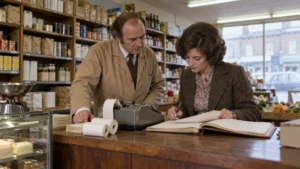
VAT officially came into effect in the UK on 1 April 1973, initially at a standard rate of 10%.
It replaced two existing forms of taxation known as Purchase Tax and Selective Employment Tax.
Purchase Tax had existed since 1940 and mainly applied to certain goods. Selective Employment Tax was introduced during the 1960s and primarily affected employment in service industries.
VAT created a broader consumption tax that could apply across goods and services while allowing businesses to reclaim eligible VAT paid on their own purchases.
Its introduction also came at the time Britain joined the European Economic Community. European countries were increasingly using VAT-based systems, making the introduction of VAT an important part of bringing the UK’s indirect tax structure into line with the European system.
More than five decades later, VAT remains a central part of the UK tax system.
Why Was VAT Introduced?
One of the main reasons for introducing VAT was to replace an older and more complicated system of indirect taxation.
Purchase Tax applied different tax rates to particular categories of products, while Selective Employment Tax affected certain industries differently.
VAT created a much broader system based on the value added to goods and services as they moved through the economy.
The introduction of VAT also helped the UK adopt a tax structure compatible with other European Economic Community countries.
Rather than collecting the entire tax only when a product reaches the final customer, VAT can be collected at different stages of the supply chain.
For example, a manufacturer may pay VAT when purchasing materials and charge VAT when selling products. The business can normally deduct qualifying VAT it has already paid from the VAT it owes.
This input and output tax system became one of the defining characteristics of VAT.
How Has VAT Changed Over the Years?
VAT has changed substantially since its introduction. Governments have raised and reduced the standard rate, introduced reduced rates and changed the VAT treatment of different products and industries.
UK VAT Timeline From 1973 to 2026
| Year | Major VAT Development |
| 1973 | VAT introduced at a standard rate of 10% |
| 1974 | Standard VAT rate reduced to 8% |
| 1974 | Higher 25% rate introduced initially for petrol |
| 1975 | Higher rate extended to several other products |
| 1976 | Higher rate reduced from 25% to 12.5% |
| 1979 | Standard rate increased from 8% to 15% and the higher rate was abolished |
| 1991 | Standard VAT rate increased to 17.5% |
| 1994 | Reduced VAT rate of 8% introduced for certain fuel and power supplies |
| 1997 | Reduced rate lowered to 5% |
| 2008 | Standard VAT temporarily reduced to 15% during the financial crisis |
| 2010 | Standard rate returned to 17.5% |
| 2011 | Standard rate increased to 20% |
| 2020 | Temporary 5% VAT rate introduced for qualifying hospitality, accommodation and attractions |
| 2021 | Temporary hospitality VAT rate moved from 5% to 12.5% |
| 2022 | Temporary hospitality relief ended and normal VAT treatment returned |
| 2026 | Standard rate remains 20%, reduced rate 5% and zero rate 0% |
Major VAT Rate Changes
Some changes were particularly significant because they reflected wider economic conditions.
The move from 8% to 15% in 1979 represented a major shift towards taxing consumer spending. The rate then increased to 17.5% in 1991.
During the global financial crisis, the government temporarily reduced the standard rate from 17.5% to 15% in December 2008.
The intention was to support consumer spending during a severe economic slowdown. It returned to 17.5% in January 2010.
The next major permanent change arrived on 4 January 2011, when the standard rate increased to 20%.
VAT was again used as an economic policy tool during the COVID-19 pandemic. Certain hospitality, tourism and attraction businesses received a temporary 5% rate from July 2020. This later changed to 12.5% before normal VAT rules returned in April 2022.
These changes demonstrate that VAT has developed from a relatively new consumption tax into an important tool for both government revenue and economic policy.
How Has VAT Affected the UK Economy?
VAT affects nearly every part of the UK economy because it influences consumer prices, government revenue and the financial responsibilities of businesses.
Impact on Government Revenue
VAT has become one of the UK’s largest sources of tax revenue.
HMRC recorded £186.9 billion in net VAT revenue for the 2025/26 financial year, highlighting how important the tax has become to public finances.
The money collected through VAT forms part of overall government revenue used to finance public spending, including areas such as healthcare, education, infrastructure, public administration and other services.
Because VAT is linked closely to consumer spending, government receipts can also rise or fall depending on inflation, household expenditure and wider economic conditions.
Impact on Consumers
Consumers ultimately bear much of the cost of VAT because businesses usually include the tax within the prices customers pay.
A product priced at £100 before standard-rate VAT would normally cost £120 including VAT.
VAT therefore influences the final price of many products and services.
However, different rates help reduce the tax burden on some essential products. Most food, books and children’s clothing, for example, can qualify for zero rating.
The impact of VAT can vary between households because people spend different proportions of their income on taxable and zero-rated goods.
Impact on Businesses and Startups
VAT creates both financial and administrative responsibilities for businesses.
A VAT-registered company needs to determine the correct rate for its sales, issue appropriate invoices, maintain records, submit VAT Returns and pay any VAT owed to HMRC.
Businesses can normally reclaim eligible VAT paid on purchases used for taxable business activities. This can make registration beneficial for companies that have substantial VAT-bearing costs.
Startups selling mainly to consumers need to consider pricing carefully. Registering for VAT can mean increasing customer prices or absorbing the VAT within existing prices.
Businesses selling primarily to other VAT-registered businesses may experience less pricing pressure because their customers can often reclaim the VAT charged.
Which Goods and Services Are Charged at 20%, 5% and 0% VAT?
The VAT rate depends on exactly what a business sells.
The 20% standard rate covers most taxable goods and services. Common examples include electronics, adult clothing, furniture, consultancy services, accounting services and many other business activities.
The 5% reduced rate applies to specific categories. Domestic fuel and power are among the most familiar examples, although detailed conditions can determine whether a particular supply qualifies.
The 0% rate applies to selected essential or socially important products, including many basic food items, books, newspapers and children’s clothing.
Zero-rated goods should not be confused with VAT-exempt supplies.
Businesses selling zero-rated products still make taxable supplies. This means those sales normally count towards VAT-taxable turnover and businesses can potentially reclaim related input VAT.
Exempt supplies work differently. Businesses making exempt supplies may not be able to reclaim all VAT associated with those activities.
Correct classification is therefore important because choosing the wrong VAT rate can result in underpayments, overpayments or problems with HMRC.
How Do You Calculate VAT in the UK?
Calculating standard-rate VAT is relatively straightforward.
To add 20% VAT to a price excluding VAT, multiply the net amount by 20%.
For example:
A business sells a service for £500 excluding VAT.
20% of £500 is £100.
The customer therefore pays:
£500 + £100 VAT = £600
The business records £500 as the net sale and £100 as output VAT.
Removing VAT from a VAT-inclusive amount requires a different calculation.
If the total price is £600 including 20% VAT, divide the amount by 1.20.
£600 ÷ 1.20 = £500
The VAT element is therefore:
£600 − £500 = £100
Simply removing 20% from a VAT-inclusive price would give the wrong answer because the VAT represents 20% of the net price rather than 20% of the final gross amount.
What Is the VAT Registration Threshold?
The VAT registration threshold is £90,000 of VAT-taxable turnover.
Businesses need to monitor turnover continuously rather than looking only at the traditional tax year or accounting year.
Registration is normally required when taxable turnover for the previous 12 months exceeds £90,000.
There is also a forward-looking rule. A business must normally register if it expects its taxable turnover to exceed £90,000 during the next 30 days alone.
Taxable turnover can include supplies charged at:
- Standard Rate of 20%
- Reduced Rate of 5%
- Zero Rate of 0%
VAT-exempt and genuinely outside-the-scope supplies are generally treated differently when calculating the registration threshold.
Businesses below £90,000 can still register voluntarily.
The VAT deregistration threshold is currently £88,000, which means eligible registered businesses expecting taxable turnover below this level may be able to apply to cancel their registration.
Should Startups Register for VAT Before Reaching the Threshold?
A startup does not necessarily have to wait until turnover reaches £90,000. Voluntary VAT registration is available to eligible businesses below the compulsory threshold.
Whether it makes sense depends largely on the business model.
Voluntary registration can be useful when a startup spends significant amounts on equipment, stock, software or other VAT-bearing business expenses because registration may allow qualifying VAT to be reclaimed.
It can also work well for business-to-business companies whose customers are themselves VAT registered.
There can, however, be disadvantages.
A consumer-facing startup may find that charging an additional 20% makes its prices less competitive. Alternatively, the business may choose to keep prices unchanged and absorb the VAT, reducing its effective margin.
Registration also creates additional responsibilities, including record keeping, VAT Returns and Making Tax Digital requirements.
Startups should therefore consider customers, costs, margins and expected growth rather than seeing voluntary registration as automatically beneficial.
What VAT Can Businesses Reclaim?
VAT-registered businesses can generally reclaim VAT paid on qualifying goods and services used for taxable business activities.
Examples can include stock, equipment, professional services, office costs and other legitimate business expenses where VAT has been correctly charged.
Businesses normally need valid evidence, such as an appropriate VAT invoice.
Where something is used partly for business and partly for personal purposes, only the qualifying business proportion may normally be reclaimed.
VAT can sometimes also be reclaimed on purchases made before registration.
Subject to the relevant conditions, a newly registered business may potentially reclaim VAT on:
- Goods Purchased Up To Four Years Before Registration where qualifying conditions are satisfied and the goods are still held or incorporated into goods still held
- Services Received Up To Six Months Before Registration where they relate to the business that has registered
Businesses making both taxable and exempt supplies may be subject to partial exemption rules, which can restrict the amount of VAT they can recover.
Keeping proper invoices and records is therefore essential.
What VAT Schemes Are Available for Small Businesses?

HMRC provides several VAT accounting schemes designed to simplify administration or help businesses manage cash flow.
Flat Rate Scheme
Eligible businesses with taxable turnover of £150,000 or less excluding VAT can potentially use the Flat Rate Scheme.
Instead of calculating VAT on every purchase in the normal way, the business pays HMRC a fixed percentage of VAT-inclusive turnover based on its business sector.
The scheme can simplify VAT accounting, although it is not automatically financially beneficial for every business.
Cash Accounting Scheme
Businesses with taxable turnover of £1.35 million or less may qualify for Cash Accounting.
VAT is generally accounted for when customers actually pay rather than when invoices are issued. This can help businesses that offer customers longer payment terms or experience late payments.
Annual Accounting Scheme
Businesses with taxable turnover of £1.35 million or less may also qualify for Annual Accounting.
Instead of submitting the usual four VAT Returns during the year, eligible businesses normally complete one annual return while making advance payments during the accounting period.
Businesses should compare the administrative and financial effects of each scheme before choosing one.
How Do VAT Returns and Making Tax Digital Work?
VAT-registered businesses need to report VAT collected from customers and VAT that can be reclaimed on qualifying purchases.
For many businesses, a VAT accounting period lasts three months.
The VAT Return determines whether the business needs to pay money to HMRC or is entitled to receive a repayment.
Businesses also need to comply with Making Tax Digital for VAT.
VAT-registered businesses are generally required to keep relevant VAT records digitally and use compatible software when submitting VAT Returns.
This has significantly changed VAT administration compared with the paper-based systems used during much of VAT’s history.
Modern accounting platforms can connect sales records, purchase records and VAT calculations, allowing businesses to maintain digital records throughout the accounting period rather than preparing everything manually when a return becomes due.
For startups, setting up suitable bookkeeping software early can reduce errors and make it easier to monitor taxable turnover as the business grows.
FAQs
How Much Is VAT in the UK?
The standard UK VAT rate is 20%. Certain qualifying goods and services are instead charged at the reduced 5% rate or zero-rated at 0%.
What Is the VAT Registration Threshold in 2026?
The VAT registration threshold is £90,000 of taxable turnover. Businesses need to monitor their turnover on a rolling 12-month basis rather than only by tax year.
When Was VAT Introduced in the UK?
VAT came into effect on 1 April 1973. It replaced Purchase Tax and Selective Employment Tax as part of a major reform of indirect taxation.
What Was the Original UK VAT Rate?
The original standard VAT rate was 10% when the tax began in 1973. The rate has changed several times and has been 20% since January 2011.
Do Sole Traders Have to Register for VAT?
A sole trader generally has to register when VAT-taxable turnover exceeds the registration threshold. Sole traders below the threshold can also choose voluntary registration.
Can Businesses Reclaim VAT on Expenses?
VAT-registered businesses can normally reclaim VAT on eligible expenses used for taxable business activities, provided they meet the relevant conditions and maintain appropriate records.
Is VAT Calculated on Turnover or Profit?
VAT registration is based on VAT-taxable turnover rather than profit. A business may therefore need to register even when its actual profit is relatively small.

Blogger & Content creator | An insightful writer sharing practical advice for UK entrepreneurs
Related Articles in Finance
View All →
If I Take Home £1,600 a Month, What Is My Salary in the UK?
If an employee takes home £1,600 per month in the UK, their estimated gross salary is approximately £21,780 per year. This is equal to about £1,815 per month…

Why the Two Year Accounts Rule is Not Actually a Rule?
Ask most new business owners when they can first apply for a mortgage and the answer comes back the same way every time: two years of accounts, minimum,…

Snap-on Franchise Cost: Fees, Investment and Earnings
The Snap-on franchise cost in the UK is currently quoted at £166,597 to £168,487 for the franchise investment, with Snap-on stating that a new franchisee may need to…