

Last Updated On – 09-09-2026
Choosing the right business bank account can make everyday financial management considerably easier for a small business.
The best accounts now go well beyond simply receiving customer payments and paying suppliers. They can help with bookkeeping, invoices, tax planning, cash flow, employee spending and international transactions.
For startups in particular, keeping business and personal finances separate from the beginning can make bookkeeping and tax preparation much simpler.
Anyone still setting up their company may also find it useful to understand how to start a business in the UK before comparing banking providers.
There is no single bank account that will be best for every business. A freelancer receiving digital payments has very different requirements from a retailer depositing cash every day, while an ecommerce company buying stock overseas may place far greater importance on foreign currencies.
Based on those factors, here are the Top 10 best business bank accounts for small businesses in UK in 2026.
Top 10 Best Business Bank Accounts for Small Businesses in UK
| Rank | Business Bank Account | Best For |
| 1 | Starling Business Account | Best overall small business account |
| 2 | HSBC Small Business Banking Account | Traditional banking without a monthly fee |
| 3 | Monzo Business Lite | App-based banking and money management |
| 4 | Mettle Business Account | Sole traders and bookkeeping |
| 5 | Virgin Money M Account for Business | Free banking with cashback |
| 6 | NatWest Start-up Business Account | New UK businesses |
| 7 | Lloyds Business Account | Branch access and growing companies |
| 8 | Barclays Business Account | Businesses wanting wider banking services |
| 9 | Tide Business Account | Freelancers and digital-first startups |
| 10 | Revolut Business | International and multi-currency businesses |
The ranking should be treated as a starting point rather than a universal order. The best account depends on how the business actually receives, holds and spends its money.
1. Starling Bank Business Account – Best Overall

Starling Bank Business Account takes the top position because it combines a £0 monthly account fee with free standard UK payments and a strong collection of business-management features.
The account is particularly attractive to limited companies that operate primarily online. Businesses can make and receive UK bank payments without transaction charges, create invoices, organise money using Spaces and connect the account with major accounting platforms including Xero, QuickBooks and FreeAgent.
Cash can still be deposited through the Post Office, although Starling charges 0.7% of the deposit with a minimum £3 charge. That makes Starling more suitable for businesses receiving most of their income electronically than cash-heavy retailers.
Starling Business Account at a Glance
| Feature | Starling Business Account |
| Best for | Overall everyday business banking |
| Monthly account fee | £0 |
| UK bank transfers | Free |
| Cash deposits | Post Office; 0.7% with £3 minimum |
| Accounting integration | Xero, QuickBooks and FreeAgent |
| Invoicing | Available |
| FSCS protection | Up to £120,000 for eligible deposits |
| Branch access | No traditional branches |
| Main advantage | Strong range of features without a monthly fee |
| Main limitation | Less suitable for businesses depositing large amounts of cash |
One particularly useful feature is the ability to separate money for tax and operating expenses. This can help prevent money reserved for VAT, Corporation Tax or other liabilities from being accidentally spent.
Businesses that connect their bank feeds with accounting software can also reduce manual record keeping. That forms an important part of maintaining effective bookkeeping for small businesses as transaction volumes increase.
Best suited to: limited companies and other eligible small businesses wanting a feature-rich digital account without an ongoing monthly account fee.
2. HSBC Small Business Banking Account – Best Traditional Bank With No Monthly Fee
HSBC has become a particularly competitive option for small businesses because its Small Business Banking Account has no monthly account fee.
Standard domestic digital transactions, debit card payments and other everyday electronic banking can be made without the monthly subscription charges associated with many traditional business accounts.
Unlike purely digital providers, HSBC also gives businesses access to a broader banking infrastructure and business specialists.
HSBC Small Business Banking Account at a Glance
| Feature | HSBC Small Business Banking Account |
| Best for | Small businesses wanting a traditional bank |
| Monthly account fee | £0 |
| Standard UK digital transactions | Free |
| Cash deposits | Available; transaction charges apply |
| Cheque deposits | Available |
| Business borrowing | Available subject to eligibility |
| FSCS protection | Up to £120,000 for eligible deposits |
| Branch access | Yes |
| Main advantage | Traditional banking with no monthly account fee |
| Main limitation | Cash, cheques and certain non-standard transactions can incur charges |
This can make HSBC particularly attractive for businesses that do not want to choose between a free digital account and the services associated with an established high-street bank.
It may also suit companies expecting their banking requirements to become more complicated as they grow, for example through borrowing, additional authorised users or more sophisticated payment requirements.
Best suited to: startups and established small businesses wanting digital banking combined with access to a major traditional banking group.
3. Monzo Business Lite – Best for Mobile Banking

Monzo has developed one of the strongest app-based propositions for small businesses.
Its entry-level Business Lite account costs £0 per month and includes free UK bank transfers, instant spending notifications, account management tools and 24/7 customer support.
Companies needing additional functions can upgrade to Business Pro, currently £9 per month, while larger teams can consider Business Team from £25 per month.
Monzo Business Lite at a Glance
| Feature | Monzo Business Lite |
| Best for | Mobile-first business banking |
| Monthly account fee | £0 |
| UK bank transfers | Free |
| Cash deposits | £1 per deposit |
| Paid plan available | Pro from £9 per month |
| Team plan | From £25 per month |
| FSCS protection | Up to £120,000 for eligible deposits |
| Customer support | 24/7 |
| Main advantage | Excellent app and simple money management |
| Main limitation | Some accounting and invoicing features require a paid plan |
Cash deposits are available through both the Post Office and PayPoint for £1 per deposit, subject to deposit limits.
The more advanced Monzo plans add features such as invoicing, automatic tax allocation, accounting software integrations and additional team controls.
This means a business can start with Lite and upgrade if its administrative requirements become more complicated.
Best suited to: sole traders and limited companies that handle most transactions digitally and want straightforward app-based financial management.
4. Mettle Business Account – Best for Sole Traders and Bookkeeping
Mettle is particularly appealing to freelancers, sole traders and very small limited companies because there is no monthly account charge or standard transaction fee.
Mettle operates as part of NatWest and its current bank account is provided by National Westminster Bank.
One of its biggest advantages is the inclusion of FreeAgent accounting software, subject to making at least one transaction through the Mettle account each month.
Mettle Business Account at a Glance
| Feature | Mettle Business Account |
| Best for | Sole traders and very small businesses |
| Monthly account fee | £0 |
| Standard transaction fees | £0 |
| Cash deposits | Post Office |
| Cash deposit fee | £2.75 per deposit |
| FreeAgent | Included subject to conditions |
| FSCS protection | Up to £120,000 for eligible deposits |
| Overdraft | Not available |
| Main advantage | Banking and accounting combined |
| Main limitation | Limited companies can have up to two owners, with only one account user |
Businesses can also create invoices, upload receipts, categorise transactions and automatically allocate percentages of incoming payments towards tax.
The main restriction is eligibility. Mettle is intended for sole traders and limited companies with up to two owners, and only one owner can access the account.
Its cash deposit limits also make it unsuitable for businesses handling substantial volumes of physical cash.
Best suited to: freelancers, contractors, consultants and small owner-managed businesses wanting to combine banking and accounting.
5. Virgin Money M Account for Business – Best Free Account With Cashback

The Virgin Money M Account for Business combines free everyday digital banking with business debit card cashback.
It is available to qualifying sole traders, startups and small businesses with an annual turnover below £1 million.
There is no monthly account fee, while qualifying debit card purchases earn 0.25% cashback with no annual cashback cap, subject to the account’s cashback terms and exclusions.
Virgin Money M Account for Business at a Glance
| Feature | M Account for Business |
| Best for | Small businesses wanting cashback |
| Monthly account fee | £0 |
| Day-to-day app and online banking | Free |
| UK debit card payments | Free |
| Direct Debits and standing orders | Free |
| Debit card cashback | 0.25% on eligible spending |
| Turnover eligibility | Under £1 million |
| FSCS protection | Up to £120,000 on eligible deposits |
| Main advantage | No monthly fee plus cashback |
| Main limitation | Additional banking services can carry charges |
The account also works with popular business tools including Xero, Sage and Shopify.
Virgin Money’s business operations transferred to Nationwide in April 2026. Eligible deposits held across Virgin Money and Nationwide therefore need to be considered together when assessing FSCS protection.
For owners regularly purchasing fuel, stock, advertising, software or other business supplies using their debit card, cashback can provide an additional benefit compared with a standard free account.
Best suited to: small companies, sole traders and startups looking for free everyday digital banking while earning cashback on qualifying purchases.
6. NatWest Start-up Business Account – Best for New UK Businesses
NatWest’s Start-up Business Account is specifically targeted at businesses in the early stages of trading.
Eligible businesses can receive two years of free banking on everyday transactions, considerably longer than the introductory periods offered by several other high-street banks.
Businesses generally need to have been trading for less than one year and have turnover below £1 million to qualify for the startup account.
NatWest Start-up Business Account at a Glance
| Feature | NatWest Start-up Account |
| Best for | Newly established businesses |
| Free banking period | 2 years on everyday transactions |
| Eligibility | Generally trading under 1 year with turnover below £1m |
| FreeAgent | Included while eligible account is retained |
| Cash deposits | Available |
| Branch access | Yes |
| Borrowing options | Available subject to status |
| FSCS protection | Up to £120,000 for eligible deposits |
| Main advantage | Long introductory free-banking period |
| Main limitation | Standard charges apply after introductory banking ends |
FreeAgent accounting software is another notable benefit and remains available while the qualifying NatWest business bank account is retained, although optional FreeAgent extras can carry charges.
NatWest also provides access to branches, Post Office banking, online banking and its mobile app.
Founders that have recently incorporated should make sure their company and financial arrangements are properly separated. The process is covered in more detail in UK Startup Blog’s guide to registering a new company with Companies House.
Best suited to: newly formed businesses wanting an established bank, physical banking options and an extended free-banking period.
7. Lloyds Business Account – Best for Branch Access and Growing Businesses

Lloyds remains a strong option for businesses that prefer the infrastructure and broader services of a traditional UK bank.
New customers opening their first qualifying Lloyds Business Account can currently receive no monthly account fee for the first 12 months, after which the standard account charge is £10 per month.
Standard electronic incoming and outgoing payments are included without an additional transaction charge.
Lloyds Business Account at a Glance
| Feature | Lloyds Business Account |
| Best for | Growing businesses wanting traditional banking |
| Monthly fee | £0 for first 12 months, then £10 |
| Electronic payments in/out | Included |
| Cash deposits | Available; charges apply |
| Cheque deposits | Available |
| Branch access | Yes |
| International payments | Available |
| FSCS protection | Up to £120,000 for eligible deposits |
| Main advantage | Wide range of banking and borrowing services |
| Main limitation | £10 monthly fee after introductory period |
Businesses can deposit cash, handle cheques, make international payments and explore different business borrowing options, subject to eligibility and affordability.
Lloyds therefore becomes more attractive where a business expects to need more than a simple current account.
A small business anticipating significant growth may value having banking, lending and payment facilities within the same wider banking relationship.
Best suited to: retailers, professional firms and growing businesses wanting branch access and a traditional banking relationship.
8. Barclays Business Account – Best for Businesses Wanting Wider Banking Services
Barclays offers a business current account combining digital banking with branch services, borrowing options and additional business support.
Eligible businesses opening a qualifying account can receive no monthly account fee for the first 12 months. The monthly account fee is currently £8.50 after that introductory period.
Simple electronic payments can be made without additional transaction charges under the account’s standard tariff, although assisted transactions, cash deposits and other services may cost extra.
Barclays Business Account at a Glance
| Feature | Barclays Business Account |
| Best for | Businesses needing broader banking services |
| Monthly fee | Free first 12 months, then £8.50 |
| Simple electronic payments | Free |
| Cash deposits | Available |
| Branch access | Yes |
| Business borrowing | Available subject to eligibility |
| Accounting support | Accounting software offers may be available |
| FSCS protection | Up to £120,000 for eligible deposits |
| Main advantage | Combination of digital and traditional banking |
| Main limitation | Ongoing monthly fee after introductory period |
Barclays can make sense for businesses that expect their requirements to expand into areas such as finance, overdrafts, international banking or other commercial services.
A purely digital startup that only sends and receives electronic payments may find a permanently free account better value. However, businesses that expect to use a wider banking relationship may place greater value on Barclays’ broader infrastructure.
Best suited to: startups and SMEs expecting more complex banking requirements as they expand.
9. Tide Business Account – Best for Freelancers and Digital-First Startups
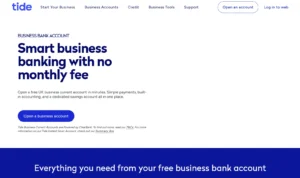
Tide has become a popular business finance platform among UK freelancers, sole traders and small companies.
Its entry-level account has no monthly account fee, although unlike Starling, Monzo and Mettle, certain individual transactions can carry charges.
On the entry-level plan, bank transfers generally cost 20p, although the current Lite structure includes a small monthly allowance of free transfers.
Tide Business Account at a Glance
| Feature | Tide Business Account |
| Best for | Freelancers and digital-first small businesses |
| Monthly account fee | £0 entry-level option |
| Bank transfers | Allowance applies; then 20p |
| Cash deposits | Post Office and PayPoint |
| Invoicing | Available |
| Accounting and tax tools | Available |
| FSCS protection | Up to £120,000 on eligible qualifying accounts |
| Customer support | 24/7 in-app support |
| Main advantage | Strong business administration tools |
| Main limitation | Transaction fees can increase costs for high-volume businesses |
Tide’s appeal is broader than the bank account itself. Its platform includes invoicing, expense management, payment acceptance and tax and accounting functionality.
That makes it particularly useful for founders who want several day-to-day financial tools within one business platform.
However, businesses sending and receiving large numbers of individual payments should calculate their likely transaction costs rather than concentrating only on the £0 monthly account fee.
Businesses struggling because customers take too long to settle invoices may also want to understand alternatives such as invoice financing, rather than relying entirely on overdrafts or short-term borrowing.
Best suited to: freelancers, sole traders, contractors and small companies wanting integrated invoicing and financial administration.
10. Revolut Business – Best for International Businesses
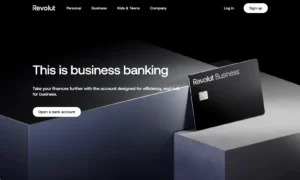
Revolut Business deserves a place in the Top 10 because it is significantly more international in focus than many conventional UK small-business accounts.
Its Basic plan starts at £10 per month, while Grow starts at £30 and Scale from £90 per month.
The main attraction is support for more than 25 currencies and tools designed for businesses sending, receiving or converting money internationally.
Revolut Business at a Glance
| Feature | Revolut Business |
| Best for | International and multi-currency companies |
| Basic plan | From £10 per month |
| Grow plan | From £30 per month |
| Scale plan | From £90 per month |
| Supported currencies | 25+ |
| Accounting integrations | Available |
| Team spending tools | Available |
| UK banking status | Fully licensed UK bank |
| Main advantage | International payments and currency management |
| Main limitation | No permanently free business plan and Revolut Business is not for sole traders |
For a business working exclusively in the UK, the £10 starting monthly fee can make permanently free alternatives more attractive.
The calculation changes for companies buying stock overseas, paying international contractors or receiving money from customers in different currencies. The ability to manage multiple currencies and foreign payments from the same platform can simplify international operations.
Revolut Business itself is primarily designed for registered companies. Sole traders and freelancers are directed towards Revolut’s separate Pro offering.
Best suited to: ecommerce businesses, agencies, technology startups, importers, exporters and other companies making frequent international transactions.
What Should Small Businesses Look for in a Business Bank Account?
Monthly Account Fees
A £0 monthly fee can be attractive for a startup trying to minimise fixed costs, but it does not necessarily mean the account will be cheapest.
Transaction fees for cash deposits, international transfers, ATM withdrawals or individual bank payments can quickly outweigh a small monthly subscription.
Transaction Charges
Estimate how many incoming and outgoing transactions the business processes every month.
A company processing hundreds of transfers may save more with unlimited free electronic payments than with a £0 account charging per transaction.
Cash Deposits
Cash handling is particularly important for:
- Shops
- Cafés and restaurants
- Market traders
- Tradespeople
- Salons
- Hospitality businesses
A business receiving £5,000 in cash each month should compare cash deposit charges and limits carefully.
Accounting Software
Bank feeds and accounting integrations can save considerable administrative time.
Connections with platforms such as FreeAgent, Xero, QuickBooks and Sage can make it easier to categorise expenditure, reconcile transactions and prepare financial records.
Invoicing
Freelancers and service businesses may benefit from accounts that allow invoices to be created and monitored directly from the banking app.
This can reduce the number of separate platforms required to run the business.
International Payments
Businesses trading internationally need to look beyond the headline monthly account fee.
Compare:
- Currency conversion charges
- International transfer fees
- Supported currencies
- Exchange-rate markups
- Foreign currency accounts
- International card charges
Revolut may therefore be more suitable for an international ecommerce company even though several UK-focused alternatives have no monthly fee.
Branch and Post Office Access
Digital banking works extremely well for many startups, but it cannot completely replace physical banking for every company.
A business regularly depositing cash or cheques may prefer HSBC, Lloyds, Barclays, NatWest or another provider with suitable physical banking facilities.
FSCS Protection
Eligible deposits with authorised UK banks can currently receive protection of up to £120,000 per eligible depositor, per banking institution under the Financial Services Compensation Scheme.
Businesses should remember that protection can apply across banking brands that share the same banking licence or institution rather than separately to every brand.
Does a Small Business Need a Business Bank Account?
A limited company is legally separate from its directors and shareholders, so company money should be kept separate from personal funds. In practice, opening a dedicated company bank account is the normal way to achieve this.
Sole traders are different because the individual and business are not separate legal entities. However, a dedicated business account can still make financial administration considerably easier.
Separating transactions makes it easier to:
- Monitor business cash flow
- Identify allowable expenses
- Reconcile accounts
- Prepare tax information
- Produce financial reports
- Understand actual business profitability
The administrative benefits often become increasingly important as a business grows.
Can a Startup Open a Business Bank Account?
Yes. Several of the accounts in this comparison are specifically aimed at startups.
The bank will normally want information about:
- The business owner or directors
- Business activities
- Company registration where applicable
- Expected turnover
- Sources of income
- Ownership and persons with significant control
- Business and personal addresses
Applications remain subject to each provider’s eligibility, verification and compliance requirements.
New businesses without extensive trading history are therefore not automatically prevented from opening an account.
Can You Have More Than One Business Bank Account?
Yes, a business can have more than one account provided it meets each bank’s eligibility requirements.
There can be practical reasons for doing this. For example, one account might handle everyday customer payments while another holds money reserved for Corporation Tax, VAT or emergency cash reserves.
Some international businesses also maintain a separate multi-currency account alongside their main UK operating account.
However, multiple accounts create additional bookkeeping requirements, so each account should have a clear purpose.
Is a Free Business Bank Account Always Better?
No.
A permanently free business account can provide excellent value for a small digital business, but the cheapest account depends on how it is used.
Consider two businesses.
Business A is a marketing consultant receiving five bank transfers each month and paying expenses electronically. A free digital account could be ideal.
Business B owns a convenience store and deposits thousands of pounds in cash every week. Cash deposit costs could matter far more than the monthly account fee.
The cheapest account therefore depends on transaction patterns rather than the headline price.
FAQs
What is the best business bank account for a small business in UK?
Starling is one of the strongest overall options because it currently combines no monthly account fee with free UK transfers and useful business-management features.
What is the best free business bank account?
Starling, HSBC Small Business Banking, Monzo Lite, Mettle and Virgin Money M Account for Business all currently provide options without a standard monthly account fee, although transaction charges can still apply.
Which business bank account is best for a startup?
NatWest is particularly competitive for eligible new businesses because its Start-up Business Account includes two years of free banking on everyday transactions. Starling, Monzo, Mettle and Virgin Money are also worth considering.
Which business bank account is best for sole traders?
Mettle, Starling, Monzo and Virgin Money are strong options for sole traders. Mettle stands out where included FreeAgent accounting software would be valuable.
Which business bank account is best for international payments?
Revolut Business is particularly suited to companies frequently handling different currencies or international transactions.
Which business account is best for cash deposits?
Businesses handling substantial amounts of cash should compare HSBC, Lloyds, Barclays, NatWest and other providers offering branch or Post Office facilities because cash deposit pricing varies significantly.
Are business bank accounts protected by FSCS?
Eligible deposits with qualifying UK banks can currently be protected by the Financial Services Compensation Scheme up to £120,000 per eligible depositor, per banking institution.
Can a limited company use a personal bank account?
A limited company is legally separate from its owners, so its finances should be kept separate from directors’ personal money. A dedicated company banking arrangement is therefore the normal approach.

Blogger | Business Writer | Sharing startup advice on UK business blogs