
Cutting Office Paper Waste: Practical Tips for Greener Workplaces


UK Startup Blog Archive
Paper remains one of the most commonly used resources in offices around the world. Despite the rise of digital tools, many workplaces still rely heavily on printed documents, reports, invoices, and internal communications.
While paper may seem like a small operational expense, excessive consumption contributes to unnecessary waste, increased costs, and environmental strain. Businesses that take steps to reduce paper use often discover benefits that extend beyond sustainability, including improved efficiency and streamlined workflows.
Creating a greener workplace does not require drastic changes or expensive investments. Small, consistent improvements can significantly reduce paper consumption while helping organizations build more responsible and environmentally conscious practices.
By understanding where paper waste originates and implementing practical solutions, companies of all sizes can make a meaningful difference.
How Does Cutting Office Paper Waste for Greener Workplaces Benefit Businesses?
Understanding Where Office Paper Waste Comes From

Many organizations underestimate how much paper they consume daily. Printing emails, meeting agendas, draft documents, reports, and forms often becomes routine without employees considering whether physical copies are truly necessary. Over time, these habits create a substantial amount of waste that accumulates throughout the workplace.
Another common source of waste is unnecessary duplication. Documents are frequently printed multiple times for review, revision, or distribution, even when digital alternatives are readily available. Outdated filing systems can also contribute to excessive paper storage and disposal needs. When organizations rely on physical archives rather than digital records, paper consumption tends to increase significantly.
Understanding these patterns is the first step toward meaningful improvement. Conducting a simple audit of printing habits, storage practices, and document workflows can reveal opportunities for reduction. Once businesses identify their primary sources of paper waste, they can develop targeted strategies that produce measurable results.
Encouraging Digital-First Workflows
One of the most effective ways to reduce paper waste is to prioritize digital communication and document management. Cloud-based platforms, collaborative software, and secure file-sharing systems allow employees to access information without printing physical copies. These tools make collaboration easier while reducing reliance on paper-intensive processes.
Digital signatures have also become widely accepted across many industries. Instead of printing contracts, forms, and approvals, businesses can complete transactions electronically. This not only reduces paper use but also speeds up administrative processes and improves document accessibility.
Organizations that adopt digital-first workflows often find that information becomes easier to organize and retrieve. Employees spend less time searching through filing cabinets and more time focusing on productive work. As digital systems become integrated into daily operations, paper consumption naturally declines without disrupting efficiency.
Creating Smarter Printing Habits
Even in highly digital workplaces, some printing remains necessary. However, implementing smarter printing policies can dramatically reduce waste.
Encouraging double-sided printing, black-and-white printing when color is unnecessary, and print preview checks before printing can significantly lower paper usage.
Many companies establish print management settings as defaults across office devices. By making duplex printing the standard option and requiring confirmation before large print jobs, organizations can reduce accidental and unnecessary printing. These simple adjustments often lead to substantial paper savings over time.
Employee awareness is equally important. Training staff to think critically before printing encourages more responsible resource use. A workplace culture that values sustainability helps employees recognize opportunities to reduce waste without compromising productivity or quality.
Improving Paper Recycling and Disposal Practices
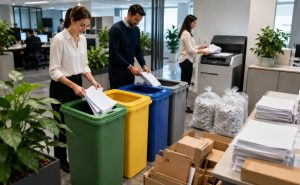
Reducing paper consumption is only part of the solution. Businesses should also focus on managing paper waste responsibly when disposal becomes necessary. Accessible recycling stations placed throughout the office encourage employees to recycle documents, packaging, and other paper materials rather than sending them to landfill.
Clear labeling is essential for successful recycling programs. Employees should understand which materials belong in recycling bins and which require alternative disposal methods. Educational initiatives can help prevent contamination that may reduce the effectiveness of recycling efforts.
Organizations can further strengthen their sustainability efforts by partnering with professional providers that specialize in secure and environmentally responsible waste paper disposal. Proper disposal procedures help ensure confidential information remains protected while maximizing opportunities for recycling and resource recovery.
Building a Culture of Sustainability
Long-term success depends on employee engagement. Sustainability initiatives are most effective when staff members understand their purpose and actively participate in achieving organizational goals. Leadership plays a critical role in setting expectations and demonstrating commitment to responsible resource management.
Recognition programs can help reinforce positive behavior. Celebrating departments that successfully reduce paper usage or achieve sustainability milestones encourages ongoing participation. Employees are often more motivated when they can see the direct impact of their efforts.
Regular communication about environmental goals and progress also helps maintain momentum. Sharing updates on paper reduction achievements, recycling successes, and sustainability initiatives keeps employees informed and invested in the organization’s environmental objectives.
Leveraging Technology for Continuous Improvement
Modern technology offers numerous opportunities to further reduce paper waste. Document management systems, automated workflows, and digital archiving solutions help organizations eliminate many traditional paper-based processes. These technologies create more efficient operations while supporting environmental goals.
Data analytics can provide valuable insights into printing behavior and resource consumption. By monitoring usage patterns, businesses can identify areas for improvement and implement targeted strategies to reduce waste. Tracking performance also makes it easier to measure the effectiveness of sustainability initiatives over time.
As technology continues to evolve, organizations that embrace innovation will be better positioned to reduce their environmental footprint. Continuous improvement ensures that paper reduction efforts remain relevant, effective, and aligned with broader sustainability objectives.
Conclusion
Reducing office paper waste is a practical and achievable goal for businesses of every size. By understanding consumption patterns, adopting digital workflows, improving printing practices, and implementing effective recycling programs, organizations can significantly decrease their environmental impact while enhancing operational efficiency.
A greener workplace is built through consistent actions rather than dramatic changes. When businesses combine thoughtful policies, employee engagement, responsible disposal methods, and modern technology, they create sustainable practices that benefit both the organization and the environment for years to come.

Blogger | Business Writer | Sharing startup advice on UK business blogs
Related Articles in Work Culture
View All →
How to House Your Team for a London Project Sprint?
Pulling a distributed team into London for a sprint, roadshow, or product launch is one of those things that sounds easy until you start pricing it up. Hotel…

Strategic Interior Fit-Outs for Workplace Productivity
Creating an efficient workspace is essential for business success. Strategic interior fit-outs can significantly boost productivity and employee satisfaction. Companies are increasingly focusing on interior design to create…

The Importance of Reporting Workplace Accidents: A Guide
The workplace can be a dangerous place. No working environment is completely free from risk of accident or injury, which makes it just as important for any and…