
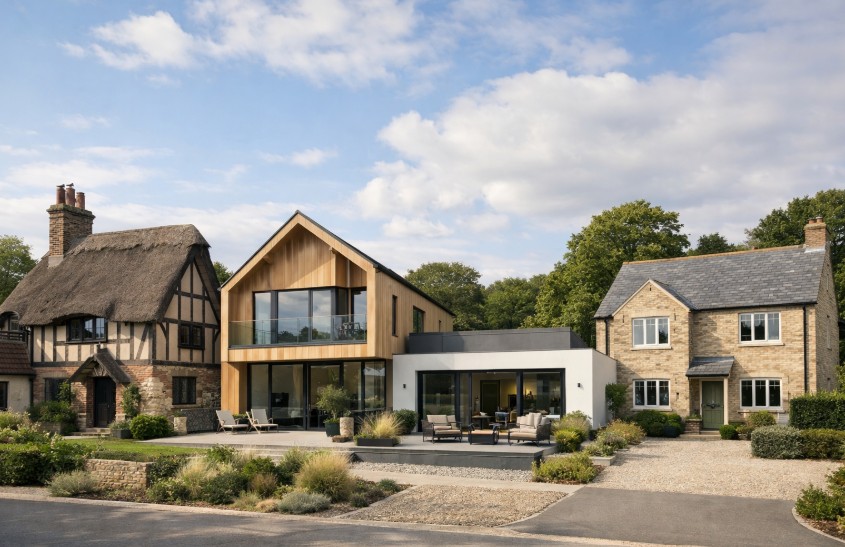

Finding home insurance can feel straightforward when you live in a conventional brick-built property. However, if your home falls outside the ordinary, you might discover that standard insurers aren’t willing to provide cover.
Non-standard properties range from architectural beauties with historical significance to modern homes built with alternative materials, and each presents unique risks that require specialist understanding.
The good news is that specialist insurers exist specifically to cover these properties, offering tailored policies that recognise the individual characteristics and requirements of unusual homes. Let’s explore which types of properties typically need this specialised approach.
Steel and Timber-Framed Houses
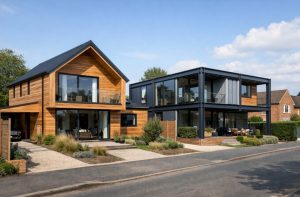
Alternative construction methods have gained popularity in recent years, particularly for their eco-friendly credentials and design flexibility. However, timber-framed and steel-framed houses often struggle to secure standard insurance policies.
Timber-framed properties can face concerns about fire risk, moisture damage, and structural integrity. Insurers may worry about the potential for rot, insect infestation, or the challenges of repairs requiring specialist tradespeople.
These concerns don’t make timber-framed homes uninsurable, but they do require insurers who understand these construction methods properly. Steel-framed houses present challenges as well.
While robust and durable, they can be susceptible to corrosion if not properly maintained. Additionally, some insurers lack experience with this construction type, making them reluctant to provide cover.
Intelligent Insurance specialises in policies for both timber and steel-framed properties, assessing each home individually instead of applying blanket refusals.
Heritage Listed Buildings
Grade I, Grade II*, and Grade II listed buildings represent the UK’s architectural heritage, but they come with specific insurance challenges. These properties require specialist materials and skilled craftspeople for repairs, making claims potentially more expensive than standard homes.
Listed buildings often feature period features like original timber beams, historical roofing materials, or decorative stonework. If damage occurs, you can’t simply replace these with modern alternatives. The work must meet conservation standards, use appropriate materials, and often requires listed building consent.
Standard insurers typically can’t accommodate these requirements. Specialist policies for listed buildings will consider the property’s unique features, higher rebuild costs, and the specific regulations governing any repairs or modifications.
Flat Roof Houses
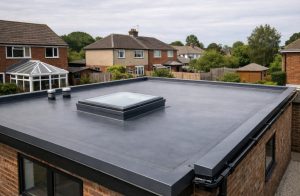
While flat roofs aren’t necessarily non-standard, they can raise red flags with traditional insurers. The perception (whether accurate or not) is that flat roofs are more prone to leaks, water damage, and require more frequent maintenance than pitched roofs.
Modern flat roofs with proper drainage and high-quality materials can be extremely durable. However, convincing insurers of this can prove difficult. Properties with flat roofs benefit from specialist policies that assess the actual condition and construction quality rather than making assumptions based on roof type alone.
Homes Susceptible to Subsidence
Subsidence occurs when the ground beneath a property shifts or sinks, potentially causing structural damage. Properties built on clay soil, near trees with extensive root systems, or in areas with historical mining activity face higher subsidence risk.
If your property has experienced subsidence previously, many standard insurers will refuse cover or exclude subsidence from your policy entirely. This leaves homeowners vulnerable to potentially catastrophic repair costs.
Specialist subsidence insurance recognises that many homes with previous subsidence have been properly repaired and may include underpinning work that actually makes them more stable.
These policies assess the property’s current condition, the quality of previous remedial work, and ongoing risk factors to provide appropriate cover.
Underpinned Houses
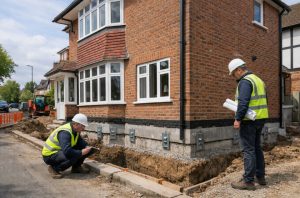
Underpinning strengthens a property’s foundations, typically performed after subsidence damage. While this repair work should make the property structurally sound, many insurers view underpinning as a warning sign rather than a solution.
Standard insurers often decline to cover underpinned properties or charge prohibitively high premiums. They may worry about future movement or question whether the underpinning was performed to adequate standards.
Specialist policies for underpinned houses take a more nuanced approach.
They’ll consider factors such as:
- When the underpinning was completed
- Which company performed the work
- Whether guarantees or warranties are in place
- The property’s stability since completion
- Any ongoing monitoring or maintenance requirements
To Summarise
Non-standard properties deserve insurance policies that recognise their unique characteristics rather than penalising them for being different. Whether you own a beautiful listed cottage, a modern timber-framed eco-home, or a property with a complex repair history, specialist insurers can provide the comprehensive cover you need.
While we’ve discussed several common examples, this is not an exhaustive list and there are other non-standard properties that may require specialised cover.
The key lies in finding insurers who assess each property individually, understand the specific risks involved, and offer policies tailored to your home’s particular requirements. With the right specialist cover, you can protect your unique property with confidence.