
Shell Petrol Station Franchise Cost in the UK: Real Investment, Income and Process

UK Startup Blog Archive
Table of Contents
If you are searching for the Shell petrol pump franchise cost in the UK, the first thing to understand is that Shell does not currently advertise its UK opportunity as a conventional franchise with a standard franchise fee and fixed royalty structure.
The closest opportunity for many entrepreneurs is Shell’s Self-Employed Retailer Programme, where an approved operator runs one or more Shell service stations as an independent business.
There is also a separate dealer route for businesses operating independently owned or controlled forecourts under the Shell brand.
Current third-party Shell opportunity listings show a minimum investment of around £100,000, while petrol station finance guides have quoted approximately £138,000 as a total initial investment. Shell itself does not publish either figure as a universal fixed entry cost.
That distinction matters.
Someone researching a normal franchise business model might expect to buy a territory, pay a franchise fee and then pay ongoing royalties. Shell’s UK retailer structure works differently.
How Much Does a Shell Petrol Pump Franchise Cost in the UK?
For planning purposes, a prospective Shell retailer should currently think in terms of at least £100,000 of available capital, while recognising that the actual funding requirement may be higher depending on the site or cluster offered.
| Cost Point | Amount | What It Actually Means |
| Advertised minimum investment | About £100,000 | Current third-party Shell retailer opportunity listings |
| Separate franchise fee | No conventional franchise fee advertised | Shell retailer model is not a standard franchise |
| Third-party total investment estimate | Around £138,000 | Estimate appearing in petrol station finance guides |
| Shell’s official fixed investment figure | Not publicly stated | Shell says working capital depends on the site or cluster |
| Financial security | Required | Shell says applicants need financial security in the form of a bank guarantee |
| Property purchase | Normally not required under retailer model | A retailer can operate Shell-owned locations rather than buying the freehold |
Shell’s own retailer information states that working capital is essential and that the amount required varies according to the location, size of the cluster and initial stock requirement. Applicants must also be able to provide financial security through a bank guarantee.
The safest interpretation, therefore, is not that a Shell station costs exactly £100,000 or £138,000.
Instead:
£100,000 appears to be a current minimum-investment indication, while £138,000 should be treated as a third-party planning estimate rather than an official Shell price.
Prospective operators should obtain an individual capital requirement directly from Shell before arranging finance or committing funds.
More information about the current programme is available through Shell’s official self-employed retailer opportunities page.
Is a Shell Petrol Station Actually a Franchise?
Not in the traditional sense.
Shell has separate self-employed retailer and dealer opportunities in the UK. Calling both a “Shell franchise” can therefore create confusion about what the investor actually owns.
| Route | Who Typically Owns the Site? | Operator’s Role | Capital Requirement |
| Self-employed retailer | Shell/company structure | Operates the retail business and manages staff | Working capital and financial security required |
| Independent Shell dealer | Independent dealer/operator | Runs own forecourt under Shell branding/supply relationship | Much more dependent on property, lease and business value |
| Purchase an existing Shell-branded station | Buyer or landlord depending on transaction | Buys an existing operating business or property interest | Potentially several hundred thousand pounds or more |
| Multi-site retailer | Shell/company sites under operating arrangement | Manages a cluster of locations | Greater working-capital and management requirement |
This explains why online figures can differ by hundreds of thousands or even millions of pounds.
Someone buying the freehold of a petrol station may need substantial property acquisition finance, whereas a Shell self-employed retailer can enter the market without purchasing the underlying petrol station infrastructure.
It also explains why US figures claiming that a Shell franchise costs hundreds of thousands or millions of dollars should not be applied to the UK retailer programme.
What Could the £100,000 to £138,000 Investment Cover?
Shell does not publish an itemised £100,000 or £138,000 cost schedule, so it would be misleading to present either figure as an official package.
However, an operator’s capital can reasonably be expected to support several parts of the retail operation.
The following is an illustrative £120,000 planning model, rather than a Shell quotation.
| Capital Requirement | Illustrative Allowance |
| Initial convenience-store stock | £35,000 |
| Payroll reserve | £25,000 |
| Day-to-day working-capital buffer | £20,000 |
| Financial security/bank guarantee provision | £25,000 |
| Insurance, compliance and opening costs | £5,000 |
| Uniforms, administration and miscellaneous setup | £3,000 |
| Contingency reserve | £7,000 |
| Illustrative total | £120,000 |
A bank guarantee should not automatically be treated as money that will be spent. Depending on its structure, it may represent financial security rather than operating expenditure.
The important lesson is that a large part of the investment is likely to be working capital rather than a payment to Shell for the brand.
That is fundamentally different from investing £100,000 in a traditional franchise where a substantial percentage may disappear immediately into franchise fees, fit-out charges and equipment.
How Does a Shell Self-Employed Retailer Make Money?
Another major difference is the treatment of fuel.
An independent forecourt owner may have to finance large fuel deliveries, meaning substantial cash can be tied up in petrol and diesel stock.
Under Shell’s retailer structure, fuel economics can operate differently, with the operator earning through an agreed commercial arrangement rather than necessarily purchasing and holding the entire fuel stock personally.
The precise commission, margin and incentive structure is not publicly disclosed by Shell and should be obtained before accepting a site.
Potential income can also come from:
- Fuel-related commission or contractual payments
- Convenience-store sales
- Food and drink
- Coffee
- Car or jet wash services
- Parcel collection and delivery services
- Promotional incentives
- Performance payments and
- Other services available at an individual forecourt.
This is why petrol volume alone is a poor measure of whether a station makes money.
A high-volume forecourt with weak convenience sales, heavy staffing costs and poor cost control could produce less income for its operator than a smaller location with strong shop, coffee and food-to-go performance.
What Could a Shell Petrol Station P&L Look Like?
Shell does not publish a detailed operator profit-and-loss account, so any online P&L claiming to represent an average Shell station should be treated cautiously.
However, a simple hypothetical model shows how the economics could work.
Illustrative Example Only
| Annual Item | Example |
| Fuel commission/contribution | £90,000 |
| Convenience-store gross profit | £135,000 |
| Car wash and other services | £25,000 |
| Bonuses and other operating income | £10,000 |
| Total gross operating income | £260,000 |
| Staff wages | -£145,000 |
| Employer NIC, pensions and staff-related costs | -£25,000 |
| Utilities and communications | -£18,000 |
| Insurance, administration and accounting | -£9,000 |
| Security, shrinkage and maintenance | -£12,000 |
| Local marketing and miscellaneous costs | -£6,000 |
| Illustrative operating profit | £45,000 |
These are not Shell figures and should not be used to value a specific site.
Their purpose is to demonstrate why turnover is less useful than the contribution remaining after product costs and why staffing can dominate the economics of a 24-hour forecourt.
How Much Can a Shell Retailer Earn?
Shell provides one unusually useful figure.
Its current retailer material says potential earnings may be approximately £65,000 to £80,000 per annum for a cluster of six sites, with additional earnings potentially available for exceeding targets and controlling costs.
Shell expressly states that these earnings are not guaranteed and that actual results depend on factors including cluster size and operating efficiency.
This figure needs careful interpretation.
It should not be rewritten as:
“Each Shell station makes £65,000 to £80,000 profit.”
That is not what Shell says.
Nor should £65,000–£80,000 automatically be treated as an operator’s post-tax personal take-home pay.
Applicants should request a site-specific operating forecast covering fuel remuneration, shop economics, labour assumptions, incentives and all costs before calculating expected personal income.
Where Is Break-Even?
A useful approach is to calculate break-even using gross operating contribution rather than petrol-station turnover.
For example, if staffing, administration, utilities, insurance and other controllable annual costs total £220,000, the business needs more than £220,000 from fuel commission, shop gross profit and ancillary contributions before producing an operating surplus.
The equation is simple:
Fuel contribution + shop gross profit + ancillary contribution + incentives = total operating income
Then subtract all operating expenses.
This produces a much more useful picture than simply looking at millions of pounds passing through the pumps.
Why Staffing Costs Matter So Much in 2026?
Forecourt businesses are labour intensive because many operate for long hours and some remain open 24 hours a day.
From April 2026, the National Living Wage for workers aged 21 and over is £12.71 per hour, while the standard employer National Insurance rate remains 15% above the applicable secondary threshold.
At 40 paid hours per week, £12.71 an hour is approximately £26,437 in basic annual wages for one employee, before employer National Insurance, workplace pension contributions, holiday cover, sickness, recruitment and training costs.
That means labour planning can easily make the difference between a profitable and an underperforming forecourt.
A retailer should model overnight staffing, holidays, sickness cover and management supervision rather than simply multiplying the hourly wage by the minimum number of people required on shift.
How Does Shell Compare With BP, Esso, Texaco, JET and Murco?
Petrol station opportunities are frequently described online as franchises even when the commercial arrangement is actually a dealership, supply agreement, retailer contract or property acquisition.
| Brand | Typical UK Opportunity Structure | Fixed National Franchise Cost? |
| Shell | Self-employed retailer and independent dealer routes | No universal official figure published |
| BP | Dealer/forecourt operating and supply arrangements | Site-specific |
| Esso | Dealer and branded retail network | Site-specific |
| Texaco | Independent retailer/dealer relationships | Site-specific |
| JET | Dealer-operated branded forecourts | Site-specific |
| Murco | Independent forecourt/dealer relationships | Site-specific |
For investors comparing the best franchises to own in the UK, this difference is important. Petrol retail cannot always be compared with restaurant, cleaning or service franchises using franchise fee alone.
The land, fuel ownership, shop stock, employment responsibilities, supply agreement and infrastructure ownership can have a far greater financial impact.
How Do You Apply to Become a Shell Retailer?
Shell says no formal qualifications are required, but it looks for candidates with business acumen, leadership ability, financial understanding and strong customer-service skills. Its current retailer page also lists a full UK driving licence among the preferred requirements.
The process can broadly be understood as follows:
- Submit the Shell retailer application.
- Shell reviews the applicant’s background and suitability.
- Suitable applicants progress through discussions and business planning.
- Financial capacity, working capital and required security are considered.
- Applicants complete supervised work experience and tailored training.
- A suitable cluster must be available.
- The retailer prepares the business and employees for handover.
- Trading begins under the agreed operating arrangement.
Shell’s FAQ indicates that selection, business planning and training are likely to take around three to six months, although timing depends partly on the availability and location of suitable clusters.
That means this is unlikely to be an opportunity where someone pays £100,000 and immediately receives a petrol station.
Can a Shell Retailer Grow to Multiple Sites?
Yes, multi-site operation appears to be an important part of Shell’s retailer model.
Shell’s own earnings illustration is based on a cluster of six sites, while Shell publishes examples of experienced retailers operating larger groups. One featured operator, Sanj Kular, says he operates a cluster of 11 service stations after more than 25 years with Shell.
However, prospective retailers should not assume that six or eleven stations are automatically available.
Shell does not publish a guaranteed progression timetable.
Additional sites are likely to depend on operational performance, management capability, available capital and the availability of suitable locations.
For someone beginning with ambitions to become a multi-site operator, systems for payroll, recruitment, stock control, loss prevention and regional management may eventually become just as important as forecourt operations.
What Licences and Compliance Does a Shell Petrol Station Need?
The exact division of responsibility between Shell and a self-employed retailer should be confirmed in the retailer agreement because ownership and operational responsibility are not necessarily the same thing.
Important areas include petroleum storage, health and safety, food hygiene, alcohol licensing, age-restricted products, employment law and fuel-price reporting.
Where alcohol is sold in England or Wales, the premises requires the appropriate premises licence and a designated premises supervisor holding a personal licence.
Petrol storage is subject to the Petroleum (Consolidation) Regulations and the relevant storage certification regime. At a Shell-owned location, applicants should establish whether Shell or another entity is formally responsible for the certificate and infrastructure.
Convenience-store operations also bring responsibilities around food safety and age-restricted products.
The Tobacco and Vapes Act 2026 has additionally created a new framework for tobacco and vaping retail licensing, with businesses needing to monitor commencement dates and implementing regulations.
What Is Fuel Finder and Why Does It Matter?
Fuel-price transparency is now a real operational issue rather than simply a future policy proposal.
UK motor fuel traders are required to register relevant forecourts and report price changes through Fuel Finder. Price updates must generally be submitted within 30 minutes of a change.
The government’s Fuel Finder reporting guidance explains the current requirements for petrol station operators.
By August 2026, the Competition and Markets Authority reported that retailers registered with Fuel Finder accounted for around 99% of UK road-fuel sales.
For operators, this matters commercially as well as legally.
Consumers can compare nearby prices more easily, meaning a station charging materially more than competitors may face increased pressure unless location, convenience, premium fuels or its shop offer justify the difference.
How Could EV Charging Affect Shell Retailers?
Fuel retail is gradually becoming broader mobility and convenience retail.
Shell itself now describes its station offering as including fuel, EV charging, convenience retail, car care, parcel services and food and drink.
For a prospective retailer, however, one important question remains:
Who receives the economic benefit from EV charging?
Shell does not publicly provide one universal answer covering every self-employed retailer arrangement.
Applicants should therefore ask specifically:
- Who owns the chargers
- Who pays their electricity costs
- Whether the retailer receives commission or another payment
- Whether ev customers contribute materially to shop sales and
- Who carries maintenance and downtime risk.
This could become increasingly important as petrol and diesel demand changes.
A site with strong coffee, food-to-go, convenience and other services may be better positioned for longer EV charging dwell times than one relying almost entirely on fuel throughput.
How Can a First-Time Operator Raise £100,000 or More?
The first funding source is often personal savings because Shell requires applicants to demonstrate genuine financial strength rather than simply finding enough borrowed money to meet an advertised minimum.
Other possibilities include commercial business loans, family capital, asset finance and government-supported lending.
The government’s Start Up Loan programme currently provides qualifying individuals with £500 to £25,000, meaning it would not normally finance the entire Shell requirement by itself. It is also an unsecured personal loan rather than a direct investment into the business.
Entrepreneurs investigating commercial borrowing can compare different startup business loans while building their funding structure.
The Growth Guarantee Scheme can support eligible UK businesses through products including term lending and asset finance, but lender approval, viability and trading eligibility still apply. It should not be assumed that a completely new operator will automatically qualify.
Banks and other lenders are likely to pay particular attention to:
- Available personal capital
- Credit history
- Management experience
- The shell agreement
- Projected cash flow
- Staffing costs
- Debt-service coverage
- Security or guarantees and
- Downside scenarios.
Anyone still preparing for business ownership more broadly may also benefit from reviewing the support available when starting a business in the UK before taking on a capital-intensive forecourt operation.
What Are the Main Advantages and Risks?
The attraction is obvious.
A retailer can operate under one of the world’s most recognised fuel brands without necessarily having to purchase a petrol station freehold, construct underground tanks or fund the complete forecourt infrastructure.
Shell also provides training and an established operating environment.
However, this should not be confused with passive investment.
The opportunity is advertised as hands-on and owner-managed, and the economics depend heavily on people management and cost control.
Major risks include high staffing requirements, long opening hours, theft and stock shrinkage, wage inflation, thin margins in parts of the business, contractual restrictions, local competition, changing fuel demand and the financial consequences of underperforming against expected targets.
Exit provisions also deserve particular attention.
Before signing, an applicant should understand contract duration, termination rights, outstanding stock treatment, employee obligations, financial guarantees and what happens to the business if Shell reallocates or disposes of a site.
Who Is Most Suited to a Shell Retailer Opportunity?
The opportunity is likely to suit someone comfortable managing people, cash flow, retail operations and multiple locations rather than somebody simply looking for an investment carrying the Shell name.
Experience in convenience retail, supermarkets, hospitality, forecourts or another labour-intensive customer business can be particularly transferable.
Shell itself says it values customer-service skills, leadership, people management, financial acumen and ideally retail, convenience, grocery, forecourt or previous business experience.
Someone expecting passive franchise income with minimal day-to-day involvement is likely to find the model much less suitable.
Is a Shell Petrol Station Worth the Investment?
A Shell retail opportunity can offer a lower barrier to entering forecourt retail than purchasing an entire petrol station property, but £100,000 should not be mistaken for a guaranteed all-inclusive Shell franchise price.
The strongest interpretation of the available information in 2026 is that prospective retailers should have at least around £100,000 available, with some third-party industry sources placing the broader initial requirement at approximately £138,000.
Shell itself says the real requirement depends on the location, cluster size and initial shop stock, while financial security through a bank guarantee is also required.
For potential investors, the next step is therefore not simply asking, “Can I raise £100,000?”
The better questions are how much working capital a specific cluster requires, what fuel and shop economics apply, who receives EV-charging income, what staffing level is needed, what financial security Shell requires and what happens if the operation underperforms.
Those figures determine whether the investment works far more accurately than the headline “Shell petrol pump franchise cost”.
FAQs
Does Shell charge a franchise fee in the UK?
Shell does not advertise a conventional UK franchise fee. Its self-employed retailer programme instead requires sufficient working capital and financial security.
Is £100,000 enough to open a Shell petrol station?
Around £100,000 is commonly quoted as a minimum investment, but the actual capital requirement can vary according to the site, cluster size, stock and working-capital needs.
Do Shell retailers have to buy the petrol station property?
Not necessarily. Under the self-employed retailer model, operators can manage Shell-controlled service stations without purchasing the underlying freehold.
Does Shell provide finance to new petrol station operators?
Shell does not advertise direct funding for the full investment. Applicants may need personal capital alongside suitable commercial finance or other eligible funding sources.
How long does it take to become a Shell retailer?
Shell indicates that selection, business planning and training can typically take around three to six months, although availability of suitable sites can affect the timeline.
Can a Shell petrol station become a multi-site business?
Yes. Successful retailers may eventually manage several locations, but additional sites depend on performance, management capability, available capital and Shell’s site availability.

Blogger | Business Writer | Sharing startup advice on UK business blogs
Related Articles in Business News
View All →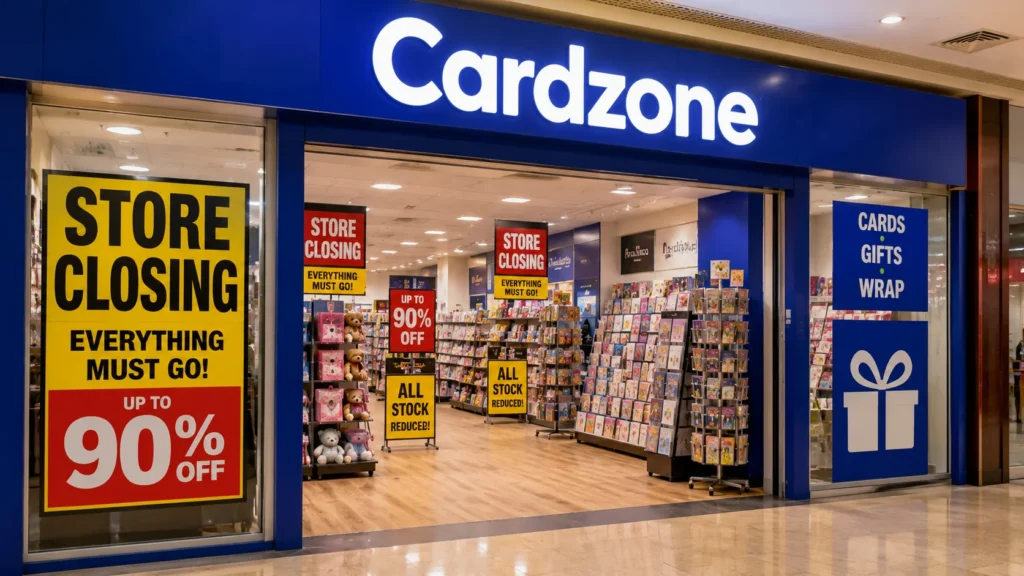
Cardzone UK Store Closures: Full List and Latest 2026 Update
Cardzone UK store closures are continuing in 2026, with several branches already gone from high streets and further shops now preparing to shut. The latest confirmed closures include…

The £1.3bn Industry Quietly Benefiting From Britain’s Startup Economy
When you picture the infrastructure behind Britain’s startup economy, self-storage probably isn’t the first thing that springs to mind. Coworking spaces, cloud software and laptops in coffee shops,…
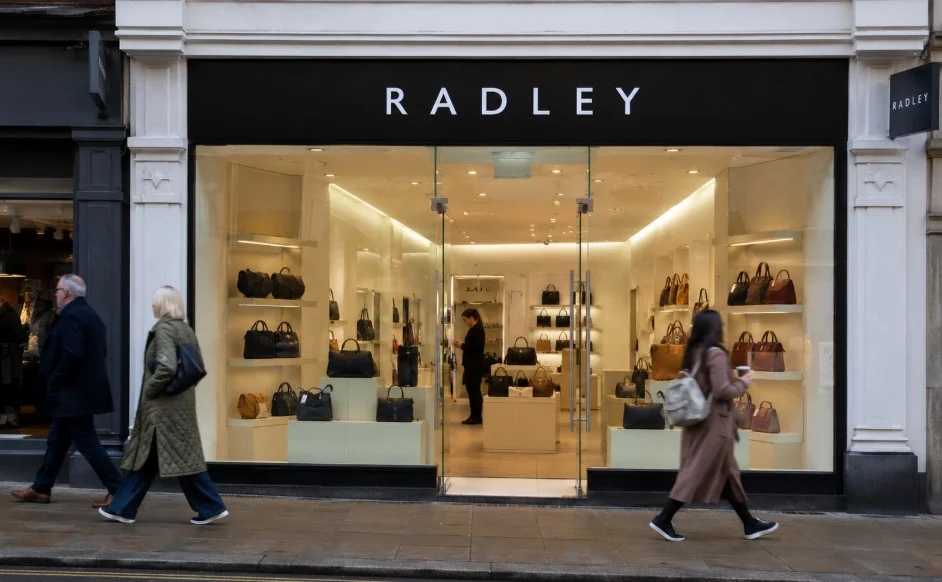
Has Radley Gone into Administration? | Gordon Brothers Deal & Store Closures
Yes. Radley + Co. Limited entered administration on 26 May 2026 and was renamed R Realisations 2026 Limited, now listed as “In Administration” at Companies House. The Radley…