
Suspended From Work Pending Investigation – What Are My Rights?


UK Startup Blog Archive
Table of Contents
If you are suspended from work pending investigation, you still keep your employment rights. Suspension does not mean you are guilty or that you will automatically lose your job. In most cases, it is a temporary step that allows your employer to investigate a concern fairly.
While you are suspended, your contract of employment continues. Your employer must usually keep paying you, protect your confidentiality, and carry out the investigation as quickly as possible.
Your key rights while suspended include:
- the right to full pay unless your contract allows unpaid suspension
- the right to know why you have been suspended
- the right to understand the allegations against you
- the right to continue receiving benefits and holiday entitlement
- the right to a fair and unbiased investigation
- the right to updates and the opportunity to challenge unfair treatment
Understanding these rights can help you protect yourself during the investigation
What Does It Mean to Be Suspended from Work Pending Investigation?

Suspension from work pending investigation means that your employer has temporarily removed you from your normal duties while they look into a concern or allegation.
You remain an employee but may be asked not to attend the workplace, contact colleagues, or access company systems. Importantly, suspension is not disciplinary action or dismissal, and no final decision has been made.
Employers usually use suspension when they believe your presence could affect the investigation, such as influencing witnesses or evidence.
An ACAS spokesperson has stated:
“Suspension should never be an automatic response. Employers should only use it where it is necessary and should keep it under regular review.”
Your employer should normally explain the suspension in writing. The letter should tell you why you are being suspended, how long it is likely to last, who your contact person is, and whether there are any restrictions on speaking to colleagues or customers.
Why Would an Employer Suspend You During an Investigation?
There are several reasons why an employer may decide to suspend an employee while an investigation is taking place.
In many cases, the issue relates to alleged misconduct or gross misconduct, but suspension can also happen because of health and safety concerns or to protect other employees.
Typical reasons include:
- Allegations of misconduct or gross misconduct
- Concerns that evidence may be destroyed or altered
- Worries that witnesses may be influenced
- Risks to customers, colleagues, or the business
- Serious breakdowns in workplace relationships
- Health and safety concerns, including pregnancy-related risks
However, your employer should not suspend you automatically. Before making that decision, they should consider whether there is a less serious alternative, such as temporarily moving you to another role, changing your shift pattern, or restricting your access to certain systems.
Employer Insights: Why Suspension Was Reviewed?
Let me explain this with a real-world example. A retail manager in Manchester was suspended after stock went missing because they had access to the stockroom and records. Initially, the employer felt suspension was necessary.
However, after reviewing the situation a week later, they realised the employee could return to work safely in a different department. They restricted access to sensitive areas and allowed the investigation to continue without keeping the employee away from work.
This clearly shows why employers should regularly review suspension. It helps reduce unnecessary stress for employees while still protecting the investigation process.
What Rights Do You Have While Suspended from Work?
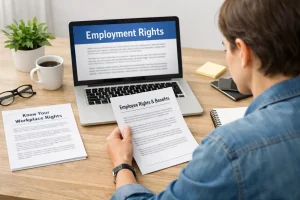
You keep your employment rights while you are suspended from work pending investigation. Suspension does not end your employment contract, and it does not remove your normal legal protections.
You are still an employee, which means your employer must continue to act fairly, reasonably and in line with both your contract and the ACAS Code of Practice.
Your employer should treat suspension as a neutral step rather than a punishment. They should not assume that you are guilty before the investigation has finished, and they should make sure that the process is handled in a way that protects your dignity and reputation.
Your Key Rights During Suspension
While you are suspended, you normally keep the following rights:
- The right to full pay unless your contract specifically allows unpaid suspension
- The right to continue receiving benefits such as pension contributions or private healthcare
- The right to continue building up annual leave
- The right to be told why you have been suspended
- The right to know the allegations against you
- The right to confidentiality
- The right to a fair investigation
- The right to updates about the investigation
- The right to raise a grievance or appeal later
These rights are important because suspension can often feel uncertain and stressful. Knowing what your employer must still provide can help you understand where you stand and whether the process is being handled properly
Full Pay, Benefits and Holiday Entitlement
In most cases, suspension from work pending investigation should be on full pay. Unless your contract clearly allows for an unpaid suspension, your employer should continue paying your normal salary throughout this period.
You should receive the same pay as if you were working. If your employer stops paying you without a valid contractual reason, you may have a legal claim for unlawful deduction from wages.
Your benefits should usually continue as well, which may include:
- pension contributions
- private medical insurance
- company car or travel allowance
- bonus or commission
- life insurance or other benefits
You should also continue building up annual leave during suspension. Your holiday entitlement does not stop, and you may request leave, although approval is still up to your employer.
| Employment Right or Benefit | Continue During Suspension? | Possible Exception |
| Basic salary | Yes | Only if the contract allows an unpaid suspension |
| Pension contributions | Yes | Rarely stopped unless stated in the contract |
| Annual leave entitlement | Yes | No exception in most cases |
| Bonus or commission | Usually | Depends on contract terms |
| Company car or healthcare | Usually | Depends on benefit rules |
While salary and core benefits usually continue, bonuses and commissions can vary. If they are discretionary, your employer may not pay them. However, if they are contractual or regularly paid, you may still be entitled to receive them.
Your Right to Know the Allegations
Your employer does not have to give you every piece of evidence immediately, but they should explain enough for you to understand why you have been suspended.
For example, they might tell you that there has been an allegation involving missing money, misuse of company property, inappropriate behaviour, or a breach of workplace policy. They should also explain why they believe suspension is necessary, such as concerns about evidence, witnesses, or the safety of others.
In most cases, this information should be confirmed in writing.
A suspension letter often includes:
- the reason for the suspension
- The general nature of the allegations
- How long is the suspension expected to last
- Who you should contact if you have questions
- any restrictions, such as not contacting colleagues
A senior employment solicitor from Slater and Gordon has said:
“Employees should never be left in the dark. They are entitled to know the allegations and why suspension is considered necessary.”
If your employer refuses to tell you anything at all about the allegations, it may be difficult for you to respond properly later in the process. In some cases, this could make the suspension unfair
Confidentiality and Fair Treatment
Your employer should keep the matter as confidential as possible while the investigation is taking place. They should not discuss the allegations unnecessarily with other staff, customers, or clients, and they should not present you as guilty before the facts have been established.
Suspension can often feel embarrassing and isolating, particularly if colleagues suddenly notice that you are no longer at work.
However, your employer has a responsibility to protect your reputation and avoid creating the impression that you have done something wrong.
Can Your Employer Suspend You Without Pay or Stop Your Benefits?
Your employer can only suspend you without pay if there is a clear clause in your contract allowing this. Even then, they must act reasonably.
Most employees who are suspended pending an investigation continue to receive their normal salary. If your employer stops your pay without a contractual right, you may be able to make a claim for unlawful deduction from wages.
The same principle applies to benefits. If your contract says that you receive pension contributions, private healthcare, or other benefits, these should usually continue throughout the suspension period.
Some payments, such as overtime, bonuses, or commission, can be more complicated. Whether you continue to receive them depends on the wording of your contract and how regularly those payments are normally made.
| Type of Payment | Usually Paid During Suspension? | Notes |
| Contractual salary | Yes | Normally paid in full |
| Guaranteed overtime | Usually | If overtime forms part of normal earnings |
| Discretionary bonus | Not always | Depends on employer policy |
| Commission | Sometimes | Depends on contract wording |
| Sick pay | Yes, if you become ill during suspension | Standard rules still apply |
If you think your employer has stopped your pay unfairly, raise the issue in writing immediately. You may also wish to contact ACAS or an employment solicitor.
How Long Can You Be Suspended from Work Pending Investigation?

There is no specific legal time limit in the UK for how long a suspension pending investigation can last. However, your employer must keep the suspension as short as reasonably possible and review it on a regular basis. It should never continue longer than necessary without valid reasons.
The length of suspension often depends on how complex the investigation is. A simple issue involving one or two people may be resolved within a few days.
More serious cases, such as those involving multiple employees, CCTV evidence, financial records, or even police involvement, can take several weeks or longer to complete.
When Should an Employer Review a Suspension?
Employers should regularly assess whether suspension is still necessary rather than leaving it in place automatically.
They should carefully consider:
- whether the investigation has progressed
- whether there is still a risk to the business or witnesses
- whether there is now an alternative to suspension
- whether the employee’s wellbeing is being affected
If the answer is that the risks have reduced, your employer should consider allowing you to return to work, perhaps with temporary changes to your duties.
Employee Example: A Suspension That Went on Too Long
Sarah, an office administrator in Birmingham, was suspended while her employer investigated allegations that she had shared confidential information. She was suspended for nine weeks but received very few updates.
Eventually, Sarah raised a grievance because she believed the suspension had become unreasonable. Shortly afterwards, the employer completed the investigation and confirmed there was no case to answer.
Sarah later said:
“The hardest part was not knowing what was happening. I felt forgotten about and worried every day that I would lose my job.”
Long or unexplained suspensions can seriously affect mental health and may even lead to claims for breach of contract or constructive dismissal if the employer acts unfairly.
What Should You Do and Avoid Doing While You Are Suspended?

Being suspended can make you feel powerless, but there are practical steps you can take to protect yourself and stay in control of the process.
What You Should Do?
- Ask for the reasons for your suspension in writing
- Read your employment contract and staff handbook
- Keep copies of all letters, emails and notes
- Write down your own timeline of events
- Stay available for meetings and updates
- Contact your trade union, ACAS or a solicitor if necessary
It is also sensible to keep a record of every conversation you have with your employer during the suspension. If you later need to challenge the process, these notes could be useful.
What You Should Avoid?
Avoid discussing the allegations with colleagues, especially if your employer has asked you not to. You should also avoid posting about the situation on social media.
Do not delete emails, text messages, or documents that may be relevant to the investigation. If your employer later believes that you destroyed evidence, this could make the situation worse.
Finally, avoid resigning immediately. Although you are legally allowed to resign while suspended, it is often better to understand your rights and seek advice first.
Can You Challenge an Unfair Suspension or Resign While Suspended?
If you believe that your suspension is unfair, you do not have to simply accept it. You may be able to challenge the decision by raising a formal grievance.
A suspension may be unfair if:
- There was no genuine reason to suspend you
- Your employer failed to consider alternatives
- The suspension has lasted far too long
- You have not been kept informed
- The employer has damaged your reputation
You should normally start by writing to your employer and asking them to review the suspension. Explain why you think it is unnecessary or unreasonable.
If the issue is not resolved, you may have legal claims, including:
- breach of contract
- unlawful deduction from wages
- constructive dismissal
- unfair dismissal, if you are later dismissed unfairly
Constructive dismissal can happen if your employer seriously breaches your contract, making it impossible for you to continue working there. For example, an excessively long suspension without explanation may be enough in some cases.
Although you can resign while suspended, doing so too early may weaken your position. It is usually better to seek legal advice first so that you understand the consequences.
What Happens When the Investigation Ends?

Once the investigation is complete, your employer should decide whether there is enough evidence for further action.
In some cases, the investigation ends with no further action. If this happens, you should return to work and continue as normal.
Other possible outcomes include a warning, temporary changes to your role, or a formal disciplinary hearing.
If there is a disciplinary hearing, your employer should write to you in advance and explain the allegations, the evidence, and the possible consequences. You normally have the right to take someone with you, such as a colleague or trade union representative.
Possible outcomes after the investigation include:
- No further action
- Return to work with temporary adjustments
- Written or final warning
- Demotion
- Dismissal
If you are unhappy with the outcome, you usually have the right to appeal. The appeal should be heard by someone who was not involved in the original decision, wherever possible.
Conclusion
If you’ve been suspended from work pending investigation, it doesn’t mean you’re guilty or that dismissal is certain. You’re still an employee with full rights.
In most cases, you should receive full pay, continue accruing leave, and be kept informed. Your employer must act fairly, maintain confidentiality, and review the suspension regularly.
If you feel treated unfairly, raise your concerns in writing and seek advice from organisations like ACAS or a solicitor before making decisions.
FAQs
Can your employer suspend you immediately without warning?
Yes. Your employer can suspend you immediately if they believe it is necessary to protect the investigation, other staff, or the business. However, they should explain the reasons as soon as possible and confirm the suspension in writing.
Are you allowed to take annual leave while you are suspended?
Yes. You continue to build up annual leave while suspended and can usually request holiday in the normal way, subject to your employer’s approval.
Can you go off sick while already suspended from work?
Yes. If you become genuinely ill during your suspension, including suffering stress or anxiety, you can report sickness in the normal way and may be entitled to sick pay.
Will your suspension appear on a job reference?
Usually not. Most employers only provide basic references confirming your job title and dates of employment. However, if disciplinary action later takes place, some employers may mention this.
Can your employer search your work emails or devices during the investigation?
Yes. Employers can normally examine company emails, computers, and work devices if their policies allow it and the investigation makes it necessary.
Can you be suspended more than once for the same issue?
Normally, no. If the issue has already been investigated and resolved, your employer should not repeatedly suspend you unless there is new evidence or a new concern.
Should you attend an investigation meeting if you think the allegations are false?
Yes. You should attend and explain your side of the story. Refusing to take part could make the situation more difficult and may weaken your position.

Blogger | Business Writer | Sharing startup advice on UK business blogs
Related Articles in Business
View All →
Pass the Keys Franchise Cost: Investment, Fees and Profit Potential in 2026
The Pass the Keys franchise cost is currently best understood as a two-part investment: the franchise entry cost and the wider capital needed to launch and operate the…

Shell Petrol Station Franchise Cost in the UK: Real Investment, Income and Process
If you are searching for the Shell petrol pump franchise cost in the UK, the first thing to understand is that Shell does not currently advertise its UK…

Is Raising Cane’s Opening in the UK? | London Locations Revealed
Yes, Raising Cane’s is officially coming to the UK. The American chicken restaurant brand plans to open its first UK restaurant at 22 Coventry Street in London’s West…